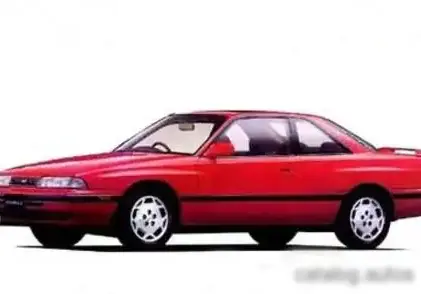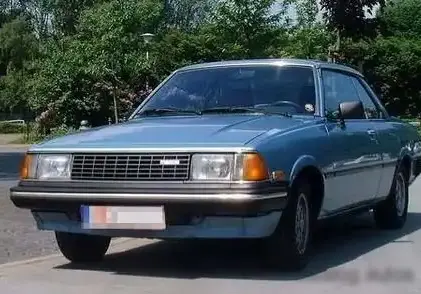
The Mazda Capella 1.6, producing 73 horsepower, was a variant of the Capella (also known as the 626 outside of Japan) produced between 1989 and 1994. This model occupied the entry-level position within the Capella range, offering a more affordable option for buyers seeking a comfortable and reliable family sedan. It was primarily marketed towards those prioritizing fuel efficiency and practicality over outright performance. The Capella, in this generation (GC), represented Mazda’s commitment to front-wheel-drive technology and modern styling, competing with established rivals like the Toyota Camry and Honda Accord.
Technical Specifications
| Brand | Mazda |
| Model | Capella |
| Generation | Capella |
| Type (Engine) | 1.6 (73 Hp) |
| Start of production | 1989 |
| End of production | 1994 |
| Powertrain Architecture | Internal Combustion engine |
| Body type | Sedan |
| Seats | 5 |
| Doors | 4 |
| Fuel Type | Petrol (Gasoline) |
| Power | 73 Hp @ 5500 rpm |
| Power per litre | 45.7 Hp/l |
| Torque | 122 Nm @ 3500 rpm |
| Torque (lb-ft) | 89.98 lb.-ft. @ 3500 rpm |
| Engine Model/Code | B6 |
| Engine displacement | 1597 cm3 |
| Engine displacement (cu. in.) | 97.45 cu. in. |
| Number of cylinders | 4 |
| Engine configuration | Inline |
| Cylinder Bore | 78 mm |
| Cylinder Bore (in.) | 3.07 in. |
| Piston Stroke | 83.6 mm |
| Piston Stroke (in.) | 3.29 in. |
| Compression ratio | 9:1 |
| Number of valves per cylinder | 2 |
| Engine aspiration | Naturally aspirated engine |
| Valvetrain | OHC |
| Fuel tank capacity | 60 l |
| Fuel tank capacity (US gal) | 15.85 US gal |
| Fuel tank capacity (UK gal) | 13.2 UK gal |
| Length | 4515 mm |
| Length (in.) | 177.76 in. |
| Width | 1690 mm |
| Width (in.) | 66.54 in. |
| Height | 1395 mm |
| Height (in.) | 54.92 in. |
| Wheelbase | 2575 mm |
| Wheelbase (in.) | 101.38 in. |
| Front track | 1460 mm |
| Front track (in.) | 57.48 in. |
| Rear track | 1455 mm |
| Rear track (in.) | 57.28 in. |
| Drivetrain Architecture | Front wheel drive |
| Number of gears | 5 |
| Gearbox type | Manual transmission |
| Front brakes | Ventilated discs |
| Rear brakes | Drum |
| Tires size | 165/80 R13 |
| Wheel rims size | 4.5J x 13 |
Powertrain & Engine Architecture
The Capella 1.6 was powered by Mazda’s B6 engine, a 1.6-liter inline-four cylinder gasoline engine. This engine utilized a single overhead camshaft (OHC) valvetrain with two valves per cylinder. Fuel delivery was managed by a carburetor or early fuel injection systems depending on the specific market and year of production. The B6 engine was known for its relative simplicity and durability, though it wasn’t a powerhouse in terms of performance. The engine’s 9:1 compression ratio was a standard figure for the time, balancing efficiency and power output. The five-speed manual transmission was the standard offering, providing drivers with reasonable control over the engine’s limited power band.
Driving Characteristics
The 73 horsepower output of the 1.6-liter engine translated to modest acceleration. The Capella 1.6 was not designed for spirited driving; instead, it prioritized fuel economy and comfortable cruising. The five-speed manual transmission allowed drivers to keep the engine in its optimal power range, but overtaking maneuvers required careful planning. Compared to the higher-spec Capella variants equipped with larger engines (such as the 2.0-liter), the 1.6 felt noticeably slower. The gear ratios were tuned for economy, meaning the engine could feel strained at higher speeds. Handling was typical for a front-wheel-drive sedan of the era – predictable but not particularly engaging.
Equipment & Trim Levels
The Capella 1.6 typically came with a basic level of equipment. Standard features generally included cloth upholstery, a simple dashboard layout, and manual windows and door locks. Air conditioning was often an optional extra, as were power steering and a basic audio system. The interior was functional and durable, prioritizing practicality over luxury. Trim levels were often differentiated by the addition of features like upgraded upholstery, a more comprehensive instrument cluster, and exterior enhancements like wheel covers. The 1.6 model was often seen as a base model, with buyers opting for higher trims if they desired more comfort and convenience features.
Chassis & Braking
The Capella 1.6 featured a conventional front-wheel-drive chassis with MacPherson strut front suspension and a torsion beam rear suspension. This setup provided a comfortable ride, but didn’t offer particularly sporty handling characteristics. The front brakes were ventilated discs, providing adequate stopping power for the vehicle’s weight and performance. However, the rear brakes were drums, which were less effective than disc brakes and could fade under heavy use. The 165/80 R13 tires were chosen for their balance of comfort, fuel efficiency, and affordability, rather than outright grip.
Market Reception & Comparison
The Mazda Capella 1.6 was generally well-received as an affordable and reliable family sedan. Critics praised its fuel efficiency and comfortable ride, but noted its lack of performance. Compared to the higher-spec Capella variants, the 1.6 offered a more economical entry point into the model range. However, it lacked the refinement and performance of its more powerful siblings. In terms of reliability, the B6 engine proved to be reasonably durable, although regular maintenance was essential. Fuel economy was a key selling point, making it an attractive option for budget-conscious buyers.
Legacy
The Mazda Capella 1.6, while not a particularly exciting vehicle, played an important role in establishing Mazda as a maker of reliable and affordable family cars. The B6 engine, while superseded by more modern designs, proved to be a durable and long-lasting powerplant. Today, the Capella 1.6 is a relatively rare sight on the roads, but well-maintained examples are sought after by enthusiasts looking for a classic 1990s Japanese sedan. Its simplicity and affordability make it a relatively easy car to maintain and repair, and its fuel efficiency remains respectable even by modern standards. The Capella 1.6 represents a snapshot of automotive engineering from a bygone era, prioritizing practicality and reliability over outright performance.