Technical Specifications
| Brand | Ford |
| Model | Ranger |
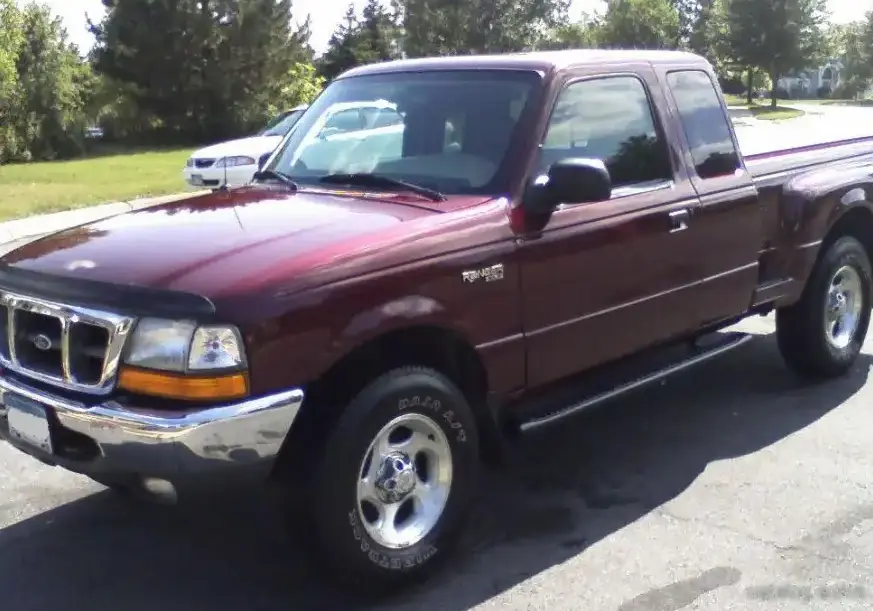
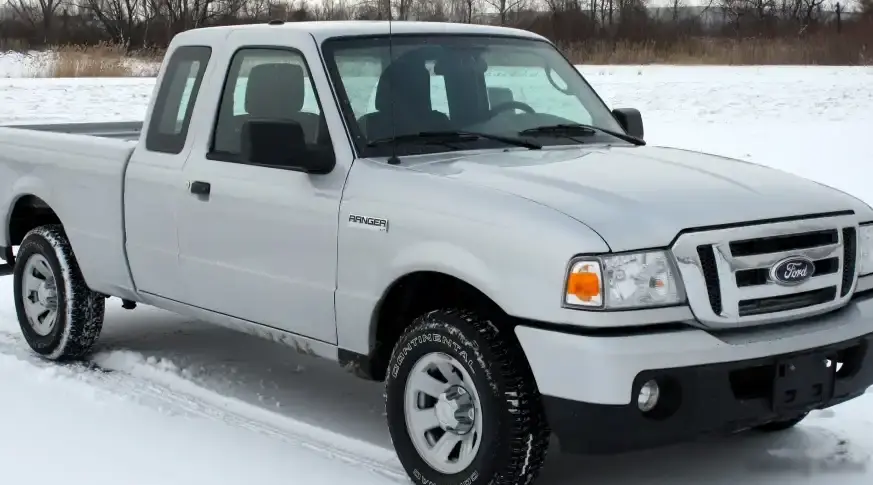
| Generation | Ranger II Super Cab (facelift 2009) |
| Type (Engine) | 2.5 TDCi (143 Hp) Automatic |
| Start of production | 2009 |
| End of production | 2011 |
| Powertrain Architecture | Internal Combustion engine |
| Body type | Pick-up |
| Seats | 4 |
| Doors | 2 |
| Fuel Type | Diesel |
| Maximum speed | 170 km/h (105.63 mph) |
| Weight-to-power ratio | 12.9 kg/Hp, 77.5 Hp/tonne |
| Weight-to-torque ratio | 5.6 kg/Nm, 178.9 Nm/tonne |
| Power | 143 Hp @ 3500 rpm |
| Power per litre | 57.2 Hp/l |
| Torque | 330 Nm @ 1800 rpm (243.4 lb.-ft. @ 1800 rpm) |
| Engine layout | Front, Longitudinal |
| Engine Model/Code | WLAA |
| Engine displacement | 2499 cm3 (152.5 cu. in.) |
| Number of cylinders | 4 |
| Engine configuration | Inline |
| Cylinder Bore | 93 mm (3.66 in.) |
| Piston Stroke | 92 mm (3.62 in.) |
| Compression ratio | 17.5:1 |
| Number of valves per cylinder | 4 |
| Fuel injection system | Diesel Commonrail |
| Engine aspiration | Turbocharger, Intercooler |
| Engine oil capacity | 7 l (7.4 US qt | 6.16 UK qt) |
| Coolant | 9.4 l (9.93 US qt | 8.27 UK qt) |
| Kerb Weight | 1845 kg (4067.53 lbs.) |
| Max. weight | 2985 kg (6580.8 lbs.) |
| Max load | 1140 kg (2513.27 lbs.) |
| Fuel tank capacity | 70 l (18.49 US gal | 15.4 UK gal) |
| Length | 5080 mm (200 in.) |
| Width | 1788 mm (70.39 in.) |
| Height | 1762 mm (69.37 in.) |
| Wheelbase | 3000 mm (118.11 in.) |
| Front track | 1488 mm (58.58 in.) |
| Rear (Back) track | 1455 mm (57.28 in.) |
| Ride height (ground clearance) | 230 mm (9.06 in.) |
| Drivetrain Architecture | The Internal combustion engine (ICE) drives the rear wheels of the vehicle. |
| Drive wheel | Rear wheel drive |
| Number of gears and type of gearbox | 5 gears, automatic transmission |
| Front suspension | Independent torsion bar, double wishbone |
| Rear suspension | Dependent suspension of two longitudinal semi-elliptic leaf springs |
| Front brakes | Ventilated discs |
| Rear brakes | Drum |
| Assisting systems | ABS (Anti-lock braking system) |
| Steering type | Steering rack and pinion |
| Tires size | 235/75 R15; 245/70 R16 |
| Wheel rims size | 15; 16 |
The 2009 facelift of the Ford Ranger II Super Cab brought updated styling and, crucially, continued availability of the 2.5-liter TDCi diesel engine paired with a five-speed automatic transmission. This combination was particularly popular in markets like Europe, Australia, and South America, where diesel engines are favored for their fuel efficiency and torque. The Super Cab configuration offered a compromise between the practicality of a double cab and the more compact size of a standard cab, providing limited rear seating and a usable cargo bed. This variant aimed to appeal to buyers needing a versatile vehicle for both work and personal use, without the expense or size of a full-size pickup.
Powertrain & Engine Architecture
The heart of this Ranger variant is the WLAA 2.5-liter inline-four cylinder TDCi diesel engine. This engine utilizes a common rail direct injection system, delivering fuel at extremely high pressure for improved combustion efficiency and reduced emissions. A turbocharger with an intercooler further enhances performance by forcing more air into the cylinders. The engine produces 143 horsepower at 3500 rpm and a respectable 330 Nm (243.4 lb-ft) of torque at 1800 rpm. The five-speed automatic transmission, while not known for being particularly sporty, provides convenient shifting and is well-suited to the engine’s torque characteristics. The transmission is electronically controlled, adapting shift points based on throttle input and vehicle load. This engine is known for its durability, but like all diesels, requires regular maintenance, including oil changes and fuel filter replacements. The common rail system, while efficient, can be sensitive to fuel quality, making consistent use of clean diesel fuel important for longevity.
Driving Characteristics
The 2.5 TDCi automatic Ranger offers a comfortable, if not exhilarating, driving experience. The automatic transmission smooths out power delivery, making it easy to drive in urban environments. However, the 143 hp output and the weight of the vehicle (1845 kg / 4067.53 lbs) mean that acceleration is not particularly brisk. Compared to the manual transmission versions or higher-output engine options (like the 3.2L TDCi available in some markets), this variant feels noticeably slower, especially when fully loaded. The automatic transmission’s gear ratios are optimized for fuel economy and towing capacity rather than outright performance. The rear-wheel-drive configuration provides good traction under normal conditions, but can struggle on slippery surfaces without careful throttle control. The steering, while precise, lacks the feedback found in some competitors. Overall, the driving experience prioritizes usability and dependability over sporty handling.
Equipment & Trim Levels
The 2009 facelift Ranger II Super Cab 2.5 TDCi Automatic typically came equipped with air conditioning, power steering, and an AM/FM radio as standard. Higher trim levels, often denoted by “XL” or “XLT” badges, added features such as alloy wheels, power windows and locks, a more sophisticated audio system, and upgraded interior trim. Optional extras included a limited-slip differential, a tow package, and various accessories like bed liners and roof racks. Interior upholstery was typically vinyl or cloth, with the XLT trims offering more premium cloth options. The dashboard layout was functional and straightforward, prioritizing usability over aesthetics. The XLT trim also often included features like cruise control and a trip computer, adding to the convenience for longer journeys.
Chassis & Braking
The Ranger II Super Cab utilizes a body-on-frame construction, providing a robust and durable platform. The front suspension consists of independent torsion bars and double wishbones, offering a reasonable level of ride comfort. The rear suspension employs a traditional leaf spring setup, which is well-suited to carrying heavy loads. Braking duties are handled by ventilated discs at the front and drum brakes at the rear. Anti-lock Braking System (ABS) was standard, enhancing safety during emergency braking situations. The chassis was designed to handle a significant payload (1140 kg / 2513.27 lbs), making it a practical choice for commercial applications. The leaf spring rear suspension, while capable, can result in a somewhat firm ride when the vehicle is unladen.
Market Reception & Comparison
The Ranger II Super Cab 2.5 TDCi Automatic was generally well-received in its target markets. Critics praised its fuel efficiency, durability, and practicality. However, the automatic transmission was sometimes criticized for being somewhat sluggish and lacking the responsiveness of a manual gearbox. Compared to the manual transmission versions, the automatic offered slightly lower fuel economy. Against competitors like the Toyota Hilux and Nissan Navara, the Ranger offered a competitive price point and a robust powertrain. The 2.5 TDCi engine was considered a reliable unit, although some owners reported issues with the fuel injection pump and injectors over time. The Ranger often represented a more affordable option than the Hilux, while offering similar levels of durability and capability.
Legacy
The Ford Ranger II Super Cab 2.5 TDCi Automatic has proven to be a relatively reliable and durable vehicle in the used car market. The 2.5 TDCi engine, when properly maintained, can withstand high mileage. However, potential buyers should be aware of potential issues with the fuel injection pump and injectors. Parts availability is generally good, and the relatively simple mechanical design makes it a relatively easy vehicle to repair. Today, these Rangers are often found in the hands of tradespeople and those seeking a dependable and affordable pickup truck. While not a performance icon, the 2.5 TDCi automatic Ranger remains a practical and capable workhorse. Its continued presence on roads and work sites is a testament to its robust construction and the longevity of the TDCi engine.