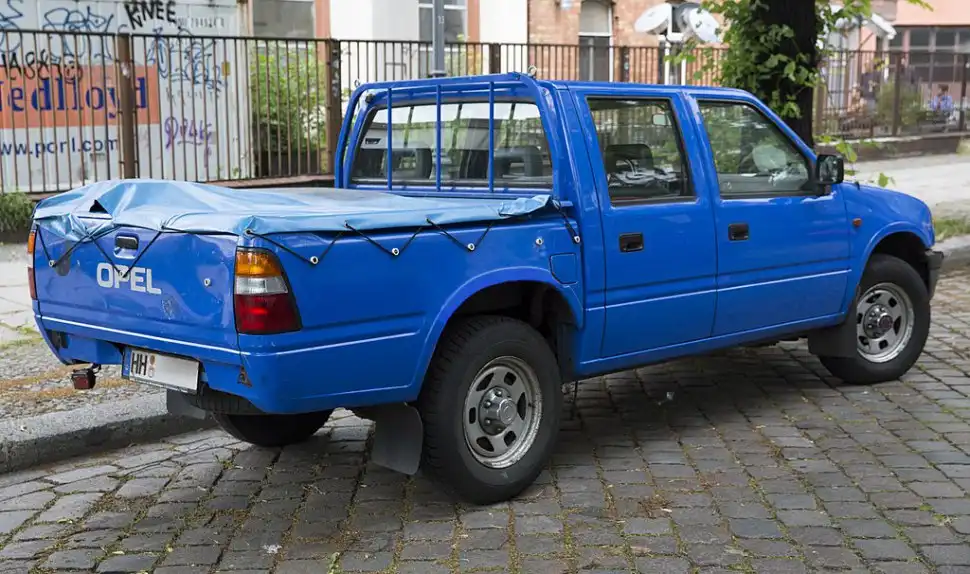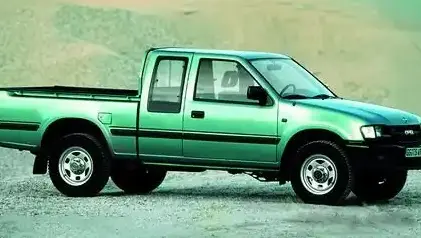
The Opel Campo Half Cab 2.3 (98 hp) Automatic, produced from 1994 to 1995, represents a specific configuration within the broader Opel Campo pickup truck range. The Campo, a rebadged Isuzu Faster, was Opel’s entry into the compact pickup segment, primarily aimed at the European market. This particular variant, combining a 2.3-liter gasoline engine with a four-speed automatic transmission, occupied a niche position, offering a degree of convenience not found in the more common manual transmission models. It was positioned as a step up from the base models, appealing to buyers who desired an automatic gearbox for ease of use, particularly in urban or challenging terrain, but didn’t require the higher performance of potential diesel options.
Technical Specifications
| Brand | Opel |
| Model | Campo |
| Generation | Campo Half Cab |
| Type (Engine) | 2.3 (98 Hp) Automatic |
| Start of production | 1994 |
| End of production | 1995 |
| Powertrain Architecture | Internal Combustion engine |
| Body type | Pick-up |
| Seats | 4 |
| Doors | 2 |
| Fuel Type | Petrol (Gasoline) |
| Power | 98 Hp @ 5000 rpm |
| Power per litre | 43.5 Hp/l |
| Engine Model/Code | 4ZD1 |
| Engine displacement | 2255 cm3 / 137.61 cu. in. |
| Number of cylinders | 4 |
| Engine configuration | Inline |
| Cylinder Bore | 89.3 mm / 3.52 in. |
| Piston Stroke | 90 mm / 3.54 in. |
| Number of valves per cylinder | 2 |
| Engine aspiration | Naturally aspirated engine |
| Valvetrain | SOHC |
| Engine oil capacity | 3.5 l / 3.7 US qt | 3.08 UK qt |
| Coolant | 9 l / 9.51 US qt | 7.92 UK qt |
| Length | 4980 mm / 196.06 in. |
| Width | 1690 mm / 66.54 in. |
| Height | 1710 mm / 67.32 in. |
| Wheelbase | 3025 mm / 119.09 in. |
| Drivetrain Architecture | The Internal combustion engine (ICE) drives the rear wheels of the vehicle. |
| Drive wheel | Rear wheel drive |
| Number of gears and type of gearbox | 4 gears, automatic transmission |
| Front suspension | Independent coil spring |
| Rear suspension | dependent spring suspension |
| Front brakes | Ventilated discs |
| Rear brakes | Drum |
Powertrain & Engine Architecture
The heart of the Campo Half Cab 2.3 Automatic is the 4ZD1 engine, a 2.3-liter inline-four cylinder gasoline engine. This engine, sourced from Isuzu, features a single overhead camshaft (SOHC) valvetrain operating two valves per cylinder. Fuel delivery is managed by a throttle body injection system, a relatively simple setup compared to multi-point fuel injection systems becoming more common at the time. The 4ZD1 produces 98 horsepower at 5000 rpm and a modest amount of torque, suitable for light-duty pickup tasks. The four-speed automatic transmission, while offering convenience, is a somewhat dated design. It lacks the overdrive gear found in more modern automatics, impacting highway fuel economy. The transmission is electronically controlled, offering smoother shifts than older hydraulically controlled units, but it’s not known for particularly quick or sporty responsiveness.
Driving Characteristics
The driving experience in the Campo 2.3 Automatic is best described as utilitarian. The 98 hp engine, coupled with the four-speed automatic, provides adequate power for everyday driving and light hauling. However, acceleration is leisurely, and passing maneuvers require careful planning. The automatic transmission’s gear ratios are spaced to prioritize low-end torque, making it reasonably capable off-road on gentle inclines, but it struggles with steeper grades or heavier loads. Compared to the manual transmission versions of the Campo, the automatic suffers a noticeable performance deficit. The manual offered a more direct connection to the engine and allowed the driver to better utilize the available power. The automatic’s shift points are programmed for economy, sometimes resulting in the engine bogging down during acceleration.
Equipment & Trim Levels
The Campo Half Cab 2.3 Automatic was generally equipped with a basic level of features. Standard equipment typically included a vinyl interior, basic instrumentation, and manual windows and locks. Power steering was often included, but air conditioning was frequently an optional extra. The Half Cab designation refers to the vehicle’s cab configuration, featuring a smaller rear seating area suitable for occasional passengers. Higher trim levels, if available, might have added features like upgraded upholstery, a more comprehensive instrument cluster, and potentially a cassette stereo. However, the Campo was never positioned as a luxury vehicle, and even the higher trims remained relatively spartan.
Chassis & Braking
The Campo’s chassis is a traditional body-on-frame construction, providing durability and off-road capability. The front suspension utilizes independent coil springs, offering a reasonable ride quality on paved roads. The rear suspension employs a dependent leaf spring setup, which is more robust for hauling and off-road use but can result in a harsher ride when unladen. The braking system features ventilated discs on the front wheels and drum brakes on the rear. This configuration was common for vehicles in this class at the time, but it lacks the stopping power and modulation of a full disc brake setup. The steering is a recirculating ball system, providing a relatively heavy but direct feel.
Market Reception & Comparison
The Opel Campo, and specifically the 2.3 Automatic variant, received mixed reviews. Critics generally praised its ruggedness and practicality but noted its lack of refinement and relatively low power output. The automatic transmission was seen as a convenience feature, but its performance impact was a common complaint. Compared to other pickups in the European market, such as the Toyota Hilux or Nissan Datsun, the Campo offered a more affordable entry point but lacked their reputation for reliability and build quality. The 1.6-liter and diesel variants of the Campo were often preferred by buyers seeking better fuel economy or more robust performance. The 2.3 Automatic appealed to a specific segment of buyers who prioritized ease of use over outright performance.
Legacy
The Opel Campo, while not a long-lived model, holds a place in automotive history as Opel’s attempt to compete in the compact pickup segment. The 2.3 Automatic variant, while relatively rare, is remembered for its convenience and simplicity. Today, these vehicles are primarily found as affordable work trucks or project vehicles for enthusiasts. The 4ZD1 engine is generally considered reliable, but age and maintenance history are critical factors. Parts availability can be challenging, as the Campo is no longer in production. The automatic transmission, while durable, is prone to wear and tear with age. Overall, the Campo 2.3 Automatic represents a unique and somewhat quirky chapter in Opel’s history, offering a glimpse into a time when pickup trucks were more about functionality than luxury.