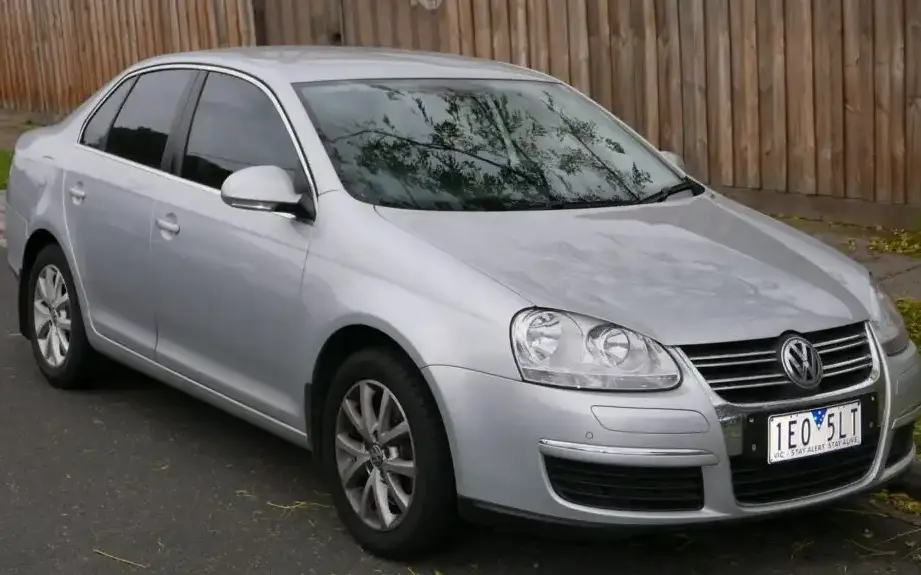
The Volkswagen Jetta V 2.0 TDI CR (170 hp) was a diesel-powered variant of the fifth-generation Jetta (designated the 1K chassis) produced between 2008 and 2010. This model represented a significant step forward in diesel technology for the Jetta, incorporating common rail direct injection and a particulate filter to meet increasingly stringent emissions standards. Positioned as a mid-range offering, it bridged the gap between the more economical base models and the performance-oriented GTI. The Jetta V, in general, was Volkswagen’s offering in the compact sedan segment, primarily aimed at the North American and European markets, offering a blend of practicality, fuel efficiency, and German engineering.
Technical Specifications
| Brand | Volkswagen |
| Model | Jetta |
| Generation | Jetta V |
| Type (Engine) | 2.0 TDI CR (170 Hp) |
| Start of production | 2008 |
| End of production | 2010 |
| Powertrain Architecture | Internal Combustion engine |
| Body type | Sedan |
| Seats | 5 |
| Doors | 4 |
| Fuel consumption (urban) | 7.1 l/100 km (33.1 US mpg) |
| Fuel consumption (extra urban) | 4.5 l/100 km (52.3 US mpg) |
| Fuel consumption (combined) | 5.4 l/100 km (43.6 US mpg) |
| CO2 emissions | 143 g/km |
| Fuel Type | Diesel |
| Acceleration 0 – 100 km/h | 8.6 sec |
| Acceleration 0 – 62 mph | 8.6 sec |
| Acceleration 0 – 60 mph | 8.2 sec |
| Maximum speed | 222 km/h (137.94 mph) |
| Emission standard | Euro 4 |
| Weight-to-power ratio | 8.3 kg/Hp |
| Weight-to-torque ratio | 4.1 kg/Nm |
| Power | 170 Hp @ 4200 rpm |
| Torque | 350 Nm @ 1750-2500 rpm (258.15 lb.-ft.) |
| Engine layout | Front, Transverse |
| Engine Model/Code | CEGA |
| Engine displacement | 1968 cm3 (120.09 cu. in.) |
| Number of cylinders | 4 |
| Engine configuration | Inline |
| Cylinder Bore | 81 mm (3.19 in.) |
| Piston Stroke | 95.5 mm (3.76 in.) |
| Compression ratio | 16.5:1 |
| Number of valves per cylinder | 4 |
| Fuel injection system | Diesel Commonrail |
| Engine aspiration | Turbocharger, Intercooler |
| Valvetrain | DOHC |
| Engine oil capacity | 4.3 l (4.54 US qt | 3.78 UK qt) |
| Kerb Weight | 1418 kg (3126.15 lbs.) |
| Max. weight | 2010 kg (4431.29 lbs.) |
| Max load | 592 kg (1305.14 lbs.) |
| Trunk (boot) space (minimum) | 527 l (18.61 cu. ft.) |
| Fuel tank capacity | 55 l (14.53 US gal | 12.1 UK gal) |
| Length | 4554 mm (179.29 in.) |
| Width | 1781 mm (70.12 in.) |
| Height | 1459 mm (57.44 in.) |
| Wheelbase | 2578 mm (101.5 in.) |
| Front track | 1534 mm (60.39 in.) |
| Rear track | 1512 mm (59.53 in.) |
| Minimum turning circle | 10.9 m (35.76 ft.) |
| Drivetrain Architecture | Front wheel drive |
| Number of gears | 6 |
| Gearbox type | Manual transmission |
INTRODUCTION
The Volkswagen Jetta V 2.0 TDI CR, produced from 2008 to 2010, was a key variant within the fifth-generation Jetta lineup. Built on the Volkswagen Group’s A5 platform (also known as the 1K chassis), it shared its underpinnings with models like the Golf, Audi A3, and SEAT Leon. This generation Jetta aimed to offer a more refined and spacious interior compared to its predecessor, while also improving ride quality and handling. The 2.0 TDI CR engine was a central component of Volkswagen’s strategy to offer fuel-efficient diesel options in the North American and European markets, appealing to buyers seeking lower running costs and reduced emissions.
Powertrain & Engine Architecture
The heart of the Jetta V 2.0 TDI CR is the CEGA engine code, a 1968cc inline-four cylinder diesel engine. This engine utilized common rail direct injection, a technology that allowed for more precise fuel delivery and improved combustion efficiency. The common rail system, supplied by Bosch, operated at extremely high pressures (up to 1600 bar) to atomize the fuel into a fine mist, resulting in a cleaner and more complete burn. The engine also featured a variable geometry turbocharger (VGT) with an intercooler, which helped to boost power and torque across a wider RPM range. The DOHC (Dual Overhead Camshaft) valvetrain, with four valves per cylinder, further enhanced the engine’s breathing and performance. The 6-speed manual transmission was standard, providing a good balance between fuel economy and driver engagement. The engine’s particulate filter was a crucial component in reducing soot emissions, meeting the Euro 4 emission standards prevalent at the time.
Driving Characteristics
The 170 hp and 350 Nm (258 lb-ft) of torque produced by the 2.0 TDI CR engine provided a noticeable step up in performance compared to the lower-powered Jetta variants. While not a sports car, the Jetta V 2.0 TDI CR offered brisk acceleration, with a 0-60 mph time of around 8.2 seconds. The engine’s torque curve was particularly strong, delivering ample pulling power from low RPMs, making it well-suited for everyday driving and highway cruising. The 6-speed manual transmission allowed drivers to keep the engine in its optimal power band. Compared to the gasoline-powered Jetta models, the TDI offered superior fuel economy and a more relaxed driving experience, thanks to the engine’s inherent torque and the taller gear ratios. However, it lacked the responsiveness and higher revving nature of the gasoline engines.
Equipment & Trim Levels
The Jetta V 2.0 TDI CR typically came equipped with a reasonable level of standard features. These included air conditioning, power windows and locks, a CD stereo system, and alloy wheels. Higher trim levels, such as the SEL, added features like a sunroof, upgraded audio system, leather upholstery, and heated front seats. Interior upholstery was typically cloth, with leather options available. The dashboard layout was functional and straightforward, with a focus on ergonomics. Optional extras included navigation systems, automatic climate control, and various driver assistance features.
Chassis & Braking
The Jetta V utilized a MacPherson strut front suspension and an independent multi-link rear suspension. This setup provided a comfortable ride while maintaining good handling characteristics. The front suspension incorporated a transverse stabilizer bar to reduce body roll. Braking duties were handled by ventilated discs at the front and solid discs at the rear. Anti-lock braking system (ABS) was standard, enhancing safety and control during emergency braking situations. The steering was rack and pinion with electric power assistance, providing a responsive and precise feel.
Market Reception & Comparison
The Jetta V 2.0 TDI CR was generally well-received by automotive critics. It was praised for its fuel efficiency, strong torque, and comfortable ride. However, some reviewers noted that the engine could be somewhat noisy compared to gasoline engines. Compared to the gasoline-powered Jetta models, the TDI offered significantly better fuel economy, making it an attractive option for drivers who prioritized running costs. Compared to other diesel-powered compact sedans available at the time, the Jetta TDI offered a good balance of performance, refinement, and features. The 1.9 TDI models, while more economical, lacked the power and refinement of the 2.0 TDI CR.
Legacy
The 2.0 TDI CR engine proved to be a relatively reliable powertrain, although like any diesel engine, it required regular maintenance, including oil changes and filter replacements. The particulate filter could occasionally require regeneration or replacement, depending on driving conditions. Today, used Jetta V 2.0 TDI CR models are sought after by diesel enthusiasts and those looking for a fuel-efficient and practical compact sedan. The engine’s durability and relatively low running costs continue to make it an appealing option, although potential buyers should be aware of the potential maintenance costs associated with diesel engines and emissions control systems. The Jetta V 2.0 TDI CR represents a significant milestone in Volkswagen’s diesel technology development, paving the way for future generations of fuel-efficient and environmentally friendly vehicles.