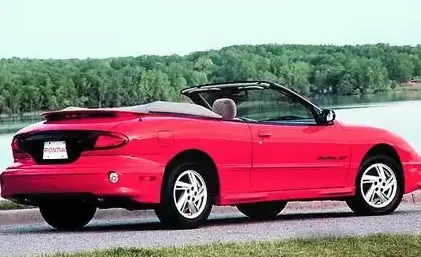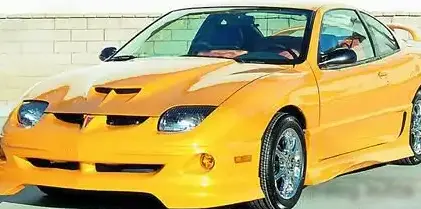
The Pontiac Sunfire Sedan 2.2i, producing 122 horsepower, was a compact car manufactured by General Motors between 1994 and 1997. It represented the first generation of the Sunfire sedan, built on the J-body platform (also known as the 1HX0 platform). Positioned as an affordable and practical option within the Pontiac lineup, the 2.2i trim served as a mainstay, offering a balance between fuel efficiency and acceptable performance for everyday driving. It was aimed at budget-conscious buyers and families seeking a reliable and economical sedan.
Technical Specifications
| Brand | Pontiac |
| Model | Sunfire |
| Generation | Sunfire Sedan |
| Type (Engine) | 2.2i (122 Hp) |
| Start of production | 1994 |
| End of production | 1997 |
| Powertrain Architecture | Internal Combustion engine |
| Body type | Sedan |
| Seats | 5 |
| Doors | 4 |
| Fuel Type | Petrol (Gasoline) |
| Weight-to-power ratio | 10.1 kg/Hp, 98.8 Hp/tonne |
| Weight-to-torque ratio | 7 kg/Nm, 142.5 Nm/tonne |
| Power | 122 Hp @ 5200 rpm |
| Power per litre | 55.7 Hp/l |
| Torque | 176 Nm @ 4000 rpm, 129.81 lb.-ft. @ 4000 rpm |
| Engine layout | Front, Transverse |
| Engine Model/Code | LN2 |
| Engine displacement | 2190 cm3, 133.64 cu. in. |
| Number of cylinders | 4 |
| Engine configuration | Inline |
| Cylinder Bore | 89 mm, 3.5 in. |
| Piston Stroke | 88 mm, 3.46 in. |
| Compression ratio | 9:1 |
| Number of valves per cylinder | 2 |
| Fuel injection system | Multi-port manifold injection |
| Engine aspiration | Naturally aspirated engine |
| Valvetrain | DOHC |
| Engine oil capacity | 3.8 l, 4.02 US qt | 3.34 UK qt |
| Coolant | 9.8 l, 10.36 US qt | 8.62 UK qt |
| Kerb Weight | 1235 kg, 2722.71 lbs |
| Trunk (boot) space – minimum | 370 l, 13.07 cu. ft |
| Fuel tank capacity | 58 l, 15.32 US gal | 12.76 UK gal |
| Length | 4616 mm, 181.73 in |
| Width | 1725 mm, 67.91 in |
| Height | 1393 mm, 54.84 in |
| Wheelbase | 2644 mm, 104.09 in |
| Front track | 1462 mm, 57.56 in |
| Rear (Back) track | 1442 mm, 56.77 in |
| Drivetrain Architecture | The Internal combustion engine (ICE) drives the front wheels of the vehicle. |
| Drive wheel | Front wheel drive |
| Number of gears and type of gearbox | 5 gears, manual transmission |
| Front suspension | Wishbone |
| Rear suspension | Trailing arm |
| Front brakes | Ventilated discs |
| Rear brakes | Drum |
| Assisting systems | ABS (Anti-lock braking system) |
| Steering type | Steering rack and pinion |
| Power steering | Hydraulic Steering |
| Tires size | 195/65 R15 |
Powertrain & Engine Architecture
The heart of the Sunfire 2.2i was the LN2 engine, a 2.2-liter inline-four cylinder powerplant. This engine utilized a multi-port fuel injection system, delivering fuel directly to each intake port for improved efficiency and responsiveness. The engine featured a double overhead camshaft (DOHC) valvetrain, operating two valves per cylinder. This configuration contributed to improved breathing and higher-end power delivery. The 9:1 compression ratio was a typical value for the era, balancing performance and fuel economy. The engine was transversely mounted in the front of the vehicle, driving the front wheels.
Driving Characteristics
The 122 horsepower and 176 Nm (129.81 lb-ft) of torque provided by the 2.2i engine delivered adequate, though not exhilarating, performance. Acceleration was reasonable for everyday driving, but the Sunfire 2.2i wasn’t designed for sporty driving. The five-speed manual transmission offered a more engaging driving experience compared to the optional automatic. The gear ratios were tuned for fuel efficiency, with a relatively tall final drive. This resulted in decent highway cruising but could feel somewhat sluggish during quick acceleration or when climbing hills. Compared to the more powerful Pontiac Sunfire GT with its 2.3-liter engine, the 2.2i offered a more economical and refined driving experience, albeit with less overall performance.
Equipment & Trim Levels
The Sunfire 2.2i typically came standard with features such as air conditioning, an AM/FM stereo, cloth upholstery, and power steering. Optional extras included power windows and locks, a sunroof, and upgraded sound systems. Interior trim was generally basic, reflecting the car’s affordable positioning. The dashboard layout was functional and straightforward, prioritizing ease of use over aesthetic flair. The base model featured a relatively spartan interior, while higher trim levels offered more comfort and convenience features.
Chassis & Braking
The Sunfire 2.2i utilized a front-wheel-drive layout with an independent wishbone suspension in the front and a trailing arm suspension in the rear. This suspension setup provided a comfortable ride quality, suitable for everyday commuting. The front brakes were ventilated discs, offering adequate stopping power, while the rear brakes were drums. An anti-lock braking system (ABS) was available as an option, enhancing safety by preventing wheel lockup during hard braking. The steering was rack and pinion, providing responsive and precise handling.
Market Reception & Comparison
The Pontiac Sunfire 2.2i was generally well-received as an affordable and reliable compact sedan. Critics praised its fuel efficiency and comfortable ride, but noted its lack of sporty handling and somewhat bland interior. Compared to competitors like the Honda Civic and Toyota Corolla, the Sunfire offered a lower price point but lacked the same level of refinement and reputation for long-term reliability. The 2.2i engine provided a good balance between performance and fuel economy, making it a popular choice for budget-conscious buyers. The automatic transmission, while convenient, did detract slightly from the car’s overall performance and fuel efficiency.
Legacy
The Pontiac Sunfire 2.2i, while not a particularly groundbreaking vehicle, served as a dependable and affordable transportation option for many drivers in the mid-1990s. The LN2 engine proved to be relatively reliable, although routine maintenance was essential to prevent issues. Today, the Sunfire 2.2i is often found in the used car market at very affordable prices. While not a collector’s item, it can still provide a practical and economical means of transportation for those seeking a basic and reliable sedan. Parts availability is generally good, and the car’s simple mechanical design makes it relatively easy to maintain and repair.