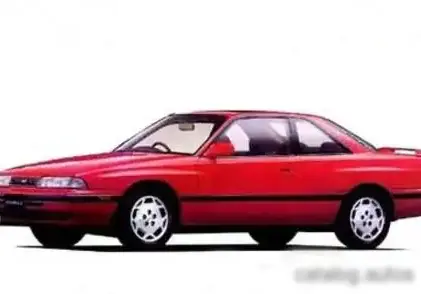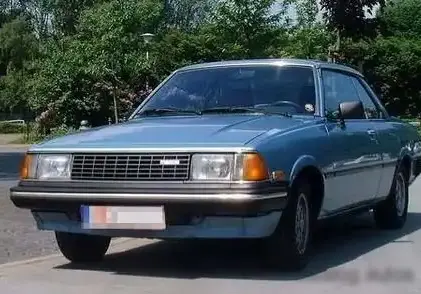
The Mazda Capella 1.8 i (125 hp) was a variant of the Capella (also known as the Mazda Sentia in some markets) produced between 1997 and 2002. Positioned as an entry-level to mid-range offering within the Capella lineup, it provided a balance of affordability and practicality for buyers seeking a comfortable and reliable sedan. The Capella, in its various iterations, served as Mazda’s flagship sedan, competing with models like the Toyota Camry and Honda Accord, primarily in the Japanese domestic market and select export regions. This 1.8L variant aimed to broaden the Capella’s appeal to a wider customer base.
Technical Specifications
| Brand | Mazda |
| Model | Capella |
| Generation | Capella |
| Type (Engine) | 1.8 i (125 Hp) |
| Start of production | 1997 year |
| End of production | 2002 year |
| Powertrain Architecture | Internal Combustion engine |
| Body type | Sedan |
| Seats | 5 |
| Doors | 4 |
| Fuel Type | Petrol (Gasoline) |
| Weight-to-power ratio | 9.7 kg/Hp, 103.3 Hp/tonne |
| Power | 125 Hp @ 6500 rpm |
| Power per litre | 69.5 Hp/l |
| Engine displacement | 1798 cm3 |
| Engine displacement (cu. in.) | 109.72 cu. in. |
| Number of cylinders | 4 |
| Engine configuration | Inline |
| Cylinder Bore | 83 mm |
| Cylinder Bore (in.) | 3.27 in. |
| Piston Stroke | 83.1 mm |
| Piston Stroke (in.) | 3.27 in. |
| Compression ratio | 10.8:1 |
| Number of valves per cylinder | 4 |
| Fuel injection system | Multi-port manifold injection |
| Engine aspiration | Naturally aspirated engine |
| Kerb Weight | 1210 kg |
| Kerb Weight (lbs.) | 2667.59 lbs. |
| Fuel tank capacity | 60 l |
| Fuel tank capacity (US gal) | 15.85 US gal |
| Fuel tank capacity (UK gal) | 13.2 UK gal |
| Length | 4575 mm |
| Length (in.) | 180.12 in. |
| Width | 1695 mm |
| Width (in.) | 66.73 in. |
| Height | 1440 mm |
| Height (in.) | 56.69 in. |
| Wheelbase | 2610 mm |
| Wheelbase (in.) | 102.76 in. |
| Front track | 1475 mm |
| Front track (in.) | 58.07 in. |
| Rear (Back) track | 1480 mm |
| Rear (Back) track (in.) | 58.27 in. |
| Minimum turning circle (turning diameter) | 10 m |
| Minimum turning circle (turning diameter) (ft.) | 32.81 ft. |
| Drivetrain Architecture | The Internal combustion engine (ICE) drives the front wheels of the vehicle. |
| Drive wheel | Front wheel drive |
| Front brakes | Ventilated discs |
| Rear brakes | Drum |
| Tires size | 175/70 R14 |
| Wheel rims size | 5.5J x 14 ET 45 |
Powertrain & Engine Architecture
The heart of the Capella 1.8 i was the F8 engine, an inline four-cylinder, naturally aspirated gasoline engine displacing 1798cc (1.8 liters). This engine utilized a multi-port fuel injection system, delivering fuel directly into the intake ports for improved combustion efficiency. The engine featured a double overhead camshaft (DOHC) valvetrain with four valves per cylinder, contributing to its respectable power output for its size. The compression ratio was set at 10.8:1. The engine was transversely mounted, driving the front wheels. Paired with this engine was a four-speed automatic transmission, offering smooth and convenient gear changes. While not a particularly advanced transmission by modern standards, it was known for its reliability and suitability for everyday driving.
Driving Characteristics
The 125 hp output of the 1.8L engine, coupled with the four-speed automatic transmission, resulted in a driving experience geared towards comfort and fuel efficiency rather than outright performance. Acceleration was adequate for typical urban and highway driving, but it wasn’t a particularly quick car. The automatic transmission’s gear ratios were tuned for smooth transitions and fuel economy, meaning it wasn’t as responsive as the five-speed manual transmission available in other Capella variants. Compared to the higher-output 2.0L engine options, the 1.8L felt noticeably less powerful, especially when fully loaded or climbing hills. However, the automatic transmission made it a more accessible option for drivers who preferred the convenience of not having to shift gears.
Equipment & Trim Levels
The Capella 1.8 i typically came equipped with a reasonable level of standard features. These generally included power windows, power steering, air conditioning, and a basic audio system. Interior upholstery was typically cloth, with options for upgraded materials available. Dashboard configuration was functional and straightforward, prioritizing ease of use. Optional extras could include alloy wheels, a sunroof, and a more advanced audio system with a CD player. The trim level of the 1.8 i often sat in the middle of the Capella range, offering more features than the base models but lacking the luxury appointments of the higher-end trims.
Chassis & Braking
The Capella 1.8 i utilized a front-wheel-drive chassis with independent MacPherson strut suspension in the front and a semi-independent multi-link suspension in the rear. The front brakes were ventilated discs, providing adequate stopping power, while the rear brakes were drum brakes, a cost-saving measure common in this class of vehicle. Stabilizer bars were fitted to both the front and rear axles to reduce body roll during cornering. The suspension tuning was biased towards comfort, providing a relatively smooth ride over uneven surfaces. The 175/70 R14 tires offered a good balance of grip and ride quality.
Market Reception & Comparison
The Mazda Capella 1.8 i was generally well-received as a practical and reliable family sedan. Critics praised its comfortable ride, spacious interior, and fuel efficiency. However, some reviewers noted that its performance was somewhat underwhelming compared to competitors with more powerful engines. In terms of fuel economy, the 1.8L automatic version typically achieved around 25-30 mpg in mixed driving conditions, which was competitive for its time. Compared to the 2.0L variants, the 1.8L offered a lower purchase price and potentially lower running costs due to its smaller engine size. However, the 2.0L models provided significantly more power and a more engaging driving experience.
Legacy
The Mazda Capella 1.8 i, while not the most exciting variant in the lineup, proved to be a durable and dependable vehicle. The F8 engine is known for its longevity and relatively simple maintenance requirements. Today, these cars are becoming increasingly rare, but well-maintained examples can still be found. In the used car market, the 1.8L automatic version is often valued for its affordability and ease of ownership. While it may not appeal to enthusiasts seeking a performance-oriented sedan, it remains a viable option for buyers looking for a reliable and economical mode of transportation. The Capella, as a whole, represents a significant chapter in Mazda’s history, showcasing the company’s commitment to building quality and comfortable vehicles.