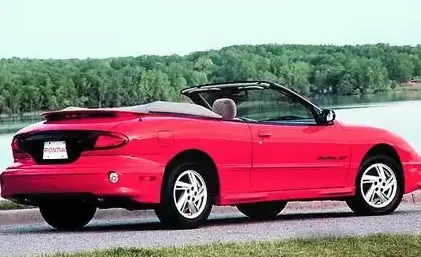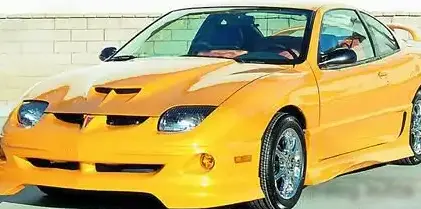
The Pontiac Sunfire Sedan 2.2i, producing 122 horsepower with an automatic transmission, was a mainstay of the compact car segment in North America from 1994 to 1997. Positioned as an entry-level to mid-range offering within the Sunfire lineup, it provided affordable transportation for families and commuters. This generation of Sunfire, built on the GM J-body platform, aimed to balance fuel efficiency, practicality, and a degree of style within a competitive market. The 2.2i automatic variant represented a significant portion of Sunfire sales, appealing to buyers prioritizing ease of use over outright performance.
Technical Specifications
| Brand | Pontiac |
| Model | Sunfire |
| Generation | Sunfire Sedan |
| Type (Engine) | 2.2i (122 Hp) Automatic |
| Start of production | 1994 |
| End of production | 1997 |
| Powertrain Architecture | Internal Combustion engine |
| Body type | Sedan |
| Seats | 5 |
| Doors | 4 |
| Fuel Type | Petrol (Gasoline) |
| Weight-to-power ratio | 10.1 kg/Hp, 98.8 Hp/tonne |
| Weight-to-torque ratio | 7 kg/Nm, 142.5 Nm/tonne |
| Power | 122 Hp @ 5200 rpm |
| Power per litre | 55.7 Hp/l |
| Torque | 176 Nm @ 4000 rpm, 129.81 lb.-ft. @ 4000 rpm |
| Engine layout | Front, Transverse |
| Engine Model/Code | LN2 |
| Engine displacement | 2190 cm3, 133.64 cu. in. |
| Number of cylinders | 4 |
| Engine configuration | Inline |
| Cylinder Bore | 89 mm, 3.5 in. |
| Piston Stroke | 88 mm, 3.46 in. |
| Compression ratio | 9:1 |
| Number of valves per cylinder | 2 |
| Fuel injection system | Multi-port manifold injection |
| Engine aspiration | Naturally aspirated engine |
| Valvetrain | DOHC |
| Engine oil capacity | 3.8 l, 4.02 US qt | 3.34 UK qt |
| Coolant | 9.8 l, 10.36 US qt | 8.62 UK qt |
| Kerb Weight | 1235 kg, 2722.71 lbs |
| Trunk (boot) space – minimum | 370 l, 13.07 cu. ft |
| Fuel tank capacity | 58 l, 15.32 US gal | 12.76 UK gal |
| Length | 4616 mm, 181.73 in |
| Width | 1725 mm, 67.91 in |
| Height | 1393 mm, 54.84 in |
| Wheelbase | 2644 mm, 104.09 in |
| Front track | 1462 mm, 57.56 in |
| Rear (Back) track | 1442 mm, 56.77 in |
| Drivetrain Architecture | The Internal combustion engine (ICE) drives the front wheels of the vehicle. |
| Drive wheel | Front wheel drive |
| Number of gears and type of gearbox | 3 gears, automatic transmission |
| Front suspension | Wishbone |
| Rear suspension | Trailing arm |
| Front brakes | Ventilated discs |
| Rear brakes | Drum |
| Assisting systems | ABS (Anti-lock braking system) |
| Steering type | Steering rack and pinion |
| Power steering | Hydraulic Steering |
| Tires size | 195/65 R15 |
| Wheel rims size | 15 |
Powertrain & Engine Architecture
The heart of the Sunfire 2.2i was the LN2 engine, a 2.2-liter inline-four cylinder powerplant. This engine utilized a multi-port fuel injection system, delivering fuel directly to each intake port for improved combustion efficiency. The engine featured a double overhead camshaft (DOHC) valvetrain, operating two valves per cylinder. This configuration contributed to improved breathing and a broader powerband compared to older single overhead cam designs. The 9:1 compression ratio was a compromise between performance and the ability to run on readily available 87 octane gasoline. Paired with the engine was a 3-speed automatic transmission, a common choice for buyers seeking convenience. This transmission, while not offering the most advanced gear ratios, provided smooth shifts and adequate performance for everyday driving. The automatic transmission was geared towards fuel economy and ease of use, rather than sporty acceleration.
Driving Characteristics
The 122 horsepower and 176 Nm (129.81 lb-ft) of torque delivered by the 2.2i engine and automatic transmission combination resulted in adequate, but not exhilarating, performance. Acceleration from 0 to 60 mph was estimated to be around 10-11 seconds. The automatic transmission’s gear ratios were optimized for fuel efficiency, meaning the engine often felt strained during quick acceleration or when climbing hills. Compared to the available 5-speed manual transmission, the automatic version felt noticeably slower. However, the automatic offered a more relaxed driving experience, particularly in stop-and-go traffic. The power delivery was relatively linear, with peak torque arriving at 4000 rpm. This made it a reasonably tractable engine for daily commuting.
Equipment & Trim Levels
The Sunfire 2.2i Automatic typically came standard with features considered essential for the time, including air conditioning, an AM/FM stereo, cloth upholstery, and power steering. Optional extras included upgraded sound systems, power windows and locks, and a sunroof. Interior trim levels varied, with higher trims offering more comfortable seating materials and additional convenience features. The dashboard layout was functional and straightforward, prioritizing ease of use over aesthetic flair. The base model offered a fairly spartan interior, while higher trims added features like a tilt steering wheel and upgraded door panels.
Chassis & Braking
The Sunfire’s chassis featured an independent front suspension with wishbone components, providing a reasonably comfortable ride. The rear suspension utilized a trailing arm design, which was cost-effective but less sophisticated than fully independent setups. Braking duties were handled by ventilated discs at the front and drum brakes at the rear. An Anti-lock Braking System (ABS) was available, and became increasingly common as standard equipment towards the end of the production run. The steering system employed a rack and pinion setup with hydraulic power assist, offering responsive steering feel. The 195/65 R15 tires provided adequate grip for most driving conditions.
Market Reception & Comparison
The Sunfire 2.2i Automatic was generally well-received as an affordable and practical compact car. Critics noted its fuel efficiency and comfortable ride, but also pointed out its lack of sporty handling and somewhat underwhelming acceleration. Compared to other trims in the Sunfire lineup, such as the higher-output 2.3-liter engine, the 2.2i automatic was positioned as the more economical and user-friendly option. It competed directly with other compact sedans like the Ford Escort, Honda Civic, and Toyota Corolla. In terms of fuel economy, the 2.2i automatic typically achieved around 24 mpg city and 32 mpg highway, which was competitive for its class.
Legacy
The Pontiac Sunfire 2.2i Automatic, while not a performance icon, remains a relatively common sight on used car lots today. The LN2 engine is known for its durability and relatively simple maintenance requirements. However, like many vehicles of this era, they are prone to rust, particularly in regions with harsh winters. The automatic transmission, if properly maintained, can provide reliable service for many years. The Sunfire 2.2i Automatic represents a snapshot of affordable American motoring in the mid-1990s, offering a blend of practicality, fuel efficiency, and convenience that appealed to a broad range of buyers. Its simplicity and relatively low cost of ownership continue to make it an attractive option for budget-conscious drivers.