
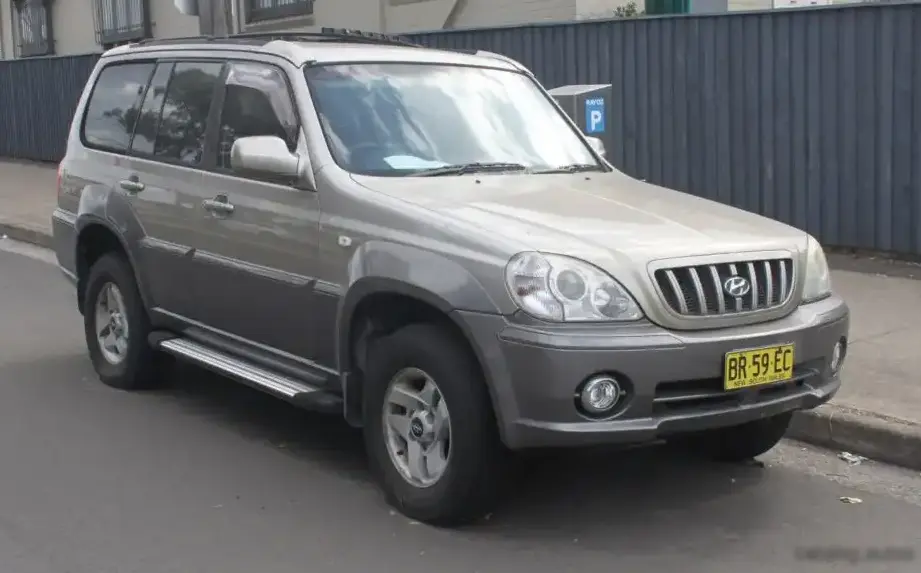
The Hyundai Terracan, produced between 2001 and 2006, was Hyundai’s initial foray into the mid-size SUV market, primarily aimed at competing with established Japanese and American offerings. While not widely sold in the United States, it found a niche in markets like Europe, Australia, and parts of Asia. The Terracan represented Hyundai’s ambition to expand its global footprint and offer a more robust, body-on-frame SUV. This article focuses specifically on the 3.5-liter V6 variant, producing 200 horsepower, paired with a four-speed automatic transmission – a configuration that represented the upper echelon of the Terracan lineup in many regions.
Technical Specifications
| Brand | Hyundai |
| Model | Terracan |
| Generation | Terracan |
| Type (Engine) | 3.5 V6 (200 Hp) |
| Start of production | 2001 |
| End of production | 2006 |
| Powertrain Architecture | Internal Combustion engine |
| Body type | SUV |
| Seats | 5 |
| Doors | 5 |
| Fuel Type | Petrol (Gasoline) |
| Weight-to-power ratio | 10.4 kg/Hp, 96.4 Hp/tonne |
| Weight-to-torque ratio | 6.6 kg/Nm, 150.8 Nm/tonne |
| Power | 200 Hp @ 5500 rpm |
| Power per litre | 57.2 Hp/l |
| Torque | 313 Nm @ 3500 rpm (230.86 lb.-ft. @ 3500 rpm) |
| Engine layout | Front, Longitudinal |
| Engine Model/Code | Sigma / G6CU |
| Engine displacement | 3497 cm3 (213.4 cu. in.) |
| Number of cylinders | 6 |
| Engine configuration | V-engine |
| Cylinder Bore | 93 mm (3.66 in.) |
| Piston Stroke | 85.8 mm (3.38 in.) |
| Number of valves per cylinder | 4 |
| Fuel injection system | Multi-port manifold injection |
| Engine aspiration | Naturally aspirated engine |
| Valvetrain | DOHC |
| Engine oil capacity | 4.3 l (4.54 US qt | 3.78 UK qt) |
| Coolant | 11 l (11.62 US qt | 9.68 UK qt) |
| Kerb Weight | 2075 kg (4574.59 lbs.) |
| Fuel tank capacity | 75 l (19.81 US gal | 16.5 UK gal) |
| Length | 4710 mm (185.43 in.) |
| Width | 1860 mm (73.23 in.) |
| Height | 1795 mm (70.67 in.) |
| Wheelbase | 2750 mm (108.27 in.) |
| Front track | 1530 mm (60.24 in.) |
| Rear (Back) track | 1530 mm (60.24 in.) |
| Drive wheel | All wheel drive (4×4) |
| Number of gears and type of gearbox | 4 gears, automatic transmission |
| Front suspension | Double wishbone |
| Rear suspension | Coil spring |
| Front brakes | Ventilated discs |
| Rear brakes | Disc |
| Assisting systems | ABS (Anti-lock braking system) |
| Power steering | Hydraulic Steering |
| Tires size | 255/65 R16 |
Powertrain & Engine Architecture
The heart of this Terracan variant is the Hyundai Sigma engine, specifically the G6CU code. This 3.5-liter, naturally aspirated V6 engine utilizes a 60-degree V-angle configuration. It features a double overhead camshaft (DOHC) valvetrain with four valves per cylinder, contributing to its respectable power output for its time. The engine employs multi-point fuel injection, delivering fuel directly to each intake port. The G6CU is known for its relatively simple design, which aids in maintainability, but it lacks the sophistication of more modern engine technologies like variable valve timing. The four-speed automatic transmission, while providing convenience, is a relatively dated design compared to the five or six-speed automatics becoming common in the early 2000s. It’s a conventional torque converter automatic, prioritizing smooth shifts over outright performance.
Driving Characteristics
The 200 horsepower and 230 lb-ft of torque offered by the 3.5L V6 and automatic transmission combination provided adequate, but not exhilarating, performance. Acceleration was reasonable for everyday driving, but the Terracan wasn’t designed for rapid sprints. The automatic transmission’s gear ratios were tuned for comfort and fuel economy rather than aggressive acceleration. Compared to the available manual transmission, the automatic resulted in a noticeable decrease in responsiveness. The Terracan’s all-wheel-drive system, typically a part-time system, offered improved traction in slippery conditions, making it suitable for light off-road use, but it wasn’t a dedicated off-roader. The vehicle’s substantial weight (over 4,500 lbs) contributed to a somewhat ponderous feel, especially when fully loaded.
Equipment & Trim Levels
The 3.5 V6 automatic typically represented a mid-to-upper trim level within the Terracan range. Standard features often included air conditioning, power windows and locks, a basic audio system, and alloy wheels. Higher-spec versions could add features like leather upholstery, a sunroof, and upgraded audio systems. Safety features were relatively basic for the era, typically including ABS brakes and driver/passenger airbags. The interior design was functional but lacked the refinement of some competitors. The dashboard layout was straightforward, with easy-to-use controls. The rear seats offered reasonable space for passengers, and the cargo area was ample for a mid-size SUV.
Chassis & Braking
The Terracan utilized a traditional body-on-frame construction, providing robustness and durability. The front suspension employed a double wishbone setup, while the rear suspension featured coil springs. This configuration aimed to balance ride comfort with handling stability. The braking system consisted of ventilated discs at the front and solid discs at the rear. While adequate for normal driving conditions, the braking performance wasn’t particularly noteworthy. The hydraulic power steering provided reasonable assistance, but the steering feel was somewhat vague. The 255/65 R16 tires offered a good compromise between comfort and grip.
Market Reception & Comparison
The Terracan 3.5 V6 automatic received mixed reviews. Critics generally praised its spacious interior, robust construction, and competitive price point. However, it was often criticized for its dated automatic transmission, somewhat unrefined ride quality, and relatively basic interior appointments. Compared to rivals like the Toyota 4Runner or Mitsubishi Pajero, the Terracan lacked the same level of sophistication and brand recognition. Fuel economy was also a concern, with the V6 engine consuming a significant amount of fuel, especially under load. The 1.8L and diesel variants offered better fuel economy, but at the expense of performance. The 3.5 V6 was aimed at buyers who prioritized space, durability, and all-wheel-drive capability over sporty handling or fuel efficiency.
Legacy
The Hyundai Terracan, while not a runaway success, played a crucial role in establishing Hyundai as a credible player in the global SUV market. The 3.5 V6 automatic powertrain, while not known for exceptional reliability issues, requires regular maintenance to prevent problems. Common issues include oil leaks, sensor failures, and wear and tear on the automatic transmission. Today, the Terracan is a relatively affordable used SUV, appealing to buyers seeking a rugged and spacious vehicle for basic transportation or light off-road adventures. Its simplicity and relatively low running costs make it an attractive option for those willing to overlook its dated technology and lack of modern features. Parts availability can be a challenge in some regions, but a dedicated community of owners helps to keep these vehicles on the road.
