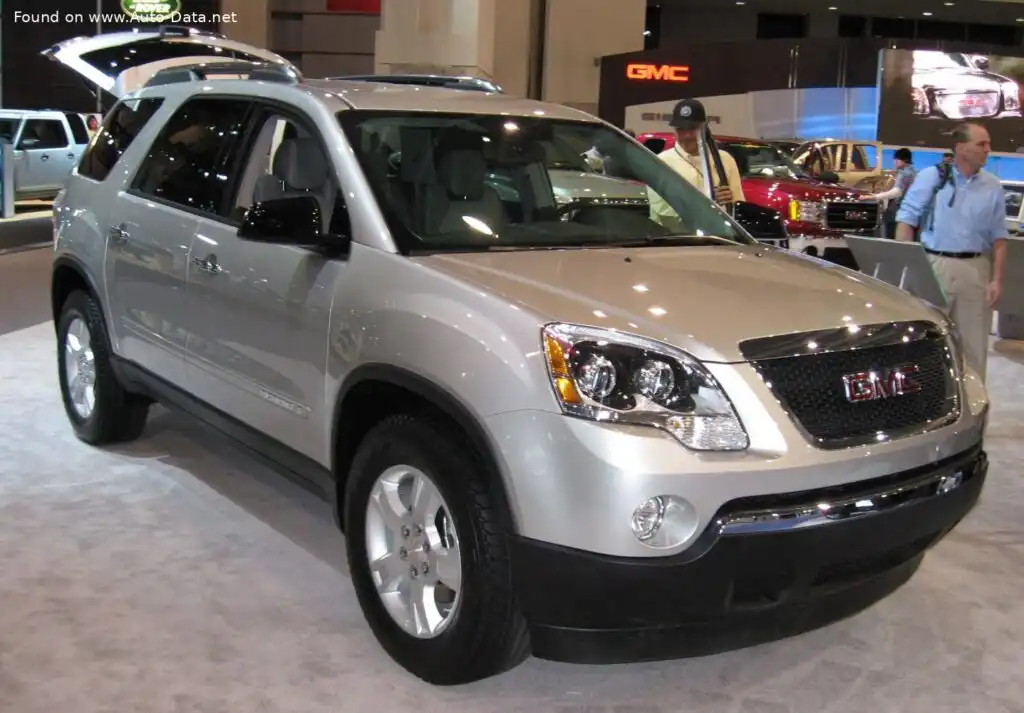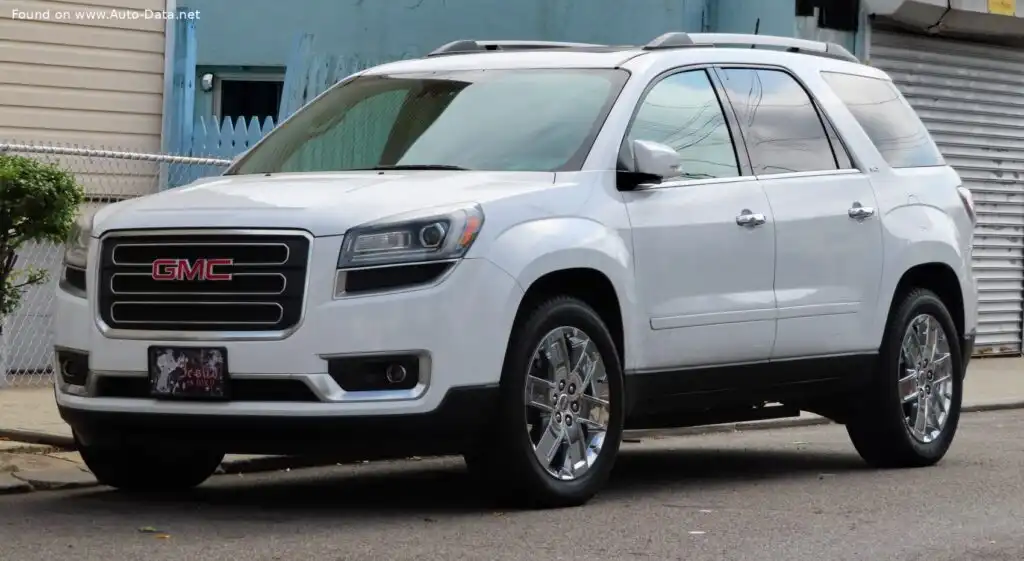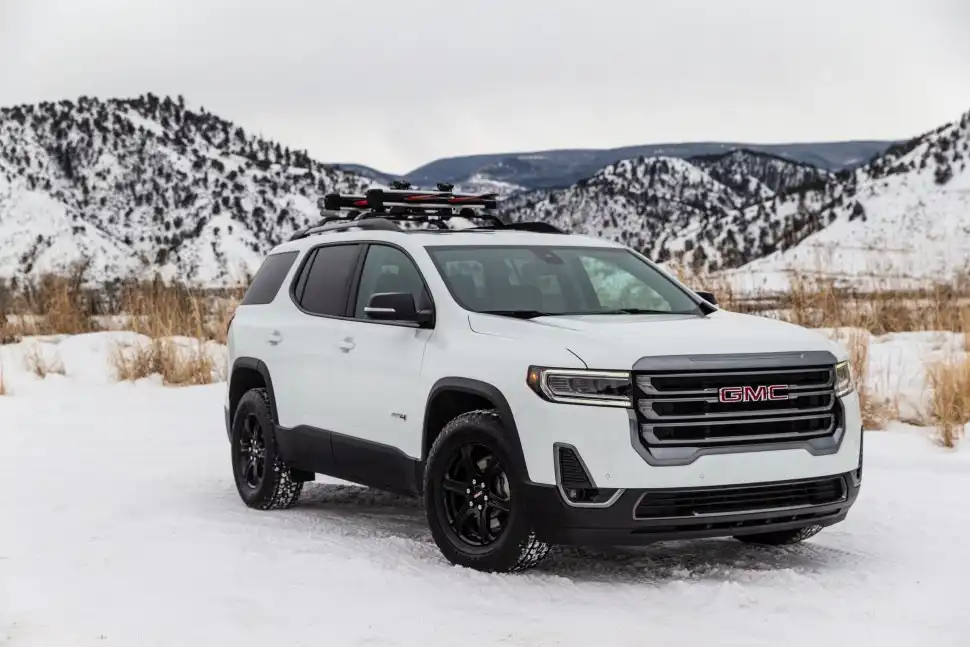
The GMC Acadia II, specifically the facelifted version introduced in 2020 with the 2.0-liter turbocharged engine producing 230 horsepower and paired with an automatic transmission and all-wheel drive, represents a significant iteration of GMC’s mid-size crossover SUV. Produced from 2020 through 2023, this variant occupied a key position in the Acadia lineup, offering a balance between fuel efficiency, respectable performance, and family-friendly practicality. It was part of the second-generation Acadia (internally designated as the 2020 facelift), which aimed to address some criticisms of the initial release regarding interior space and refinement. This configuration aimed to appeal to buyers seeking a versatile SUV without the higher price tag or fuel consumption of the larger V6 engine option.
Technical Specifications
| Brand | GMC |
| Model | Acadia |
| Generation | Acadia II (facelift 2020) |
| Type (Engine) | 2.0 (230 Hp) AWD Automatic |
| Start of production | 2020 |
| End of production | 2023 |
| Powertrain Architecture | Internal Combustion engine |
| Body type | SUV, Crossover |
| Seats | 7 |
| Doors | 5 |
| Fuel Type | Petrol (Gasoline) |
| Weight-to-power ratio | 8.4 kg/Hp, 119.7 Hp/tonne |
| Weight-to-torque ratio | 5.5 kg/Nm, 182.2 Nm/tonne |
| Power | 230 Hp @ 5000 rpm |
| Power per litre | 115.8 Hp/l |
| Torque | 350 Nm @ 1500-4000 rpm (258.15 lb.-ft. @ 1500-4000 rpm) |
| Engine Model/Code | LSY |
| Engine displacement | 1986 cm3 (121.19 cu. in.) |
| Number of cylinders | 4 |
| Engine configuration | Inline |
| Cylinder Bore | 82.8 mm (3.26 in.) |
| Piston Stroke | 92.2 mm (3.63 in.) |
| Number of valves per cylinder | 4 |
| Fuel injection system | Direct injection |
| Engine aspiration | Turbocharger, Intercooler |
| Valvetrain | DOHC |
| Engine oil capacity | 5 l (5.28 US qt | 4.4 UK qt) |
| Coolant | 9 l (9.51 US qt | 7.92 UK qt) |
| Kerb Weight | 1921 kg (4235.08 lbs.) |
| Trunk (boot) space – minimum | 362 l (12.78 cu. ft.) |
| Trunk (boot) space – maximum | 2237 l (79 cu. ft.) |
| Fuel tank capacity | 83 l (21.93 US gal | 18.26 UK gal) |
| Permitted trailer load with brakes (12%) | 680 kg (1499.14 lbs.) |
| Length | 4917 mm (193.58 in.) |
| Width | 1915 mm (75.39 in.) |
| Height | 1676 mm (65.98 in.) |
| Wheelbase | 2858 mm (112.52 in.) |
| Front track | 1638 mm (64.49 in.) |
| Rear (Back) track | 1638 mm (64.49 in.) |
| Ride height (ground clearance) | 183 mm (7.2 in.) |
| Minimum turning circle (turning diameter) | 11.8 m (38.71 ft.) |
| Drive wheel | All wheel drive (4×4) |
| Number of gears and type of gearbox | 9 gears, automatic transmission Hydra-Matic T65 |
| Front suspension | Independent, type McPherson with coil spring and anti-roll bar |
| Rear suspension | Independent multi-link spring suspension with stabilizer |
| Front brakes | Ventilated discs, 320 mm |
| Rear brakes | Ventilated discs, 315 mm |
| Assisting systems | ABS (Anti-lock braking system) |
| Steering type | Steering rack and pinion |
| Power steering | Electric Steering |
| Tires size | 245/65 R17; 255/65 R17; 235/65 R18; 235/55 R20 |
| Wheel rims size | 17; 18; 20 |
Powertrain & Engine Architecture
At the heart of this Acadia variant lies the LSY 2.0-liter turbocharged inline-four cylinder engine. This engine utilizes direct injection technology, a crucial component in achieving both power and efficiency. The direct injection system precisely meters fuel directly into the combustion chamber, optimizing the air-fuel mixture for improved combustion. The engine also features a twin-scroll turbocharger with an intercooler, which minimizes turbo lag and maximizes boost pressure across a wider RPM range. The valvetrain employs a Dual Overhead Camshaft (DOHC) design, allowing for precise control of valve timing and lift, further enhancing engine performance. The engine is mated to a sophisticated nine-speed automatic transmission, the Hydra-Matic T65. This transmission offers a wide range of gear ratios, contributing to both fuel economy and responsive acceleration. The all-wheel-drive system is primarily front-wheel drive, engaging the rear wheels as needed for enhanced traction.
Driving Characteristics
The 230 horsepower and 350 lb-ft of torque delivered by the 2.0-liter turbo engine provide adequate, though not exhilarating, performance for the Acadia. Acceleration from a standstill to 60 mph typically takes around 8-9 seconds. The nine-speed automatic transmission generally shifts smoothly, but some drivers have noted occasional hesitation or hunting for the right gear, particularly during highway passing maneuvers. Compared to the available 3.6-liter V6 engine, the 2.0-liter turbo offers less overall power and acceleration. However, the turbo engine’s torque curve provides a usable amount of power at lower RPMs, making it suitable for everyday driving. The automatic transmission, while convenient, doesn’t offer the same level of driver engagement as the optional manual transmission found in some other Acadia trims.
Equipment & Trim Levels
The 2.0-liter AWD Automatic Acadia typically came standard with a respectable array of features. These included tri-zone automatic climate control, an 8-inch touchscreen infotainment system with Apple CarPlay and Android Auto compatibility, keyless entry, and a rearview camera. Higher trim levels, such as the AT4 and Denali, added features like leather upholstery, heated and ventilated front seats, a premium audio system, and advanced safety technologies like adaptive cruise control and lane-keeping assist. Optional extras included a panoramic sunroof, a rear-seat entertainment system, and a navigation system.
Chassis & Braking
The Acadia II utilizes an independent suspension system at all four corners. The front suspension employs a McPherson strut design with coil springs and an anti-roll bar, while the rear suspension features a multi-link setup with a stabilizer bar. This suspension configuration provides a comfortable ride quality, absorbing bumps and irregularities in the road surface effectively. Braking duties are handled by ventilated discs on all four wheels, providing adequate stopping power. The Acadia also incorporates an Anti-lock Braking System (ABS) to prevent wheel lockup during hard braking. The steering system is an electric power-assisted rack and pinion setup, offering precise and responsive steering feel.
Market Reception & Comparison
The 2.0-liter turbo Acadia was generally well-received by critics as a fuel-efficient and practical option within the mid-size crossover segment. Fuel economy ratings typically hovered around 22 mpg city and 29 mpg highway, making it more economical than the V6-powered models. However, some reviewers noted that the engine could feel strained when fully loaded or when climbing steep hills. Compared to competitors like the Honda Pilot and Toyota Highlander, the Acadia offered a more stylish design and a more spacious third-row seat, but it didn’t quite match the overall refinement or reliability of those established rivals.
Legacy
The LSY 2.0-liter turbo engine, while not without its quirks, has proven to be a relatively reliable powertrain in the Acadia. Common issues reported by owners include occasional oil consumption and potential problems with the timing chain. However, these issues are not widespread and can often be addressed with routine maintenance. On the used car market, the 2020-2023 Acadia 2.0T AWD Automatic represents a good value proposition for buyers seeking a spacious and fuel-efficient SUV. Its combination of features, practicality, and reasonable running costs makes it a compelling option in the used crossover market.