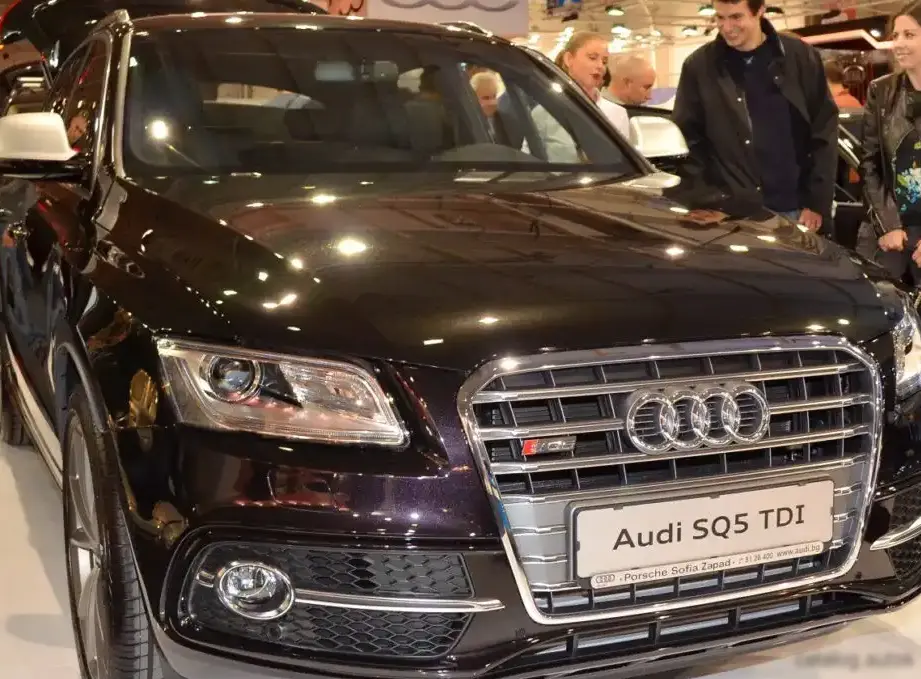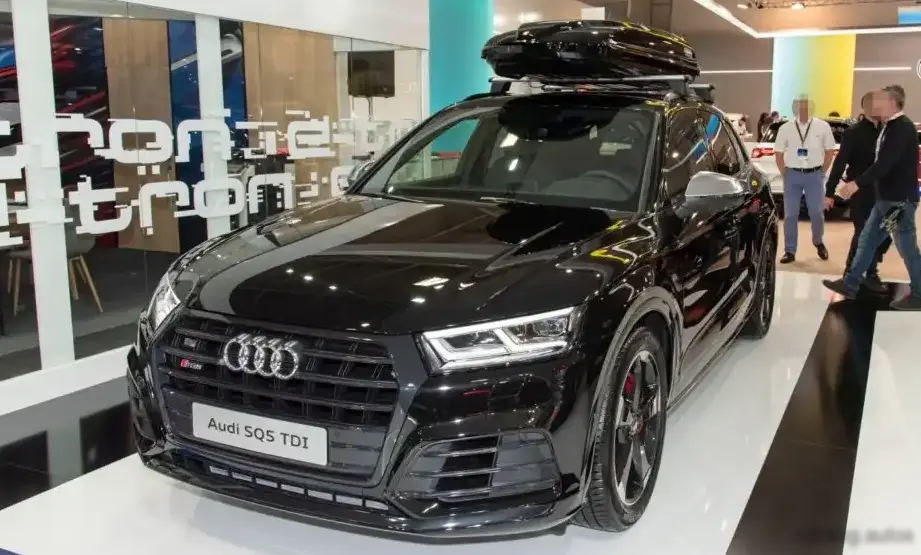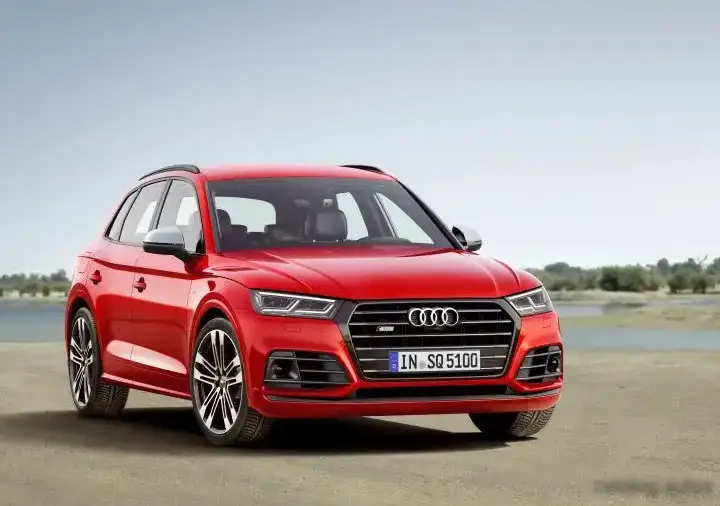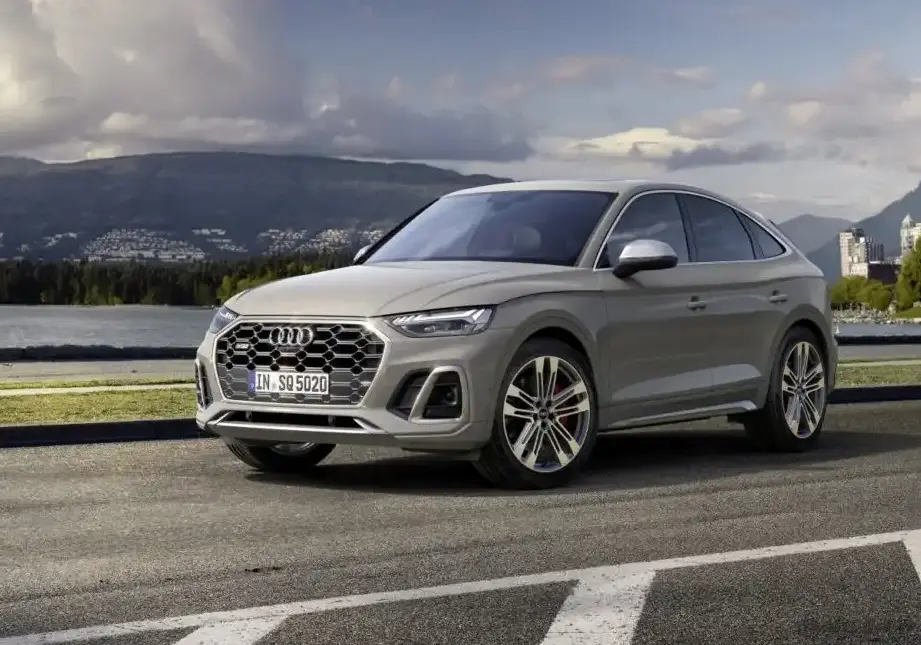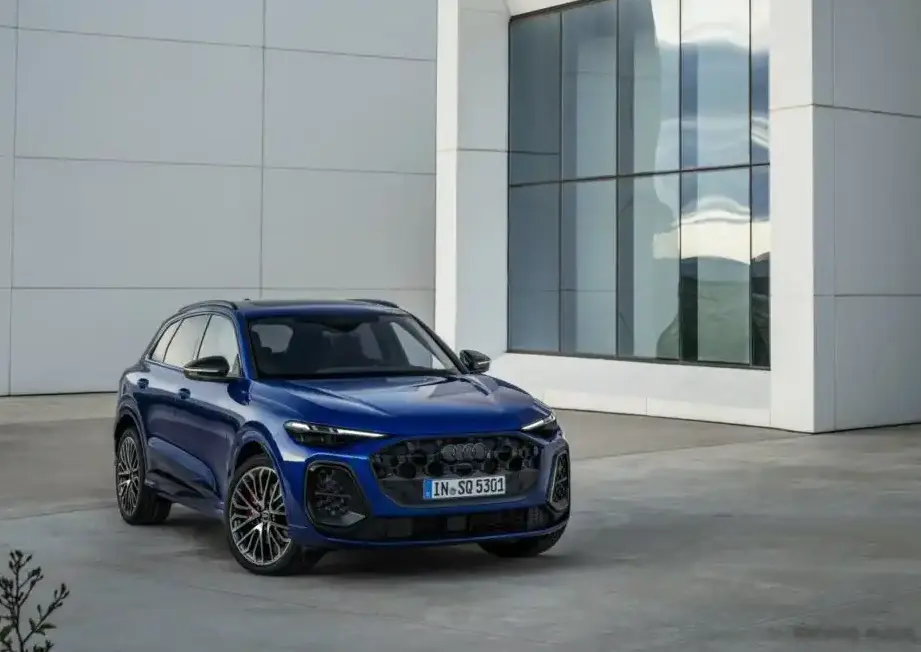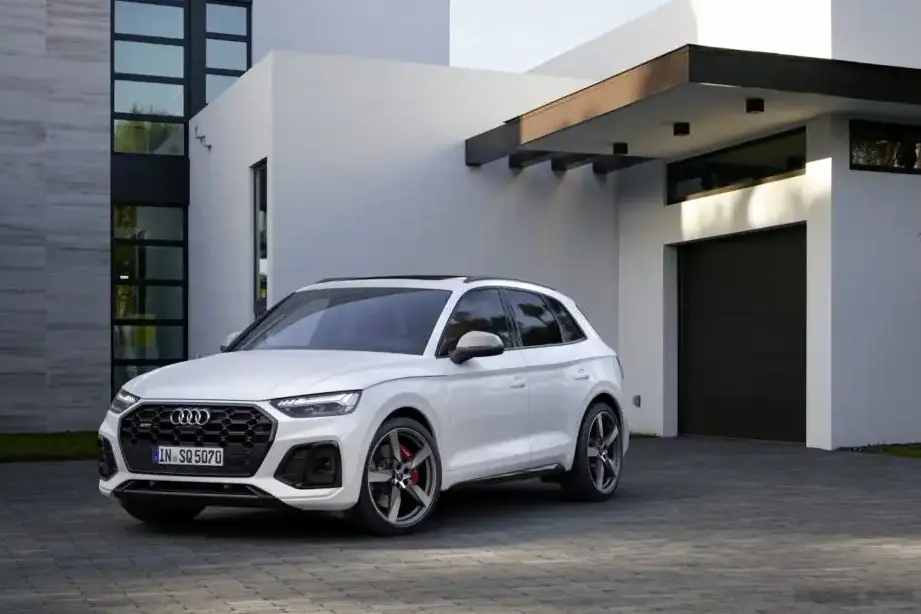
The Audi SQ5 II (FY, facelift 2020) 3.0 TFSI V6 (354 Hp) quattro tiptronic represents a performance-oriented iteration of Audi’s popular compact luxury SUV. Introduced with the facelift in 2020 and continuing through the 2024 model year, this variant slots into the upper echelon of the SQ5 lineup, offering a significant step up in power and driving dynamics compared to the base 2.0 TFSI models. It builds upon the foundation of the FY generation SQ5, which itself was launched in 2017, and is part of the broader Volkswagen Group MLB Evo platform shared with models like the Porsche Macan and Audi Q7.
Technical Specifications
| Brand | Audi |
| Model | SQ5 |
| Generation | SQ5 II (FY, facelift 2020) |
| Type (Engine) | 3.0 TFSI V6 (354 Hp) quattro tiptronic |
| Start of production | 2020 |
| End of production | 2024 |
| Powertrain Architecture | Internal Combustion engine |
| Body type | SUV |
| Seats | 5 |
| Doors | 5 |
| Fuel consumption (economy) – urban (EPA) | 12.4-13.1 l/100 km (19 – 18 US mpg, 22.8 – 21.6 UK mpg, 8.1 – 7.6 km/l) |
| Fuel consumption (economy) – extra urban (EPA) | 9.8 l/100 km (24 US mpg, 28.8 UK mpg, 10.2 km/l) |
| Fuel consumption (economy) – combined (EPA) | 11.2-11.8 l/100 km (21 – 19.9 US mpg, 25.2 – 23.9 UK mpg, 8.9 – 8.5 km/l) |
| Fuel Type | Petrol (Gasoline) |
| Acceleration 0 – 100 km/h | 4.9 sec |
| Acceleration 0 – 62 mph | 4.9 sec |
| Acceleration 0 – 60 mph | 4.7 sec |
| Maximum speed | 250 km/h (155.34 mph), Electronically limited |
| Emission standard | Euro 6 |
| Weight-to-power ratio | 5.3 kg/Hp, 189.8 Hp/tonne |
| Weight-to-torque ratio | 3.7 kg/Nm, 268.1 Nm/tonne |
| Power | 354 Hp @ 5400-6400 rpm |
| Power per litre | 118.2 Hp/l |
| Torque | 500 Nm @ 1370-4500 rpm (368.78 lb.-ft. @ 1370-4500 rpm) |
| Engine layout | Front, Longitudinal |
| Engine Model/Code | EA839 / CWGD |
| Engine displacement | 2995 cm3 (182.77 cu. in.) |
| Number of cylinders | 6 |
| Engine configuration | V-engine |
| Cylinder Bore | 84.5 mm (3.33 in.) |
| Piston Stroke | 89 mm (3.5 in.) |
| Compression ratio | 11.2:1 |
| Number of valves per cylinder | 4 |
| Fuel injection system | Direct injection |
| Engine aspiration | Twin-scroll turbo, Intercooler |
| Valvetrain | DOHC |
| Engine oil capacity | 7.3 l (7.71 US qt | 6.42 UK qt) |
| Coolant | 10 l (10.57 US qt | 8.8 UK qt) |
| Kerb Weight | 1865-2130 kg (4111.62 – 4695.85 lbs.) |
| Trunk (boot) space – minimum | 510 l (18.01 cu. ft.) |
| Trunk (boot) space – maximum | 1510 l (53.33 cu. ft.) |
| Fuel tank capacity | 70 l (18.49 US gal | 15.4 UK gal) |
| Max. roof load | 75 kg (165.35 lbs.) |
| Permitted trailer load with brakes (12%) | 1996 kg (4400.43 lbs.) |
| Length | 4682 mm (184.33 in.) |
| Width | 1893 mm (74.53 in.) |
| Width including mirrors | 2140 mm (84.25 in.) |
| Height | 1635 mm (64.37 in.) |
| Wheelbase | 2824 mm (111.18 in.) |
| Front track | 1624 mm (63.94 in.) |
| Rear (Back) track | 1612 mm (63.46 in.) |
| Front overhang | 910 mm (35.83 in.) |
| Rear overhang | 948 mm (37.32 in.) |
| Drag coefficient (Cd) | 0.33 |
| Minimum turning circle (turning diameter) | 11.8 m (38.71 ft.) |
| Drivetrain Architecture | The Internal combustion engine (ICE) drives permanently the four wheels of the vehicle. |
| Drive wheel | All wheel drive (4×4) |
| Number of gears and type of gearbox | 8 gears, automatic transmission tiptronic |
| Front suspension | Coil spring, Independent multi-link suspension, Transverse stabilizer, Air Suspension – Optional |
| Rear suspension | Independent multi-link spring suspension with stabilizer, Air Suspension – Optional |
| Front brakes | Ventilated discs, 350 mm |
| Rear brakes | Ventilated discs, 330 mm |
| Assisting systems | ABS (Anti-lock braking system) |
| Steering type | Steering rack and pinion |
| Power steering | Electric Steering |
| Tires size | 255/45 R20; 255/40 R21 |
| Wheel rims size | 8J x 20; 8.5J x 21 |
INTRODUCTION
The SQ5 II (FY) facelift, specifically the 3.0 TFSI V6 with the tiptronic transmission, represents a compelling blend of performance, luxury, and practicality. Produced from 2020 to 2024, this model year saw refinements to the exterior styling, interior technology, and powertrain calibration. Positioned as the performance variant of the Q5 range, it caters to buyers seeking a more engaging driving experience without sacrificing the comfort and versatility expected of a luxury SUV. The ‘quattro’ designation signifies Audi’s renowned all-wheel-drive system, providing enhanced traction and stability in various driving conditions.
Powertrain & Engine Architecture
At the heart of the SQ5 II (FY) facelift lies the EA839 3.0-liter V6 engine, internally designated as the CWGD code. This engine is a direct-injection, turbocharged powerplant featuring a single twin-scroll turbocharger and an intercooler. The engine utilizes a DOHC (Dual Overhead Camshaft) valvetrain with four valves per cylinder. Direct injection ensures precise fuel delivery, optimizing combustion efficiency and power output. The 8-speed tiptronic automatic transmission is a torque-converter type, known for its smooth shifts and responsiveness. It features a wider gear spread than earlier iterations, contributing to both improved acceleration and fuel economy. The transmission is electronically controlled and offers manual shift capability via steering wheel-mounted paddles.
Driving Characteristics
The 354 horsepower and 368.78 lb-ft of torque delivered by the 3.0 TFSI V6, coupled with the quick-shifting tiptronic transmission and quattro all-wheel drive, result in a 0-60 mph time of around 4.7 seconds. The engine provides a broad torque curve, offering strong acceleration across the rev range. While not as overtly aggressive as some dedicated performance SUVs, the SQ5 delivers a refined and confident driving experience. The tiptronic transmission is well-matched to the engine’s characteristics, providing smooth upshifts and downshifts. Compared to the 2.0 TFSI models, the V6 offers significantly more power and a more substantial exhaust note. Against the diesel-powered SQ5 variants (like the TDI), the 3.0 TFSI prioritizes responsiveness and a more linear power delivery, though the TDI typically offers superior fuel economy.
Equipment & Trim Levels
The SQ5 II (FY) facelift 3.0 TFSI typically came standard with a high level of equipment, including leather upholstery, a panoramic sunroof, a premium sound system, and a comprehensive suite of driver-assistance features such as adaptive cruise control, lane-keeping assist, and automatic emergency braking. Optional extras included upgraded leather packages, a head-up display, and a virtual cockpit digital instrument cluster. The interior design featured aluminum trim accents and sport seats with the S-line logo. The infotainment system, featuring a touchscreen display, provided access to navigation, smartphone integration (Apple CarPlay and Android Auto), and various vehicle settings.
Chassis & Braking
The SQ5 II (FY) features a sophisticated suspension system designed to balance comfort and handling. The standard suspension utilizes coil springs and independent multi-link setups for both the front and rear axles, along with a transverse stabilizer bar. An optional air suspension system was available, offering adjustable ride height and damping characteristics. Braking duties are handled by ventilated discs on all four wheels, with larger rotors (350mm front, 330mm rear) compared to the standard Q5. The ABS (Anti-lock Braking System) and electronic stability control systems work in conjunction to provide confident braking performance and enhanced stability.
Market Reception & Comparison
The SQ5 II (FY) facelift was generally well-received by automotive critics, who praised its powerful engine, refined ride quality, and luxurious interior. Comparisons were frequently drawn to rivals such as the Porsche Macan, BMW X3 M40i, and Mercedes-AMG GLC 43. While the SQ5 offered a compelling package, some reviewers noted that its driving dynamics weren’t quite as sharp as those of the Macan. Fuel economy, while respectable for a performance SUV, was a common point of discussion, with combined figures typically ranging from 21-19.9 US mpg. The V6 variant commanded a premium price over the 2.0 TFSI models, reflecting its increased performance and standard equipment.
Legacy
The EA839 3.0 TFSI V6 engine, in general, has proven to be a relatively reliable powerplant, although preventative maintenance is crucial. Common issues reported include carbon buildup on the intake valves (requiring periodic cleaning) and potential oil consumption. The 8-speed tiptronic transmission has also demonstrated good durability, but fluid changes should be performed according to the manufacturer’s recommendations. On the used car market, the SQ5 II (FY) facelift 3.0 TFSI V6 holds its value well, appealing to buyers seeking a well-rounded and capable luxury performance SUV. Its blend of power, comfort, and practicality ensures its continued desirability for years to come.