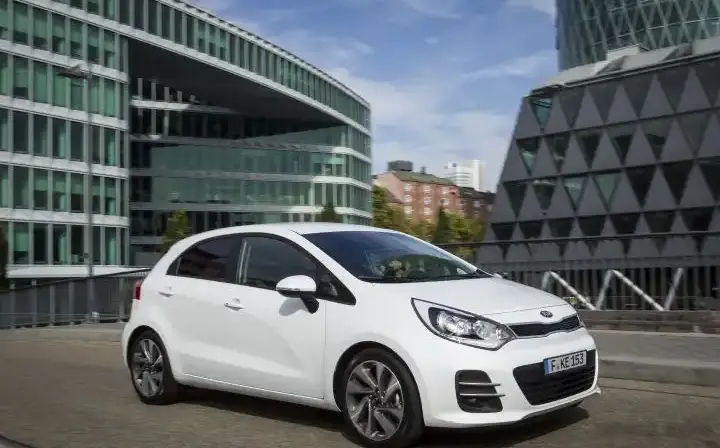
The Kia Rio III Hatchback, specifically the UB facelift model produced from 2015 to 2017, represented a significant step forward for Kia in the subcompact car segment. Among the various engine and transmission options available, the 1.4 CRDI (90 hp) variant paired with a six-speed manual transmission occupied a crucial position as a fuel-efficient and practical choice for European and Asian markets. This model aimed to balance affordability with reasonable performance and modern features, appealing to buyers seeking a cost-effective daily driver. It was positioned as a core offering within the Rio III range, sitting below the more powerful petrol variants and above the base-level trims.
Technical Specifications
| Brand | Kia |
| Model | Rio |
| Generation | Rio III Hatchback (UB, facelift 2015) |
| Type (Engine) | 1.4 CRDI (90 Hp) ISG |
| Start of production | 2015 |
| End of production | 2017 |
| Powertrain Architecture | Internal Combustion engine |
| Body type | Hatchback |
| Seats | 5 |
| Doors | 5 |
| Fuel consumption (urban) | 4.4 l/100 km (61.9 US mpg, 74.3 UK mpg, 26.3 km/l) |
| Fuel consumption (extra urban) | 3.4 l/100 km (69.2 US mpg, 83.1 UK mpg, 29.4 km/l) |
| Fuel consumption (combined) | 3.8 l/100 km (61.9 US mpg, 74.3 UK mpg, 26.3 km/l) |
| CO2 emissions | 98 g/km |
| Fuel Type | Diesel |
| Acceleration 0 – 100 km/h | 13.9 sec |
| Acceleration 0 – 62 mph | 13.9 sec |
| Acceleration 0 – 60 mph | 13.2 sec |
| Maximum speed | 169 km/h (105.01 mph) |
| Emission standard | Euro 6 |
| Weight-to-power ratio | 13 kg/Hp, 76.7 Hp/tonne |
| Weight-to-torque ratio | 5.3 kg/Nm, 187.4 Nm/tonne |
| Power | 90 Hp @ 4000 rpm |
| Power per litre | 64.5 Hp/l |
| Torque | 220 Nm @ 1750-2750 rpm (162.26 lb.-ft. @ 1750-2750 rpm) |
| Engine layout | Front, Transverse |
| Engine Model/Code | D4FC |
| Engine displacement | 1396 cm3 (85.19 cu. in.) |
| Number of cylinders | 4 |
| Engine configuration | Inline |
| Cylinder Bore | 75 mm (2.95 in.) |
| Piston Stroke | 79 mm (3.11 in.) |
| Compression ratio | 17:1 |
| Number of valves per cylinder | 4 |
| Fuel injection system | Diesel Commonrail |
| Engine aspiration | Turbocharger, Intercooler |
| Engine oil capacity | 5.3 l (5.6 US qt | 4.66 UK qt) |
| Coolant capacity | 6.6 l (6.97 US qt | 5.81 UK qt) |
| Kerb Weight | 1174-1254 kg (2588.23 – 2764.6 lbs.) |
| Max. weight | 1690 kg (3725.81 lbs.) |
| Max load | 436-516 kg (961.22 – 1137.59 lbs.) |
| Trunk (boot) space – minimum | 288 l (10.17 cu. ft.) |
| Trunk (boot) space – maximum | 923 l (32.6 cu. ft.) |
| Fuel tank capacity | 43 l (11.36 US gal | 9.46 UK gal) |
| Max. roof load | 70 kg (154.32 lbs.) |
| Permitted trailer load with brakes (12%) | 1100 kg (2425.08 lbs.) |
| Permitted trailer load without brakes | 450 kg (992.08 lbs.) |
| Permitted towbar download | 50 kg (110.23 lbs.) |
| Length | 4050 mm (159.45 in.) |
| Width | 1720 mm (67.72 in.) |
| Width including mirrors | 1985 mm (78.15 in.) |
| Height | 1455 mm (57.28 in.) |
| Wheelbase | 2570 mm (101.18 in.) |
| Front track | 1507-1520 mm (59.33 – 59.84 in.) |
| Rear (Back) track | 1511-1525 mm (59.49 – 60.04 in.) |
| Front overhang | 810 mm (31.89 in.) |
| Rear overhang | 670 mm (26.38 in.) |
| Minimum turning circle | 10.5 m (34.45 ft.) |
| Drivetrain | Front wheel drive |
| Number of gears | 6 |
| Gearbox type | Manual transmission |
| Front suspension | Independent, type McPherson with coil spring and anti-roll bar |
| Rear suspension | Semi-independent, coil spring |
| Front brakes | Ventilated discs |
| Rear brakes | Disc |
| Assisting systems | ABS (Anti-lock braking system) |
| Steering type | Steering rack and pinion |
| Power steering | Electric Steering |
| Tires size | 185/65 R15; 195/55 R16; 205/45 R17 |
| Wheel rims size | 5.5J x 15; 6.0J x 16; 6.5J x 17 |
INTRODUCTION
The Kia Rio III (UB) facelift, launched in 2015, represented a mid-cycle refresh of the popular subcompact. The 1.4 CRDI variant, producing 90 horsepower, was a key component of the lineup, particularly in European and Asian markets where diesel engines were favored for their fuel efficiency. The “ISG” designation indicates the inclusion of Kia’s Idle Stop & Go system, further enhancing fuel economy by automatically shutting off the engine when the vehicle is stationary. This trim level aimed to provide a balance between running costs and practicality, making it a popular choice for urban commuters and first-time car buyers.
Powertrain & Engine Architecture
The heart of this Rio variant is the Kia D4FC 1.4-liter common-rail diesel engine. This engine is a four-cylinder, inline configuration, utilizing a turbocharger with an intercooler to boost power and efficiency. The D4FC engine benefits from a sophisticated common-rail direct injection system, delivering fuel directly into the cylinders at extremely high pressure for optimized combustion. The engine’s 17:1 compression ratio is typical for diesel engines, contributing to its thermal efficiency. The six-speed manual transmission was the standard offering for this trim, providing a good balance between fuel economy and driver control. The gear ratios were tuned for maximizing fuel efficiency at highway speeds while still providing adequate acceleration in urban environments.
Driving Characteristics
The 90 hp output and 220 Nm of torque delivered by the 1.4 CRDI engine provided adequate, though not exhilarating, performance. Acceleration from 0-60 mph took around 13.2 seconds, and top speed was approximately 105 mph. The engine’s peak torque, available from 1750-2750 rpm, meant that the car felt reasonably responsive in everyday driving situations, particularly when overtaking. Compared to the higher-output petrol versions of the Rio III, the 1.4 CRDI felt less eager to rev, but offered significantly better fuel economy. The manual transmission allowed for precise control, but the gear ratios were geared towards efficiency rather than sporty performance.
Equipment & Trim Levels
The 1.4 CRDI ISG trim typically included standard features such as air conditioning, power windows, central locking, and a basic audio system with USB connectivity. Safety features included ABS, airbags, and stability control. Higher trim levels offered options like alloy wheels, a touchscreen infotainment system, rear parking sensors, and a leather-wrapped steering wheel. Interior upholstery was typically cloth, with a functional and durable design. The dashboard layout was straightforward and user-friendly, prioritizing practicality over luxury.
Chassis & Braking
The Rio III utilized a McPherson strut front suspension and a semi-independent coil spring rear suspension. This setup provided a comfortable ride quality, suitable for everyday driving. Front brakes were ventilated discs, while rear brakes were solid discs, providing adequate stopping power for the vehicle’s weight and performance. The electric power steering offered light and easy steering, making it ideal for maneuvering in urban environments. Stabilizer bars were included on both axles to reduce body roll during cornering.
Market Reception & Comparison
The Kia Rio III 1.4 CRDI ISG was generally well-received by automotive critics for its fuel efficiency and affordability. It was often praised as a practical and reliable choice for budget-conscious buyers. Compared to other subcompact diesels, such as the Volkswagen Polo or Peugeot 208, the Rio offered a competitive price point and a generous warranty. However, some critics noted that the engine could be somewhat noisy and that the interior lacked the refinement of some of its rivals. Fuel economy figures consistently ranked among the best in its class.
Legacy
The Kia Rio III 1.4 CRDI ISG has proven to be a relatively reliable powertrain in the used car market. The D4FC engine is known for its durability, provided it has been properly maintained. Common issues include diesel particulate filter (DPF) problems, particularly on vehicles that have primarily been used for short journeys. However, with regular servicing and careful driving, these engines can provide many years of trouble-free operation. Today, these Rios represent an affordable and economical option for those seeking a practical and fuel-efficient city car.