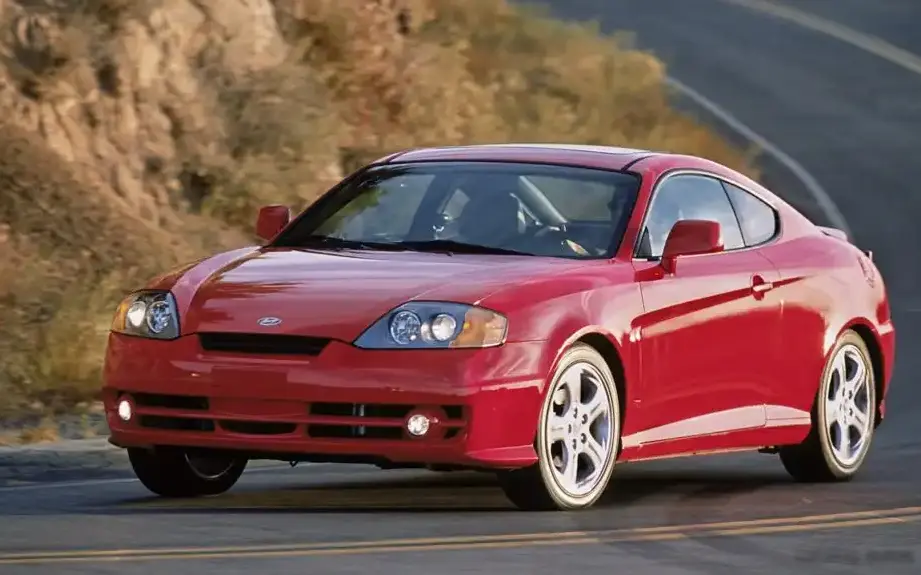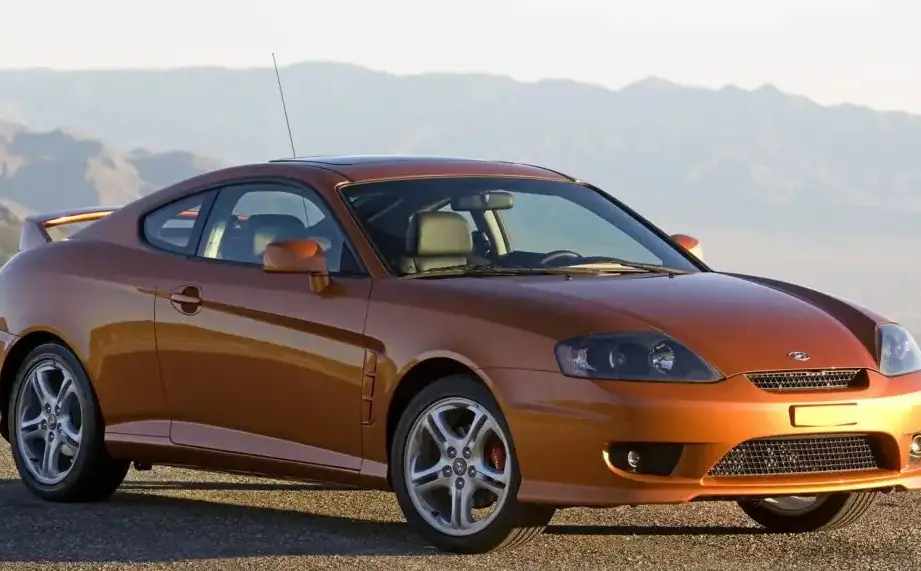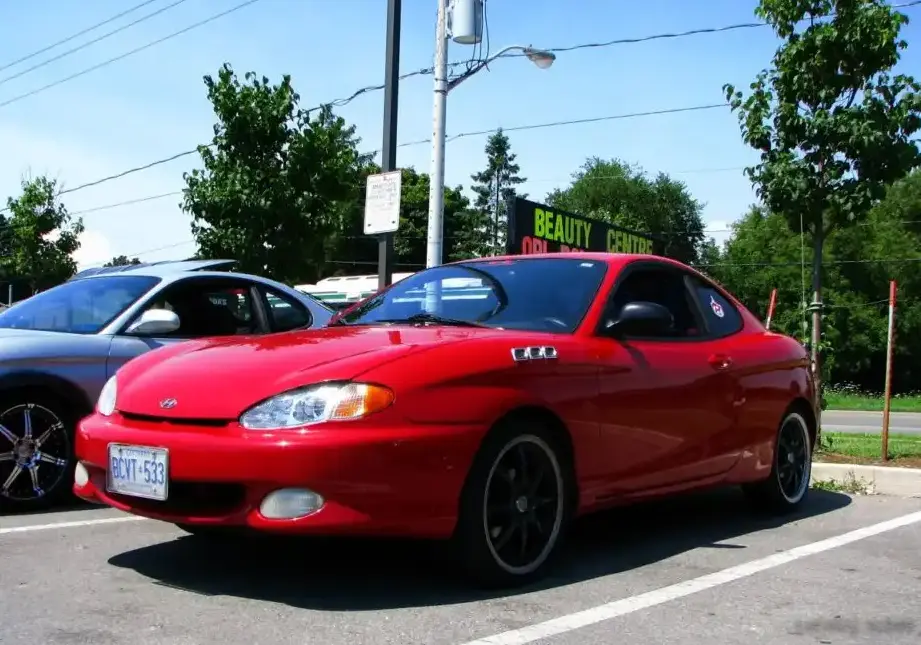
The Hyundai Tiburon, launched in 1996, represented a significant departure for the South Korean automaker, marking its first serious foray into the sporty coupe market. The first generation, internally designated RD, was produced from 1996 to 2002, with the 1.8L 16V automatic variant being offered from 1998 to 2001. This model aimed to provide an affordable and stylish alternative to established Japanese and European coupes, particularly in the North American market where it gained a moderate following. The 1.8L automatic trim occupied a middle ground in the Tiburon lineup, offering a balance between performance and economy, appealing to buyers who prioritized comfort and ease of use over outright speed.
Technical Specifications
| Brand | Hyundai |
| Model | Tiburon |
| Generation | Tiburon I (RD) |
| Type (Engine) | 1.8 16V (132 Hp) Automatic |
| Start of production | 1998 |
| End of production | 2001 |
| Powertrain Architecture | Internal Combustion engine |
| Body type | Coupe |
| Seats | 5 |
| Doors | 3 |
| Fuel consumption (urban) | 10.7 l/100 km (22 US mpg) |
| Fuel consumption (extra urban) | 7.8 l/100 km (30.2 US mpg) |
| Fuel Type | Petrol (Gasoline) |
| Maximum speed | 190 km/h (118.06 mph) |
| Weight-to-power ratio | 9.4 kg/Hp |
| Weight-to-torque ratio | 7.5 kg/Nm |
| Power | 132 Hp @ 6000 rpm |
| Power per litre | 73.5 Hp/l |
| Torque | 166 Nm @ 5000 rpm (122.44 lb.-ft. @ 5000 rpm) |
| Engine layout | Front, Longitudinal |
| Engine Model/Code | Beta / G4GM |
| Engine displacement | 1796 cm3 (109.6 cu. in.) |
| Number of cylinders | 4 |
| Engine configuration | Inline |
| Cylinder Bore | 82 mm (3.23 in.) |
| Piston Stroke | 85 mm (3.35 in.) |
| Compression ratio | 10:1 |
| Number of valves per cylinder | 4 |
| Fuel injection system | Multi-port manifold injection |
| Engine aspiration | Naturally aspirated engine |
| Valvetrain | DOHC |
| Engine oil capacity | 4 l (4.23 US qt | 3.52 UK qt) |
| Coolant capacity | 6 l (6.34 US qt | 5.28 UK qt) |
| Kerb Weight | 1240 kg (2733.73 lbs.) |
| Max. weight | 1600 kg (3527.4 lbs.) |
| Max load | 360 kg (793.66 lbs.) |
| Trunk (boot) space – maximum | 360 l (12.71 cu. ft.) |
| Fuel tank capacity | 55 l (14.53 US gal | 12.1 UK gal) |
| Length | 4340 mm (170.87 in.) |
| Width | 1730 mm (68.11 in.) |
| Height | 1310 mm (51.57 in.) |
| Wheelbase | 2480 mm (97.64 in.) |
| Front track | 1470 mm (57.87 in.) |
| Rear (Back) track | 1450 mm (57.09 in.) |
| Drivetrain Architecture | Front wheel drive |
| Number of gears and type of gearbox | 4 gears, automatic transmission |
| Front suspension | Spring Strut |
| Rear suspension | Coil spring |
| Front brakes | Ventilated discs |
| Rear brakes | Disc |
| Steering type | Steering rack and pinion |
| Power steering | Hydraulic Steering |
| Tires size | 195/60 R14 |
| Wheel rims size | 14 |
Powertrain & Engine Architecture
The heart of the 1998-2001 Tiburon 1.8L automatic is the Hyundai Beta engine, specifically the G4GM code. This 1.8-liter inline-four cylinder engine utilizes a double overhead camshaft (DOHC) valvetrain with four valves per cylinder, contributing to its relatively high output for its displacement. Fuel delivery is managed by a multi-port fuel injection system, ensuring efficient combustion. The engine produces 132 horsepower at 6000 rpm and 166 Nm (122.44 lb-ft) of torque at 5000 rpm. The engine’s longitudinal mounting was a notable design choice, contributing to the car’s front-wheel-drive layout and balance. Paired with the engine is a four-speed automatic transmission. This transmission, while providing smooth shifts, was not known for its sportiness or quick responsiveness compared to manual options.
Driving Characteristics
The 1.8L automatic Tiburon offered a comfortable and predictable driving experience. Acceleration was adequate for everyday driving, but noticeably slower than the higher-output 2.0L models or those equipped with a manual transmission. The automatic transmission’s gear ratios were tuned for fuel efficiency and smooth cruising rather than aggressive performance. The car felt relatively stable in corners, but lacked the sharp handling characteristics of more focused sports coupes. The power delivery was linear, making it easy to modulate, but the engine could feel strained when pushed hard, particularly during uphill climbs or overtaking maneuvers. Compared to the 2.0L versions, the 1.8L automatic traded performance for improved fuel economy and a more relaxed driving experience.
Equipment & Trim Levels
The 1.8L automatic Tiburon typically came standard with features such as air conditioning, power windows and locks, and an AM/FM stereo. Interior upholstery was usually cloth, with a relatively simple dashboard layout. Optional extras included a sunroof, upgraded sound system, and alloy wheels. The trim level generally sat in the mid-range of the Tiburon lineup, offering a step up from the base models in terms of features and comfort, but lacking the premium appointments of the higher-spec 2.0L trims. The interior design, while functional, was not particularly luxurious, reflecting the car’s affordable price point.
Chassis & Braking
The Tiburon RD utilized a front strut and rear coil spring suspension setup. The suspension was tuned for a balance between ride comfort and handling. Front brakes were ventilated discs, providing adequate stopping power, while rear brakes were solid discs. The steering was rack and pinion with hydraulic power assistance, offering reasonable precision and feedback. The 1.8L models typically featured slightly smaller tires (195/60 R14) compared to the higher-performance trims, contributing to a softer ride but less grip. Stabilizer bars were present at both the front and rear, helping to reduce body roll during cornering.
Market Reception & Comparison
The 1.8L automatic Tiburon received mixed reviews from automotive critics. While praised for its styling and affordability, it was often criticized for its lack of performance and the somewhat unrefined nature of the automatic transmission. Fuel economy was generally considered good for a coupe of its size. Compared to competitors like the Honda Civic Coupe and Toyota Celica, the Tiburon offered a more aggressive design but lacked the same level of refinement and driving dynamics. Within the Tiburon lineup, the 1.8L automatic appealed to buyers who prioritized comfort and ease of use over sporty performance, while the 2.0L models attracted those seeking a more engaging driving experience.
Legacy
The Hyundai Tiburon, particularly the first generation, played a crucial role in establishing Hyundai as a credible player in the automotive market. The 1.8L automatic variant, while not the most sought-after trim, remains a relatively affordable and reliable option in the used car market. The Beta engine, while not without its quirks, proved to be reasonably durable with proper maintenance. Common issues include oil leaks and occasional sensor failures. Today, the Tiburon RD is gaining a following among enthusiasts who appreciate its unique styling and affordability, and it represents a significant milestone in Hyundai’s history as the company moved towards building more desirable and competitive vehicles.