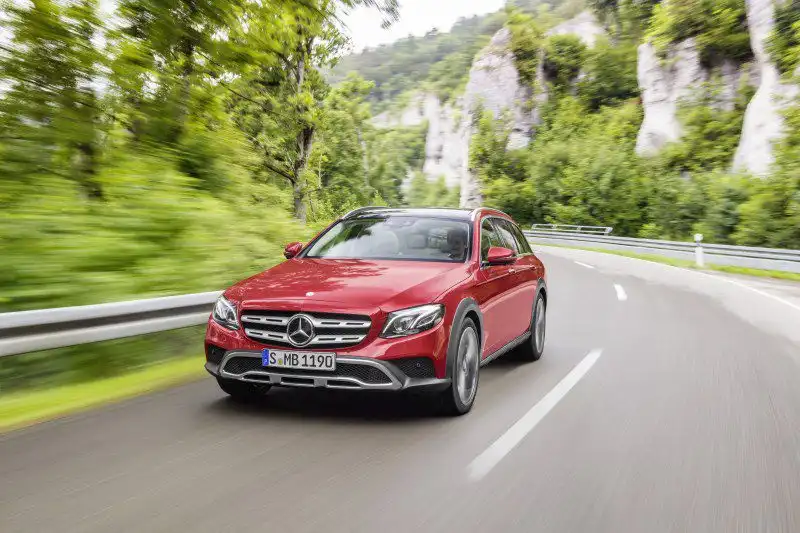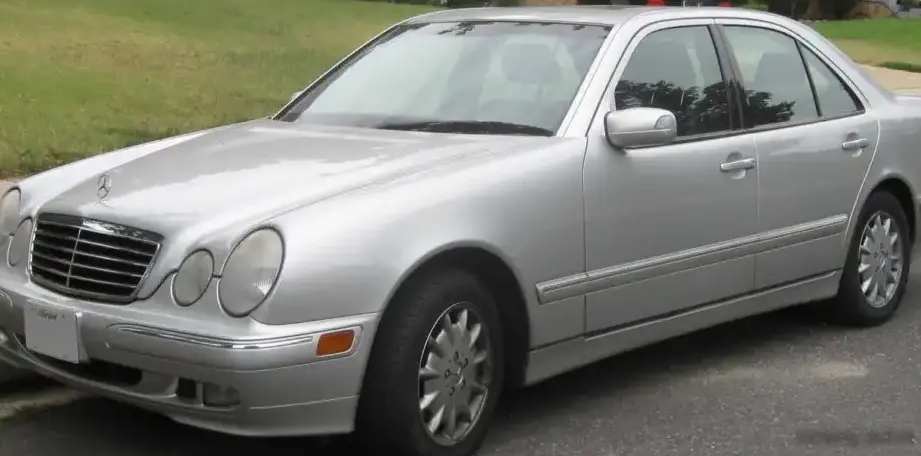
The Mercedes-Benz E 320, part of the W210 facelift generation produced from July 1999 to March 2002, represented a significant offering in the mid-size luxury sedan segment. Positioned as a step up from the E 280 and below the high-performance E 55 AMG, the E 320 aimed to balance refinement, performance, and technology. The W210 facelift, introduced in 1999, addressed criticisms of the earlier models with revised styling, improved build quality, and enhanced features, solidifying the E-Class’s reputation as a benchmark in its class. This variant was primarily sold in Europe and North America, catering to buyers seeking a comfortable and capable executive car.
Technical Specifications
| Brand | Mercedes-Benz |
| Model | E-class |
| Generation | E-class (W210, facelift 1999) |
| Type (Engine) | E 320 (224 Hp) Automatic |
| Start of production | July, 1999 |
| End of production | March, 2002 |
| Powertrain Architecture | Internal Combustion engine |
| Body type | Sedan |
| Seats | 5 |
| Doors | 4 |
| Fuel consumption (urban) | 15.2 l/100 km (15.5 US mpg, 18.6 UK mpg, 6.6 km/l) |
| Fuel consumption (extra urban) | 7.6 l/100 km (30.9 US mpg, 37.2 UK mpg, 13.2 km/l) |
| Fuel consumption (combined) | 10.3 l/100 km (22.8 US mpg, 27.4 UK mpg, 9.7 km/l) |
| Fuel Type | Petrol (Gasoline) |
| Acceleration 0 – 100 km/h | 7.9 sec |
| Acceleration 0 – 62 mph | 7.9 sec |
| Acceleration 0 – 60 mph | 7.5 sec |
| Maximum speed | 238 km/h (147.89 mph) |
| Weight-to-power ratio | 7.3 kg/Hp, 137.4 Hp/tonne |
| Weight-to-torque ratio | 5.2 kg/Nm, 193.3 Nm/tonne |
| Power | 224 Hp @ 5600 rpm |
| Power per litre | 70 Hp/l |
| Torque | 315 Nm @ 3000 rpm (232.33 lb.-ft. @ 3000 rpm) |
| Engine layout | Front, Longitudinal |
| Engine Model/Code | M 112 E 32 / 112.941 |
| Engine displacement | 3199 cm3 (195.21 cu. in.) |
| Number of cylinders | 6 |
| Engine configuration | V-engine |
| Cylinder Bore | 89.9 mm (3.54 in.) |
| Piston Stroke | 84 mm (3.31 in.) |
| Compression ratio | 10:1 |
| Number of valves per cylinder | 3 |
| Fuel injection system | Multi-port manifold injection |
| Engine aspiration | Naturally aspirated engine |
| Valvetrain | SOHC |
| Engine oil capacity | 8 l (8.45 US qt | 7.04 UK qt) |
| Coolant | 10 l (10.57 US qt | 8.8 UK qt) |
| Kerb Weight | 1630 kg (3593.53 lbs.) |
| Max. weight | 2160 kg (4761.98 lbs.) |
| Max load | 530 kg (1168.45 lbs.) |
| Trunk (boot) space – minimum | 520 l (18.36 cu. ft.) |
| Fuel tank capacity | 80 l (21.13 US gal | 17.6 UK gal) |
| Length | 4818 mm (189.69 in.) |
| Width | 1799 mm (70.83 in.) |
| Height | 1438 mm (56.61 in.) |
| Wheelbase | 2833 mm (111.54 in.) |
| Front track | 1534 mm (60.39 in.) |
| Rear (Back) track | 1528 mm (60.16 in.) |
| Drag coefficient (Cd) | 0.30 |
| Drivetrain Architecture | The Internal combustion engine (ICE) drives the rear wheels of the vehicle. |
| Drive wheel | Rear wheel drive |
| Number of gears and type of gearbox | 5 gears, automatic transmission |
| Front suspension | Wishbone |
| Rear suspension | Independent multi-link spring suspension with stabilizer |
| Front brakes | Ventilated discs |
| Rear brakes | Disc |
| Assisting systems | ABS (Anti-lock braking system) |
| Steering type | Steering rack and pinion |
| Power steering | Hydraulic Steering |
| Tires size | 215/55 R16 |
| Wheel rims size | 7.5J x 16 |
Powertrain & Engine Architecture
The heart of the E 320 was the M112 E 32 engine, a 3.2-liter naturally aspirated V6. This engine was a significant departure from previous Mercedes-Benz inline-six designs, representing a move towards more modern V-engine configurations. The M112 featured all-aluminum construction, including the cylinder heads and block, contributing to a lighter overall weight. It employed a SOHC valvetrain with three valves per cylinder (two intake, one exhaust), and a multi-port fuel injection system. The engine code 112.941 specifically denotes this configuration. The 5-speed automatic transmission (typically the 722.6) was standard, chosen for its smooth operation and suitability for luxury touring. This transmission featured torque converter lockup for improved fuel efficiency at cruising speeds.
Driving Characteristics
The E 320 Automatic offered a refined and comfortable driving experience. While not overtly sporty, the 224 horsepower and 315 Nm (232 lb-ft) of torque provided ample power for effortless cruising and confident overtaking. The automatic transmission, while smooth, wasn’t particularly quick to downshift, resulting in a slightly less responsive feel compared to the available manual transmission. The gear ratios were tuned for comfort and fuel economy rather than outright performance. Acceleration from 0-60 mph took around 7.5 to 7.9 seconds, respectable for the era but noticeably slower than the E 55 AMG. The rear-wheel drive configuration provided a balanced feel, although traction could be limited in adverse weather conditions.
Equipment & Trim Levels
The E 320 typically came well-equipped, reflecting its position in the Mercedes-Benz lineup. Standard features included automatic climate control, power windows and locks, a premium sound system, and leather upholstery. Wood trim was common throughout the interior, adding to the luxurious ambiance. Optional extras included a sunroof, navigation system, heated seats, and upgraded audio options. The E 320 often served as a platform for various packages, such as the Sport Package, which added features like sport suspension, alloy wheels, and unique interior trim.
Chassis & Braking
The W210 E-Class featured a robust chassis with independent suspension all around. The front suspension utilized a wishbone design, while the rear employed a multi-link setup with a stabilizer bar. This configuration provided a comfortable ride and good handling characteristics. The E 320 typically came equipped with ventilated disc brakes at the front and solid discs at the rear. Anti-lock braking system (ABS) was standard, enhancing safety and control. The steering was a hydraulic power-assisted rack and pinion system, offering precise and responsive steering feel.
Market Reception & Comparison
The E 320 was generally well-received by automotive critics. It was praised for its comfortable ride, refined interior, and strong engine. However, some reviewers noted that the automatic transmission could feel sluggish at times, and the handling wasn’t as sharp as some of its competitors, such as the BMW 5 Series. Compared to the E 280, the E 320 offered a significant performance upgrade. Against the E 55 AMG, it provided a more balanced and fuel-efficient option, albeit with less outright power. Fuel economy was reasonable for a V6 engine of this size, averaging around 22.8 US mpg combined.
Legacy
The M112 engine family, including the 3.2-liter variant found in the E 320, proved to be remarkably reliable. With proper maintenance, these engines can accumulate high mileage without major issues. The 722.6 automatic transmission is also known for its durability. Today, the W210 E 320 represents a relatively affordable entry point into Mercedes-Benz ownership. While finding well-maintained examples can be challenging, these cars offer a classic luxury experience and a robust powertrain that can provide years of reliable service. Common issues include age-related wear and tear on suspension components, electrical gremlins, and potential oil leaks. However, parts availability is generally good, and the car’s relatively simple construction makes it accessible for DIY repairs.