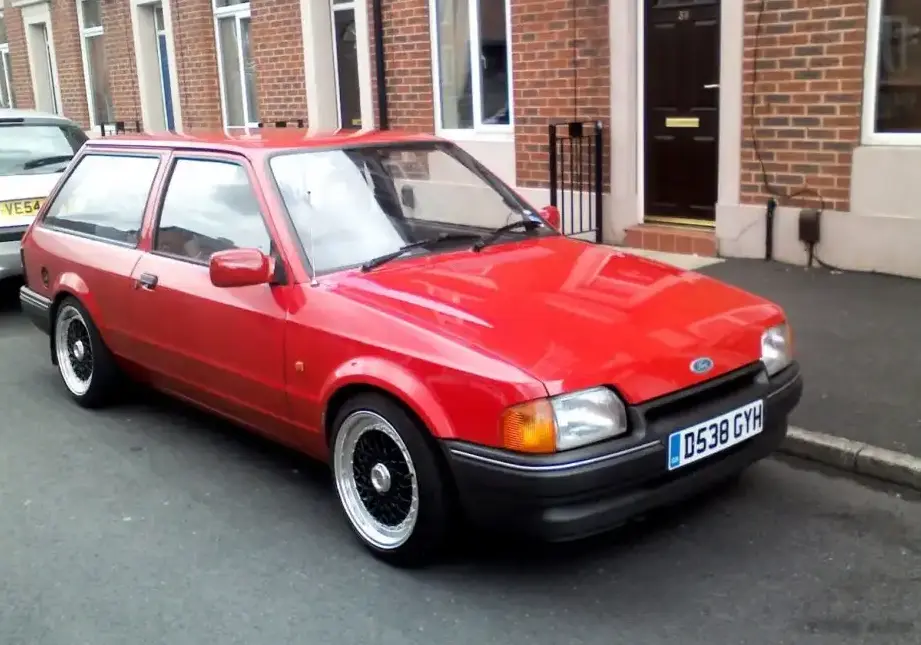
The Ford Escort IV Turnier 1.6 D, produced between 1986 and 1989, represented a practical and economical offering within the fourth generation Escort range (AWF, AVF). This station wagon, or ‘estate’ as it was commonly known in Europe, was designed to appeal to buyers prioritizing fuel efficiency and load-carrying capacity over outright performance. Positioned as the entry-level diesel variant of the Turnier, it served as a workhorse for families and businesses alike. The Escort IV generation itself was a significant update to the popular Escort line, offering improved aerodynamics, a more spacious interior, and a wider range of engine options compared to its predecessor.
Technical Specifications
| Brand | Ford |
| Model | Escort |
| Generation | Escort IV Turnier (AWF, AVF) |
| Type (Engine) | 1.6 D (54 Hp) |
| Start of production | 1986 |
| End of production | 1989 |
| Powertrain Architecture | Internal Combustion engine |
| Body type | Station wagon (estate) |
| Fuel Type | Diesel |
| Power | 54 Hp |
| Engine Model/Code | LTC |
| Engine aspiration | Naturally aspirated engine |
| Engine oil capacity | 5 l (5.28 US qt | 4.4 UK qt) |
| Coolant capacity | 9.3 l (9.83 US qt | 8.18 UK qt) |
Powertrain & Engine Architecture
The heart of the Escort IV Turnier 1.6 D was the Ford LTC diesel engine. This 1.6-liter, naturally aspirated engine was a direct-injection diesel, a common configuration for European diesel engines of the era. The ‘LTC’ code designates a specific iteration of Ford’s diesel powerplant. Unlike modern common-rail diesels, the LTC engine utilized a mechanical fuel injection pump, delivering fuel directly into the combustion chamber under high pressure. This system, while less refined than later technologies, was known for its durability and relative simplicity. The engine featured a cast iron block and head, contributing to its robust nature. The valvetrain consisted of a single overhead camshaft operating two valves per cylinder. The engine’s modest 54 horsepower output was achieved at a relatively low engine speed, prioritizing torque over peak power. The engine was typically paired with a four or five-speed manual transmission, although a three-speed automatic transmission was also available, albeit less common with this engine.
Driving Characteristics
The driving experience in the Escort IV Turnier 1.6 D was characterized by its practicality and economy rather than excitement. With only 54 horsepower on tap, acceleration was leisurely, and overtaking required careful planning. The engine produced a usable amount of torque at low RPMs, making it suitable for hauling loads and navigating hilly terrain, but it lacked the responsiveness of the gasoline-powered Escorts. The available automatic transmission, while offering convenience, further diminished performance due to its relatively wide gear ratios and inherent efficiency losses. The gear ratios were optimized for fuel economy, meaning the engine often operated at higher RPMs during highway cruising than would be ideal for maximizing power. Compared to the 1.6-liter gasoline versions, the diesel offered significantly better fuel economy, but at the cost of refinement and performance. The manual transmission versions provided a more engaging driving experience, allowing the driver to better utilize the available torque.
Equipment & Trim Levels
The Escort IV Turnier 1.6 D typically represented the base trim level within the Turnier range. Standard equipment generally included cloth upholstery, a basic instrument cluster, and manual windows and door locks. The interior was functional and durable, designed to withstand the rigors of daily use. Optional extras included a sunroof, upgraded stereo systems, and more comfortable seating. The exterior trim was relatively understated, with black plastic bumpers and steel wheels being common features. Higher trim levels, such as the Ghia, offered more luxurious appointments, including upgraded interior materials, alloy wheels, and additional convenience features. The 1.6 D was often chosen by fleet buyers and those prioritizing value for money, so it was less frequently seen with many optional extras.
Chassis & Braking
The Escort IV Turnier’s chassis featured independent front suspension with MacPherson struts and a rear suspension utilizing a solid axle with leaf springs. This configuration provided a reasonable balance between ride comfort and handling, although it wasn’t particularly sporty. The Turnier’s longer wheelbase compared to the hatchback version contributed to a more stable ride. Braking systems varied depending on the market and year of production. Earlier models often featured drum brakes on the rear wheels, while later models and higher trim levels were equipped with disc brakes all around. Front brakes were typically ventilated discs. The steering was a rack-and-pinion system, providing reasonably precise control. Stabilizer bars were often fitted to the front axle to reduce body roll during cornering, although their thickness varied depending on the specific trim level.
Market Reception & Comparison
The Escort IV Turnier 1.6 D was generally well-received as a practical and economical family vehicle. Critics praised its fuel efficiency and load-carrying capacity, but noted its lack of performance. Compared to the gasoline-powered Escorts, the diesel offered significantly better fuel economy, making it a popular choice for high-mileage drivers. However, the diesel engine was noticeably noisier and less refined than its gasoline counterparts. Compared to other diesel estate cars of the era, such as the Vauxhall Astra Estate and Volkswagen Golf Estate, the Escort offered a competitive combination of price, fuel economy, and practicality. The automatic transmission version was often criticized for its sluggish performance and reduced fuel economy compared to the manual transmission.
Legacy
The Ford Escort IV Turnier 1.6 D, while not a performance icon, remains a respected and reliable vehicle among classic car enthusiasts. The LTC diesel engine, despite its age, is known for its durability and relative simplicity, making it relatively easy to maintain. However, finding parts can become increasingly challenging as the vehicle ages. Today, these Escort Turniers are relatively affordable to purchase, making them a popular choice for those seeking a classic estate car with low running costs. The 1.6 D engine, while underpowered by modern standards, provides adequate performance for everyday use. The Turnier’s spacious interior and practical design continue to appeal to those needing a versatile and economical vehicle. The vehicle represents a significant era in Ford’s history, showcasing the company’s commitment to providing affordable and reliable transportation to a wide range of customers.