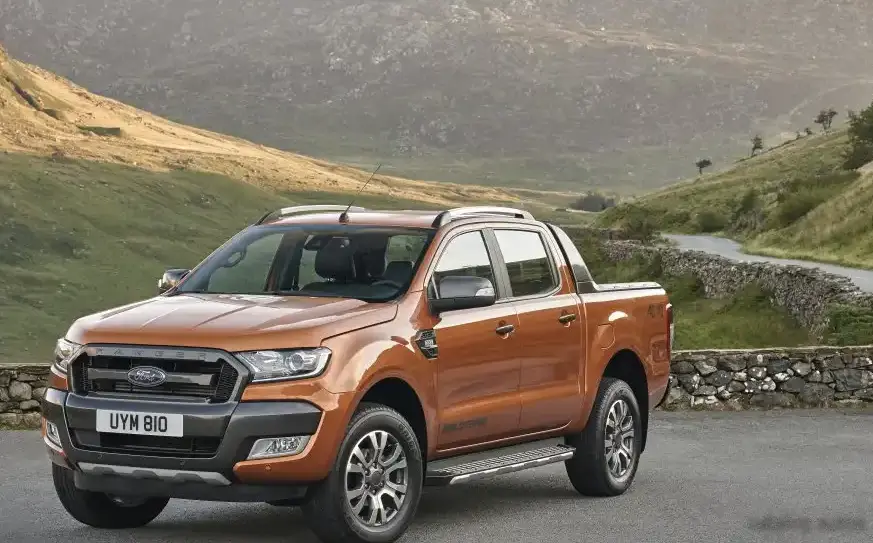
The Ford Ranger III Double Cab (facelift 2015) 2.2 TDCi, producing 160 horsepower, represents a significant iteration of Ford’s globally successful mid-size pickup truck. Introduced as part of the T6 platform’s refresh in 2015 and continuing through 2018, this variant was primarily aimed at the European, Australian, and South African markets, though limited grey imports found their way to North America. It slotted into the Ranger lineup as a balance between affordability and capability, offering a diesel engine option with a respectable power output for both work and leisure applications. This model year saw updates to the exterior styling, interior appointments, and technology features, enhancing its appeal in a competitive segment.
Technical Specifications
| Brand | Ford |
| Model | Ranger |
| Generation | Ranger III Double Cab (facelift 2015) |
| Type (Engine) | 2.2 TDCi (160 Hp) |
| Start of production | 2015 |
| End of production | 2018 |
| Powertrain Architecture | Internal Combustion engine |
| Body type | Pick-up |
| Seats | 5 |
| Doors | 4 |
| Fuel consumption (combined) | 6.9 l/100 km (34.1 US mpg, 40.9 UK mpg, 14.5 km/l) |
| CO2 emissions | 182 g/km |
| Fuel Type | Diesel |
| Maximum speed | 175 km/h (108.74 mph) |
| Emission standard | Euro 5 |
| Weight-to-power ratio | 11.8 kg/Hp, 85 Hp/tonne |
| Weight-to-torque ratio | 4.9 kg/Nm, 204.5 Nm/tonne |
| Power | 160 Hp @ 3700 rpm |
| Power per litre | 72.8 Hp/l |
| Torque | 385 Nm @ 1500-2500 rpm (283.96 lb.-ft. @ 1500-2500 rpm) |
| Engine layout | Front, Longitudinal |
| Engine displacement | 2198 cm3 (134.13 cu. in.) |
| Number of cylinders | 4 |
| Engine configuration | Inline |
| Cylinder Bore | 86 mm (3.39 in.) |
| Piston Stroke | 94.6 mm (3.72 in.) |
| Compression ratio | 15.7:1 |
| Number of valves per cylinder | 4 |
| Fuel injection system | Diesel Commonrail |
| Engine aspiration | Turbocharger, Intercooler |
| Engine oil capacity | 8.55 l (9.03 US qt | 7.52 UK qt) |
| Coolant | 11.5 l (12.15 US qt | 10.12 UK qt) |
| Kerb Weight | 1883 kg (4151.3 lbs.) |
| Max. weight | 3200 kg (7054.79 lbs.) |
| Max load | 1317 kg (2903.49 lbs.) |
| Fuel tank capacity | 80 l (21.13 US gal | 17.6 UK gal) |
| Length | 5362 mm (211.1 in.) |
| Width | 1860 mm (73.23 in.) |
| Height | 1815 mm (71.46 in.) |
| Wheelbase | 3220 mm (126.77 in.) |
| Front track | 1560 mm (61.42 in.) |
| Rear track | 1560 mm (61.42 in.) |
| Ride height (ground clearance) | 232 mm (9.13 in.) |
| Drivetrain Architecture | Rear wheel drive |
| Number of gears and type of gearbox | 6 gears, manual transmission |
| Front suspension | Independent coil spring |
| Rear suspension | Dependent suspension of two longitudinal semi-elliptic leaf springs |
| Front brakes | Ventilated discs |
| Rear brakes | Drum |
| Assisting systems | ABS (Anti-lock braking system) |
| Steering type | Steering rack and pinion |
| Power steering | Electric Steering |
| Tires size | 215/70 R16; 255/70 R16; 265/65 R17; 265/60 R18 |
| Wheel rims size | 16; 17; 18 |
INTRODUCTION
The 2015-2018 Ford Ranger III Double Cab 2.2 TDCi 160hp was a key model in Ford’s global pickup strategy. Built on the T6 platform, initially launched in 2011, the facelifted version brought a more refined appearance and improved features. This particular engine and configuration was designed to appeal to buyers seeking a balance between fuel efficiency, reasonable power, and affordability. It was positioned as a mid-range offering, sitting below the more powerful 3.2-liter five-cylinder diesel and above the lower-powered 2.5-liter engine options available in some markets. The Double Cab configuration offered increased passenger space, making it suitable for both work and family use.
Powertrain & Engine Architecture
At the heart of this Ranger variant lies the Ford Duratorq 2.2-liter TDCi four-cylinder diesel engine. This engine, designated with codes like Puma, is a common-rail direct injection diesel, known for its relatively quiet operation and good fuel economy. The 160 horsepower output is achieved through a turbocharger with an intercooler, optimizing air intake for increased power and efficiency. The engine utilizes four valves per cylinder and a robust cast iron block, contributing to its durability. Fuel is delivered via a high-pressure common rail system, allowing for precise fuel metering and optimized combustion. The 2.2 TDCi is paired with a six-speed manual transmission, chosen for its efficiency and driver engagement. While an automatic transmission was offered in some markets with this engine, the manual was the more common pairing, particularly in Europe and Australia.
Driving Characteristics
The 160hp 2.2 TDCi Ranger Double Cab offers a practical and capable driving experience. While not a performance-oriented pickup, it provides sufficient power for everyday tasks and moderate towing needs. The engine delivers a respectable 385 Nm (284 lb-ft) of torque, available from 1500-2500 rpm, making it adept at hauling loads and navigating challenging terrain. The six-speed manual transmission allows for precise gear selection and helps to keep the engine within its optimal power band. Compared to the 3.2-liter variant, the 2.2 TDCi feels less powerful, particularly when fully loaded or climbing steep inclines. However, it compensates with improved fuel economy and a lighter front end, contributing to better handling. The gear ratios are well-suited for both on-road cruising and off-road crawling, providing a versatile driving experience.
Equipment & Trim Levels
The Ranger Double Cab 2.2 TDCi (160hp) typically came equipped with a range of standard features, varying slightly depending on the specific market. Common features included air conditioning, power windows, central locking, and a basic audio system with USB connectivity. Higher trim levels, such as Limited or Wildtrack, added features like alloy wheels, leather upholstery, a more advanced infotainment system with navigation, automatic climate control, and parking sensors. Optional extras included a tow bar, bed liner, roof rails, and upgraded audio systems. Interior upholstery was typically cloth on the base models, with leather options available on higher trims. The dashboard layout was functional and straightforward, prioritizing usability over luxury.
Chassis & Braking
The Ranger III Double Cab utilizes a body-on-frame construction, providing a robust and durable platform for demanding applications. The front suspension consists of independent coil springs, offering a comfortable ride and good handling characteristics. The rear suspension employs a traditional leaf spring setup, designed to handle heavy loads. Braking duties are handled by ventilated discs at the front and drum brakes at the rear. ABS (Anti-lock Braking System) is standard, enhancing safety during emergency braking situations. The chassis is reinforced to withstand the stresses of off-road driving and heavy hauling. Stabilizer bars were fitted to reduce body roll during cornering, improving handling stability.
Market Reception & Comparison
The Ford Ranger 2.2 TDCi 160hp was generally well-received by automotive critics as a practical and versatile pickup truck. It was praised for its fuel efficiency, comfortable ride, and capable performance. However, some reviewers noted that the engine could feel underpowered when fully loaded or tackling steep inclines. Compared to the 3.2-liter variant, the 2.2 TDCi offered better fuel economy but less outright power. Against competitors like the Toyota Hilux and Nissan Navara, the Ranger offered a compelling combination of features, performance, and value. Its fuel economy figures of around 6.9 l/100km (34.1 US mpg) were competitive within its class, making it an attractive option for buyers prioritizing running costs.
Legacy
The Ford Ranger III Double Cab 2.2 TDCi (160hp) has proven to be a reliable and durable vehicle, with many examples still on the road today. The Duratorq engine is known for its longevity, provided it is properly maintained. Common maintenance issues include turbocharger wear, injector problems, and occasional issues with the diesel particulate filter (DPF). In the used car market, these Rangers represent a good value proposition, offering a capable and practical pickup truck at an affordable price. The T6 platform’s robust construction and readily available parts contribute to its continued popularity among pickup truck enthusiasts and tradespeople alike. The 2.2 TDCi engine, while not the most powerful option, remains a popular choice for those seeking a balance between performance, efficiency, and reliability.