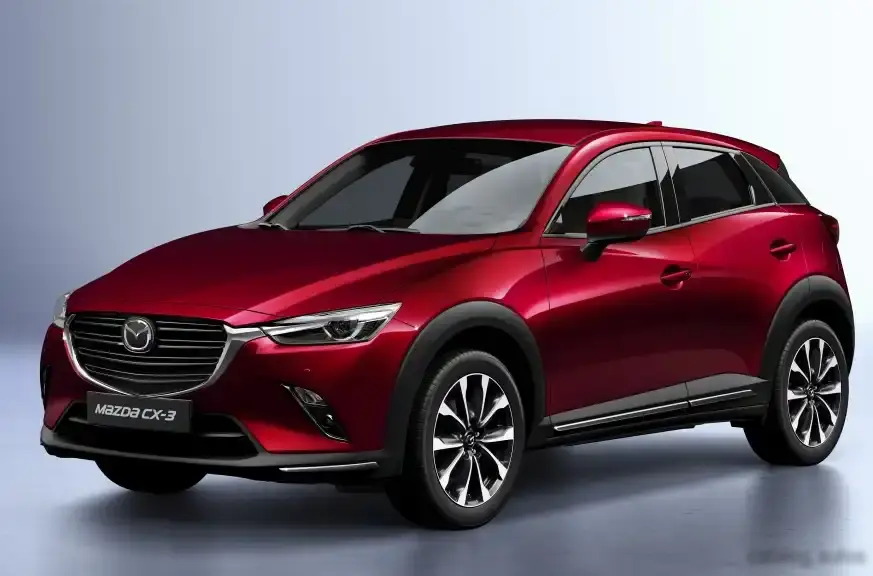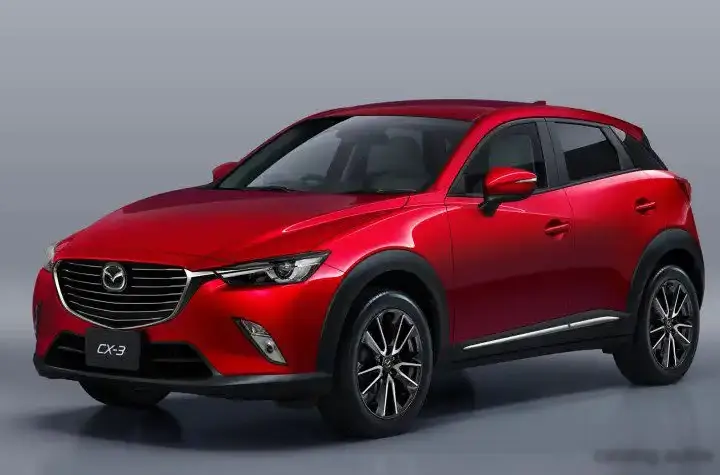
The Mazda CX-3 2.0i Automatic, produced from 2015 to 2018, represented Mazda’s entry into the burgeoning subcompact SUV market. Positioned as a stylish and relatively affordable option, this variant utilized a 2.0-liter naturally aspirated gasoline engine paired with a six-speed automatic transmission. It was a key component of the first-generation CX-3 (DY series), sharing its platform with the Mazda2, and aimed to attract buyers seeking a blend of practicality, fuel efficiency, and Mazda’s signature driving dynamics. This particular configuration served as a core trim level, offering a balance between performance and economy within the CX-3 lineup.
Technical Specifications
| Brand | Mazda |
| Model | CX-3 |
| Generation | CX-3 |
| Type (Engine) | 2.0i (120 Hp) Automatic |
| Start of production | 2015 |
| End of production | 2018 |
| Powertrain Architecture | Internal Combustion engine |
| Body type | SUV |
| Seats | 5 |
| Doors | 5 |
| Fuel consumption (urban) | 7.3 l/100 km (32.2 US mpg, 38.7 UK mpg, 13.7 km/l) |
| Fuel consumption (extra urban) | 4.9 l/100 km (48 US mpg, 57.6 UK mpg, 20.4 km/l) |
| Fuel consumption (combined) | 5.8 l/100 km (40.6 US mpg, 48.7 UK mpg, 17.2 km/l) |
| CO2 emissions | 136 g/km |
| Fuel Type | Petrol (Gasoline) |
| Acceleration 0 – 100 km/h | 9.9 sec |
| Acceleration 0 – 62 mph | 9.9 sec |
| Acceleration 0 – 60 mph | 9.4 sec |
| Maximum speed | 187 km/h (116.2 mph) |
| Emission standard | Euro 6 |
| Weight-to-power ratio | 10 kg/Hp, 100.4 Hp/tonne |
| Weight-to-torque ratio | 5.9 kg/Nm, 170.7 Nm/tonne |
| Power | 120 Hp @ 6000 rpm |
| Power per litre | 60.1 Hp/l |
| Torque | 204 Nm @ 2800 rpm (150.46 lb.-ft. @ 2800 rpm) |
| Engine layout | Front, Transverse |
| Engine Model/Code | PEX3, PEXB |
| Engine displacement | 1998 cm3 (121.93 cu. in.) |
| Number of cylinders | 4 |
| Engine configuration | Inline |
| Cylinder Bore | 83.5 mm (3.29 in.) |
| Piston Stroke | 91.2 mm (3.59 in.) |
| Compression ratio | 14:1 |
| Number of valves per cylinder | 4 |
| Fuel injection system | Direct injection |
| Engine aspiration | Naturally aspirated engine |
| Engine oil capacity | 4.2 l (4.44 US qt | 3.7 UK qt) |
| Coolant | 5.8 l (6.13 US qt | 5.1 UK qt) |
| Kerb Weight | 1195 kg (2634.52 lbs.) |
| Max. weight | 1730 kg (3814 lbs.) |
| Max load | 535 kg (1179.47 lbs.) |
| Trunk (boot) space – minimum | 350 l (12.36 cu. ft.) |
| Trunk (boot) space – maximum | 1260 l (44.5 cu. ft.) |
| Fuel tank capacity | 48 l (12.68 US gal | 10.56 UK gal) |
| Max. roof load | 50 kg (110.23 lbs.) |
| Permitted trailer load with brakes (8%) | 1200 kg (2645.55 lbs.) |
| Permitted trailer load with brakes (12%) | 1200 kg (2645.55 lbs.) |
| Permitted trailer load without brakes | 625 kg (1377.89 lbs.) |
| Permitted towbar download | 75 kg (165.35 lbs.) |
| Length | 4275 mm (168.31 in.) |
| Width | 1765 mm (69.49 in.) |
| Width including mirrors | 2049 mm (80.67 in.) |
| Height | 1535 mm (60.43 in.) |
| Wheelbase | 2570 mm (101.18 in.) |
| Front track | 1523 mm (59.96 in.) |
| Rear (Back) track | 1521 mm (59.88 in.) |
| Ride height (ground clearance) | 155 mm (6.1 in.) |
| Minimum turning circle | 10.6 m (34.78 ft.) |
| Drivetrain Architecture | The Internal combustion engine (ICE) drives the front wheels of the vehicle. |
| Drive wheel | Front wheel drive |
| Number of gears and type of gearbox | 6 gears, automatic transmission |
| Front brakes | Ventilated discs |
| Rear brakes | Disc |
| Assisting systems | ABS (Anti-lock braking system) |
| Steering type | Steering rack and pinion |
INTRODUCTION
The Mazda CX-3 2.0i Automatic, launched in 2015, was a crucial model for Mazda as they expanded their SUV offerings. Built on the 1HX0/DY platform, shared with the Mazda2, it aimed to provide a more premium and engaging driving experience than many of its competitors in the subcompact SUV segment. This variant, with its 2.0-liter engine and automatic transmission, was designed to appeal to a broad audience seeking a practical, fuel-efficient, and stylish vehicle for daily commuting and light adventures. It served as a stepping stone into the CX-3 range, offering a more accessible price point than the higher-spec trims.
Powertrain & Engine Architecture
At the heart of the CX-3 2.0i Automatic lies Mazda’s PEX3 or PEXB engine, a 1998cc (121.93 cu. in.) inline-four cylinder gasoline engine. This engine featured direct injection, a relatively advanced technology for its class at the time, contributing to improved fuel efficiency and power delivery. The engine boasted a high compression ratio of 14:1, further enhancing its thermal efficiency. The valvetrain employed four valves per cylinder, optimizing airflow for increased performance. The six-speed automatic transmission, a key component of this variant, was designed to provide smooth and responsive gear changes. It wasn’t a dual-clutch transmission, opting instead for a conventional torque-converter automatic, prioritizing comfort and ease of use over outright performance. The transmission’s gear ratios were tuned for a balance of acceleration and fuel economy, with a focus on providing adequate power for everyday driving situations.
Driving Characteristics
The CX-3 2.0i Automatic offered a comfortable and composed driving experience. While not particularly sporty, the 120 horsepower engine provided adequate power for most driving scenarios. Acceleration from 0-60 mph took approximately 9.4 seconds, and top speed was limited to 116.2 mph. The automatic transmission, while smooth, could sometimes feel hesitant during quick acceleration or when attempting to overtake. Compared to the manual transmission versions of the same engine, the automatic offered less driver engagement but greater convenience. The higher-output 2.5-liter engine option, available in some markets, provided significantly more performance, but at the cost of increased fuel consumption. The CX-3’s suspension, tuned for comfort, absorbed bumps and imperfections in the road well, providing a stable and predictable ride.
Equipment & Trim Levels
The CX-3 2.0i Automatic typically came standard with features such as air conditioning, power windows and locks, a basic audio system with USB connectivity, and a rearview camera. Safety features included ABS, stability control, and multiple airbags. Higher trim levels offered upgrades such as a touchscreen infotainment system, navigation, leather upholstery, and a sunroof. Interior upholstery was generally cloth, with optional leather available. The dashboard layout was clean and modern, with a focus on ergonomics. Optional extras included a premium sound system, adaptive headlights, and blind-spot monitoring.
Chassis & Braking
The CX-3’s chassis was designed to provide a balance of rigidity and lightweight construction. The front suspension utilized MacPherson struts, while the rear suspension employed a torsion beam setup. This configuration offered a good compromise between ride comfort and handling. Braking duties were handled by ventilated discs at the front and solid discs at the rear. ABS (Anti-lock Braking System) was standard, providing enhanced braking performance in emergency situations. The relatively light weight of the vehicle, around 2634.52 lbs, contributed to its nimble handling characteristics.
Market Reception & Comparison
The Mazda CX-3 2.0i Automatic was generally well-received by automotive critics. It was praised for its stylish design, comfortable interior, and engaging driving dynamics. However, some reviewers noted that the 2.0-liter engine could feel underpowered, particularly when fully loaded or driving uphill. Fuel economy was considered competitive for its class, averaging around 40.6 US mpg in combined driving. Compared to other subcompact SUVs, such as the Honda HR-V and Toyota C-HR, the CX-3 offered a more premium feel and a more engaging driving experience. However, some competitors offered more cargo space or a lower price point.
Legacy
The Mazda CX-3 2.0i Automatic has proven to be a relatively reliable vehicle in the used car market. The 2.0-liter engine and six-speed automatic transmission are generally considered durable and require minimal maintenance. Common issues, when they arise, often relate to routine wear and tear items such as brakes, tires, and suspension components. The CX-3’s stylish design and engaging driving dynamics have helped it maintain its appeal in the used car market, making it a popular choice for buyers seeking a practical and affordable subcompact SUV. Its reputation for reliability and Mazda’s overall brand image contribute to its continued desirability.