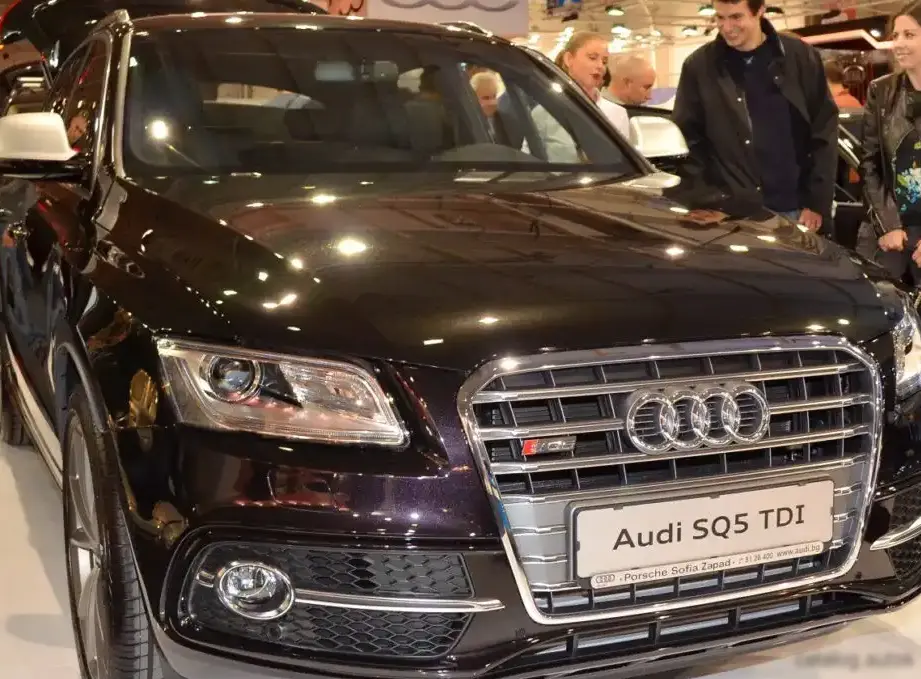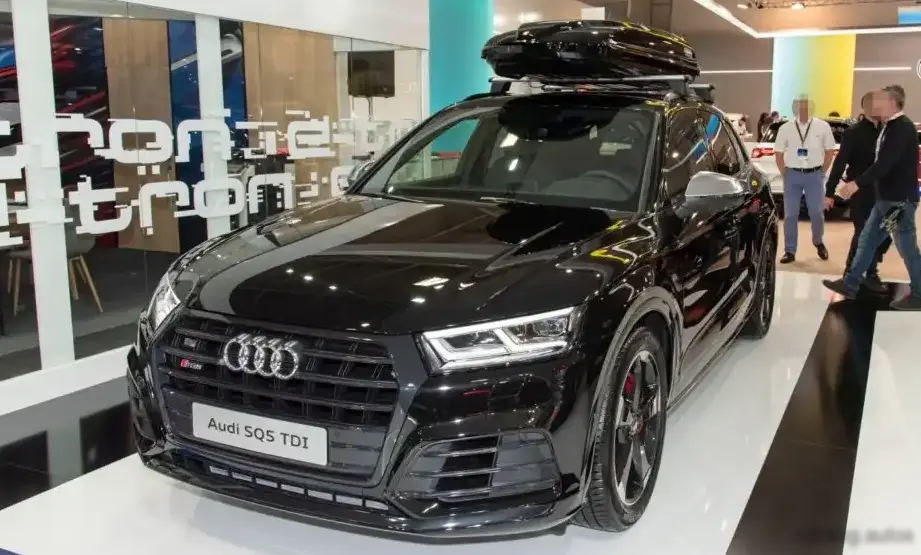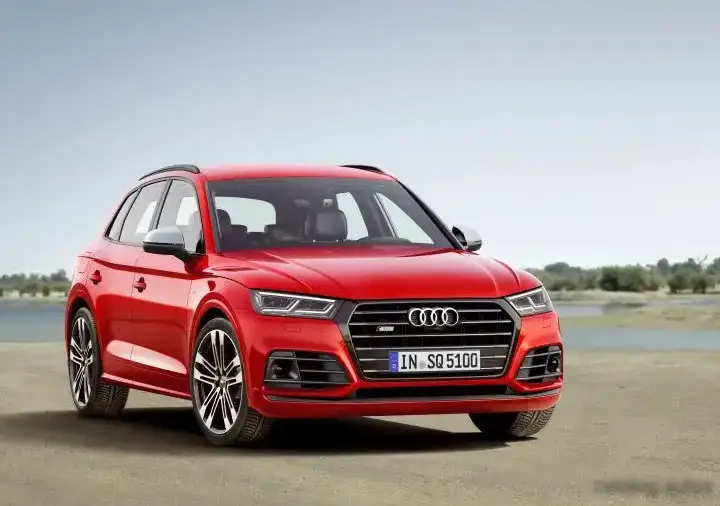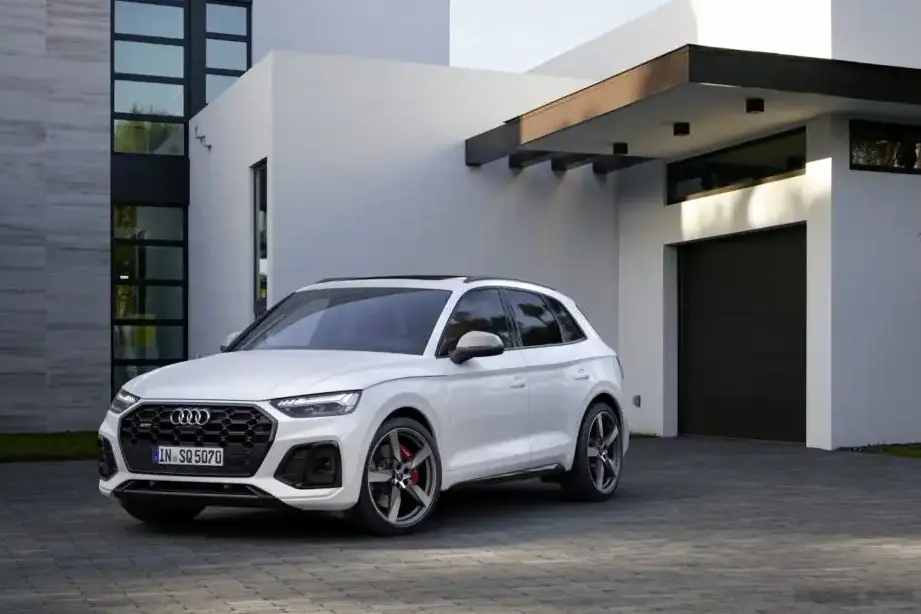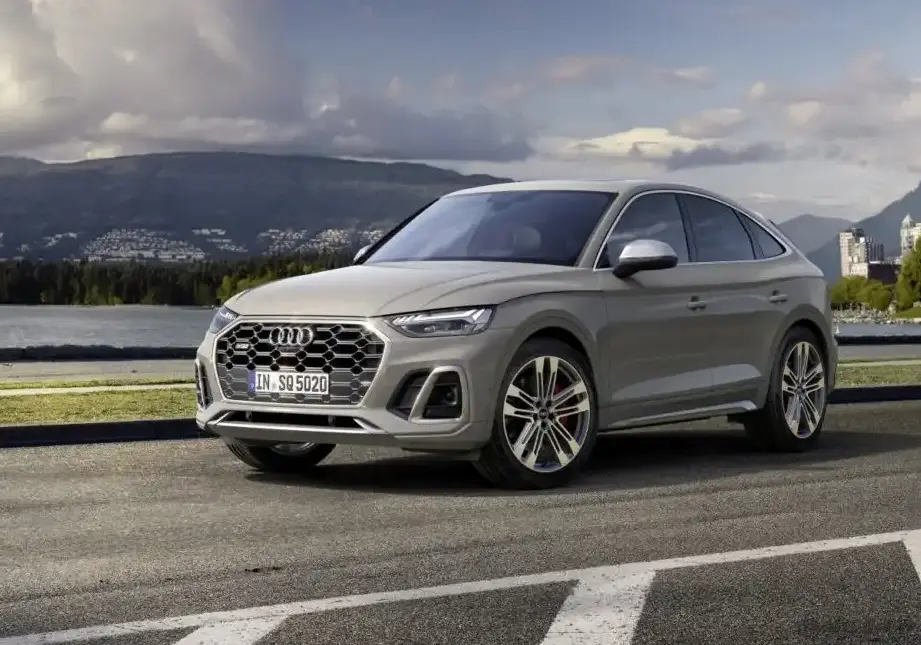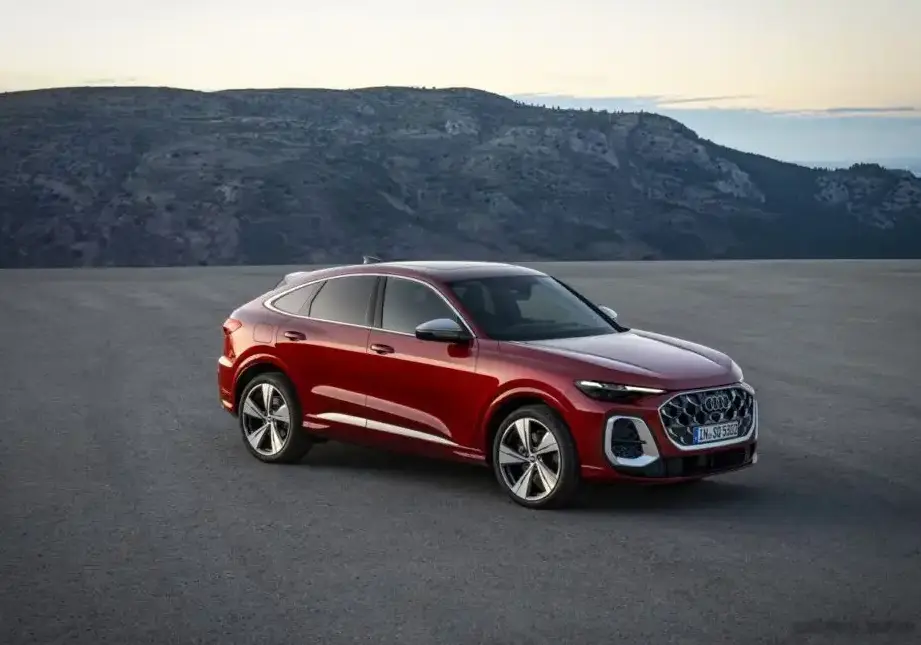
The Audi SQ5 III Sportback 3.0 TFSI V6, introduced in November 2024, represents the performance-oriented variant of the third-generation Q5 Sportback. Positioned as a premium compact SUV, it blends sporty driving dynamics with the practicality of a five-door body style and a sloping roofline. This particular configuration, boasting a 367 horsepower turbocharged V6 engine paired with a mild-hybrid system and a seven-speed S tronic dual-clutch transmission, sits at the top of the Q5 Sportback range, offering a significant performance upgrade over the base 2.0-liter four-cylinder models. The “plus” designation indicates an enhanced mild-hybrid system compared to earlier Q5 iterations.
Technical Specifications
| Brand | Audi |
| Model | SQ5 |
| Generation | SQ5 III Sportback |
| Type (Engine) | 3.0 TFSI V6 (367 Hp) Mild Hybrid plus quattro ultra S tronic |
| Start of production | November, 2024 |
| Powertrain Architecture | MHEV (Mild Hybrid Electric Vehicle) |
| Body type | SUV |
| Seats | 5 |
| Doors | 5 |
| Combined fuel consumption (WLTP) | 8.1-8.8 l/100 km (29 – 26.7 US mpg) |
| CO2 emissions (WLTP) | 184-199 g/km |
| Fuel Type | Petrol (Gasoline) |
| Acceleration 0 – 100 km/h | 4.5 sec |
| Acceleration 0 – 62 mph | 4.5 sec |
| Acceleration 0 – 60 mph | 4.3 sec |
| Maximum speed | 250 km/h (155.34 mph), Electronically limited |
| Emission standard | Euro 6e |
| Weight-to-power ratio | 5.6 kg/Hp |
| Weight-to-torque ratio | 3.7 kg/Nm |
| Gross battery capacity | 1.7 kWh |
| Battery voltage | 48 V |
| Battery technology | Lithium iron phosphate (LiFePO4) |
| Recuperation output | 25 kW |
| Electric motor power | 24 Hp |
| Electric motor Torque | 230 Nm (169.64 lb.-ft.) |
| Power | 367 Hp @ 5500-6300 rpm |
| Torque | 550 Nm @ 1700-4000 rpm (405.66 lb.-ft. @ 1700-4000 rpm) |
| Engine displacement | 2995 cm3 (182.77 cu. in.) |
| Number of cylinders | 6 |
| Cylinder Bore | 84.5 mm (3.33 in.) |
| Piston Stroke | 89 mm (3.5 in.) |
| Compression ratio | 12:1 |
| Engine oil capacity | 7.5 l (7.93 US qt | 6.6 UK qt) |
| Coolant | 17.7 l (18.7 US qt | 15.57 UK qt) |
| Kerb Weight | 2040 kg (4497.43 lbs.) |
| Max. weight | 2610 kg (5754.07 lbs.) |
| Max load | 570 kg (1256.63 lbs.) |
| Trunk (boot) space – minimum | 470 l (16.6 cu. ft.) |
| Trunk (boot) space – maximum | 1388 l (49.02 cu. ft.) |
| Fuel tank capacity | 65 l (17.17 US gal | 14.3 UK gal) |
| Length | 4717 mm (185.71 in.) |
| Width | 1900 mm (74.8 in.) |
| Height | 1619-1656 mm (63.74 – 65.2 in.) |
| Wheelbase | 2823 mm (111.14 in.) |
| Front track | 1621 mm (63.82 in.) |
| Rear track | 1613 mm (63.5 in.) |
| Drag coefficient (Cd) | 0.34 |
| Minimum turning circle | 11.8 m (38.71 ft.) |
| Front brakes | Ventilated discs, 360 mm |
| Rear brakes | Ventilated discs, 330 mm |
| Number of gears | 7 |
| Gearbox type | Automatic transmission S tronic |
Introduction
The SQ5 III Sportback 3.0 TFSI V6 builds upon the foundation of the Q5 series, which debuted in 2008. The third generation, introduced in 2017 (and facelifted in 2021), utilizes the MLB Evo platform (1HX0/A3). The Sportback variant distinguishes itself with a more aggressively sloped rear roofline, offering a coupe-like aesthetic without significantly compromising rear passenger space. The SQ5 designation signifies the high-performance version, slotting above the standard Q5 and Q5 TFSI models. The 2024 model year introduces a refined mild-hybrid system, enhancing fuel efficiency and responsiveness. This vehicle is primarily marketed in Europe and North America, competing with performance SUVs like the Porsche Macan, BMW X3 M40i, and Mercedes-AMG GLC 43.
Powertrain & Engine Architecture
At the heart of the SQ5 III Sportback lies the 2.995-liter (182.77 cubic inch) V6 engine, internally designated as the DWV. This engine is a direct-injection, turbocharged powerplant featuring an aluminum block and cylinder heads. The turbocharger, with an integrated intercooler, provides significant boost, contributing to the engine’s 367 horsepower output at 5500-6300 rpm and 550 Nm (405.66 lb-ft) of torque available from 1700-4000 rpm. The engine utilizes a dual overhead camshaft (DOHC) valvetrain with four valves per cylinder. The mild-hybrid system incorporates a 48-volt electrical architecture and a belt-driven starter-generator, allowing for extended start-stop operation, coasting with the engine off, and a small power boost during acceleration. The seven-speed S tronic dual-clutch transmission delivers rapid and smooth gear changes. This transmission features a wet clutch design for improved heat dissipation and durability.
Driving Characteristics
The SQ5 III Sportback 3.0 TFSI V6 offers a compelling blend of performance and refinement. The 4.5-second 0-62 mph (0-100 km/h) acceleration time demonstrates its sporting capabilities. The S tronic transmission’s quick shifts and the engine’s broad torque curve provide responsive acceleration in all gears. The quattro all-wheel-drive system, a hallmark of Audi, distributes power between the front and rear axles as needed, enhancing traction and stability, particularly in adverse weather conditions. Compared to the standard Q5 2.0 TFSI, the SQ5 offers a noticeably more powerful and engaging driving experience. While the 2.0 TFSI prioritizes fuel economy, the SQ5 focuses on performance. The suspension is tuned for a balance between comfort and handling, providing a controlled ride without being overly harsh. The steering is precise and well-weighted, offering good feedback to the driver.
Equipment & Trim Levels
The SQ5 III Sportback 3.0 TFSI V6 comes generously equipped as standard. Key features include Audi’s virtual cockpit digital instrument cluster, a touchscreen infotainment system with navigation, leather upholstery, heated front seats, and a panoramic sunroof. Optional extras include adaptive suspension, a Bang & Olufsen premium sound system, and various driver-assistance systems such as adaptive cruise control and lane-keeping assist. Interior trim options typically include aluminum or carbon fiber accents. The Sportback trim also features unique exterior styling elements, such as a distinctive rear spoiler and a blacked-out grille.
Chassis & Braking
The SQ5 III Sportback utilizes an independent multi-link suspension setup at both the front and rear axles. This configuration provides excellent wheel control and ride comfort. The chassis is reinforced compared to the standard Q5 to handle the increased power and torque. Braking duties are handled by ventilated discs at all four corners, with larger diameter discs (360mm front, 330mm rear) compared to the standard Q5. The anti-lock braking system (ABS) and electronic stability control (ESC) are standard features. The SQ5 also benefits from Audi’s wheel-selective torque vectoring system, which can apply braking force to individual wheels to enhance cornering agility.
Market Reception & Comparison
The Audi SQ5 III Sportback has been well-received by automotive critics, praised for its powerful engine, refined interior, and engaging driving dynamics. Comparisons with rivals like the Porsche Macan and BMW X3 M40i often highlight the SQ5’s comfortable ride and user-friendly technology. Fuel economy, while respectable for a performance SUV (8.1-8.8 l/100 km), is slightly lower than some of its competitors. Reliability has generally been good, although some owners have reported minor issues with the infotainment system. The mild-hybrid system is expected to improve long-term reliability compared to previous generations.
Legacy
The SQ5 III Sportback 3.0 TFSI V6 represents a significant step forward in terms of performance and technology for the Q5 line. The combination of a potent V6 engine, a sophisticated mild-hybrid system, and the renowned quattro all-wheel-drive system makes it a compelling choice for buyers seeking a sporty and practical SUV. On the used car market, these models are expected to hold their value well due to their performance credentials and Audi’s reputation for quality. The DWV engine, while complex, is generally considered to be a robust and reliable unit when properly maintained. The integration of the 48-volt mild-hybrid system is a key development, paving the way for further electrification in future Audi models.