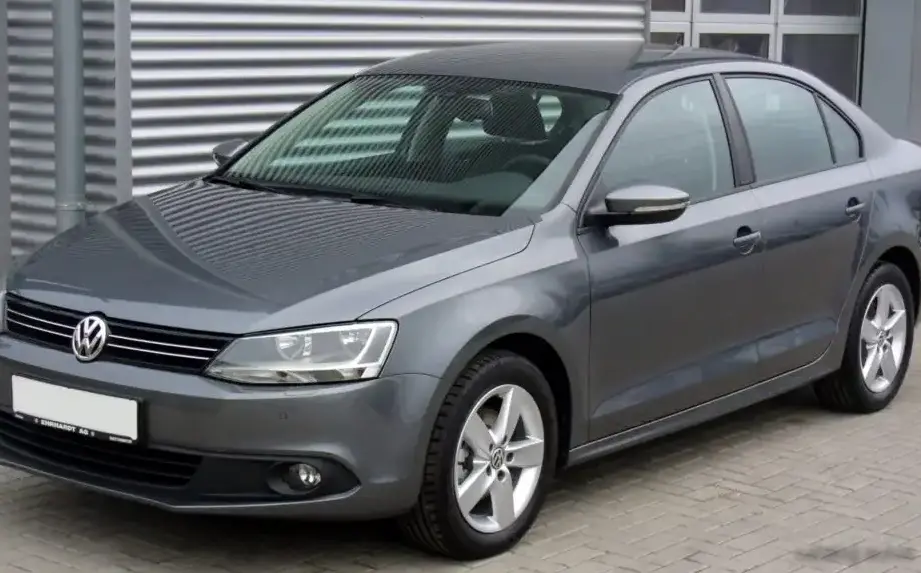
The Volkswagen Jetta VI 1.2 TSI (105 hp) represents an entry-level offering within the sixth generation of Volkswagen’s globally successful Jetta compact sedan. Produced from 2010 to 2014, this variant was primarily aimed at the European market, where fuel efficiency and affordability were key purchasing considerations. While the Jetta was also sold in North America during this period, the 1.2 TSI engine was not typically offered there, with larger displacement engines being favored. The Jetta VI, built on the Volkswagen Group’s A5 (PQ35) platform, aimed to provide a more mature and refined experience compared to its predecessor, the Jetta V, with a focus on improved interior quality and ride comfort.
| Brand | Volkswagen |
| Model | Jetta |
| Generation | Jetta VI |
| Type (Engine) | 1.2 TSI (105 Hp) |
| Start of production | 2010 |
| End of production | 2014 |
| Powertrain Architecture | Internal Combustion engine |
| Body type | Sedan |
| Seats | 5 |
| Doors | 4 |
| Fuel consumption (urban) | 7.1 l/100 km (33.1 US mpg) |
| Fuel consumption (extra urban) | 4.9 l/100 km (48 US mpg) |
| Fuel consumption (combined) | 5.7 l/100 km (41.3 US mpg) |
| Fuel Type | Petrol (Gasoline) |
| Acceleration 0 – 100 km/h | 10.9 sec |
| Acceleration 0 – 62 mph | 10.9 sec |
| Acceleration 0 – 60 mph | 10.4 sec |
| Maximum speed | 190 km/h (118.06 mph) |
| Emission standard | Euro 5 |
| Weight-to-power ratio | 12.4 kg/Hp |
| Power | 105 Hp @ 5000 rpm |
| Power per litre | 87.7 Hp/l |
| Engine layout | Front, Transverse |
| Engine Model/Code | CBZB |
| Engine displacement | 1197 cm3 (73.05 cu. in.) |
| Number of cylinders | 4 |
| Engine configuration | Inline |
| Number of valves per cylinder | 4 |
| Fuel injection system | Direct injection |
| Engine aspiration | Turbocharger, Intercooler |
| Engine oil capacity | 3.9 l (4.12 US qt | 3.43 UK qt) |
| Kerb Weight | 1302 kg (2870.42 lbs.) |
| Max. weight | 1800 kg (3968.32 lbs.) |
| Max load | 498 kg (1097.9 lbs.) |
| Trunk (boot) space – minimum | 510 l (18.01 cu. ft.) |
| Fuel tank capacity | 55 l (14.53 US gal | 12.1 UK gal) |
| Length | 4644 mm (182.83 in.) |
| Width | 1778 mm (70 in.) |
| Height | 1482 mm (58.35 in.) |
| Wheelbase | 2651 mm (104.37 in.) |
| Front track | 1535 mm (60.43 in.) |
| Rear track | 1532 mm (60.31 in.) |
| Minimum turning circle | 11.1 m (36.42 ft.) |
| Drivetrain Architecture | Front wheel drive |
| Number of gears | 6 gears, manual transmission |
| Front suspension | Independent, McPherson with coil spring and anti-roll bar |
| Rear suspension | Independent multi-link spring suspension with stabilizer |
| Front brakes | Ventilated discs |
| Rear brakes | Disc |
| Assisting systems | ABS (Anti-lock braking system) |
| Steering type | Steering rack and pinion |
| Power steering | Electric Steering |
| Tires size | 205/55 R16 |
| Wheel rims size | 6.5J x 16 |
Powertrain & Engine Architecture
The heart of the Jetta VI 1.2 TSI is the CBZB engine code, a 1.2-liter turbocharged inline-four cylinder gasoline engine. This engine utilizes direct fuel injection (FSI) and a single scroll turbocharger with an intercooler to deliver a balance of performance and fuel economy. The direct injection system allows for precise fuel delivery, optimizing combustion efficiency and reducing emissions. The engine features four valves per cylinder, contributing to improved breathing and power output. The 1.2 TSI engine produces 105 horsepower at 5000 rpm and 175 Nm (129 lb-ft) of torque. This power is delivered through a six-speed manual transmission, which was the standard offering for this variant. While a seven-speed dual-clutch transmission (DSG) was available on higher-spec Jettas, it was not typically paired with the 1.2 TSI engine.
Driving Characteristics
The 1.2 TSI engine, coupled with the Jetta’s weight of approximately 1302 kg (2870 lbs), resulted in a 0-60 mph acceleration time of around 10.4 seconds and a top speed of 190 km/h (118 mph). While not particularly sporty, the engine provided adequate performance for everyday driving situations. The turbocharger provides a noticeable boost in power, but the engine can feel somewhat strained at higher speeds or when fully loaded. The six-speed manual transmission offers a decent shift feel, but the gear ratios are geared towards fuel efficiency rather than outright performance. Compared to the more powerful 1.4 TSI or 2.0 TDI variants, the 1.2 TSI felt noticeably slower, but it offered a more economical driving experience.
Equipment & Trim Levels
The 1.2 TSI variant typically represented the entry-level trim in the Jetta VI range. Standard equipment generally included air conditioning, power windows, central locking, and a basic audio system. Safety features such as ABS, electronic stability control, and multiple airbags were also standard. Interior upholstery was typically cloth, and the dashboard featured a functional but relatively basic design. Optional extras included alloy wheels, a more advanced audio system, parking sensors, and climate control. The trim level was often designated as “Trendline” or a similar base-level moniker, depending on the specific market.
Chassis & Braking
The Jetta VI 1.2 TSI utilized an independent McPherson strut suspension at the front and an independent multi-link suspension at the rear. This suspension setup provided a comfortable ride quality, absorbing bumps and imperfections in the road surface effectively. The front brakes were ventilated discs, while the rear brakes were solid discs. The steering was electrically assisted, providing a light and easy steering feel. The suspension was tuned for comfort rather than sporty handling, resulting in a slight degree of body roll during cornering. Stabilizer bars were included at both the front and rear to help reduce body roll and improve stability.
Market Reception & Comparison
The Jetta VI 1.2 TSI was generally well-received by critics for its fuel efficiency and affordability. However, some reviewers noted that the engine lacked the punch of the more powerful alternatives. Compared to the 1.4 TSI, the 1.2 TSI offered lower running costs but sacrificed performance. The 2.0 TDI diesel variant provided even greater fuel economy and torque, but at a higher purchase price. In terms of reliability, the 1.2 TSI engine proved to be generally dependable, although some owners reported issues with the turbocharger and fuel injectors over the long term. Fuel economy figures averaged around 5.7 l/100 km (41.3 US mpg), making it an attractive option for drivers prioritizing efficiency.
Legacy
The Volkswagen Jetta VI 1.2 TSI remains a relatively common sight on European roads today. The engine, while not known for its blistering performance, has proven to be reasonably durable and economical to maintain. In the used car market, these models are often sought after by buyers looking for an affordable and fuel-efficient compact sedan. While the 1.2 TSI engine has been superseded by more modern and efficient powertrains in subsequent Jetta generations, it represents a significant step forward in terms of fuel economy and emissions reduction for the model. The Jetta VI, as a whole, solidified the Jetta’s position as a practical and reliable family car, and the 1.2 TSI variant played a key role in making it accessible to a wider range of buyers.