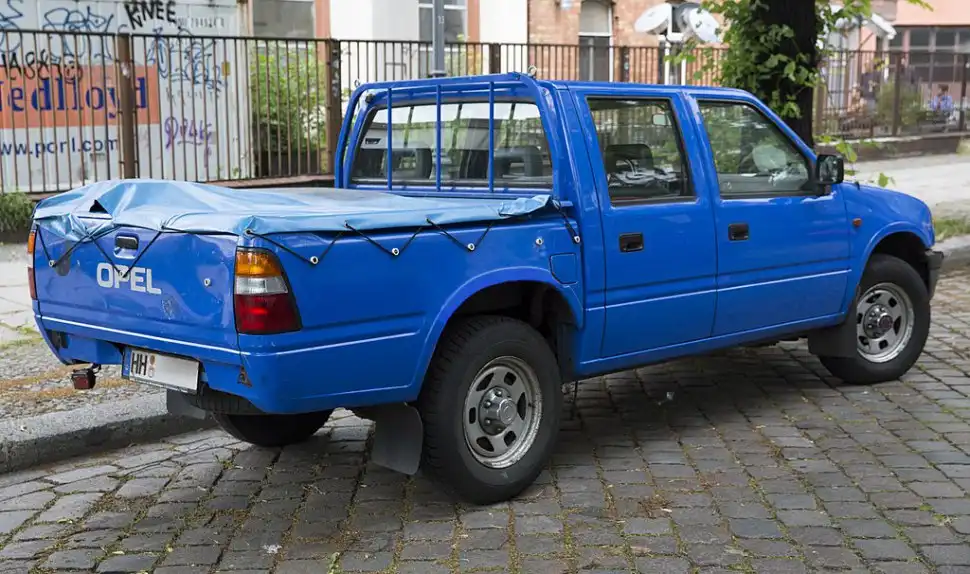
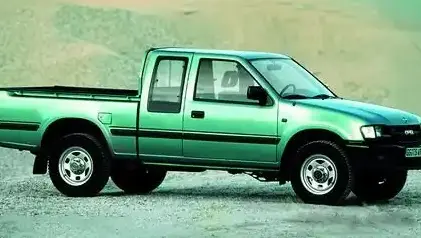
The Opel Campo Single Cab 2.5 TD, produced from 1991 to 2001, was a utilitarian pickup truck aimed primarily at commercial and agricultural users in Europe. Representing Opel’s entry into the compact pickup segment, the Campo was based on the Isuzu Faster platform – a result of collaboration between Opel and Isuzu. The Single Cab configuration, powered by the 2.5-liter turbocharged diesel engine producing 76 horsepower, served as a workhorse option within the Campo lineup, prioritizing durability and low running costs over outright performance. It filled a niche for those needing a robust, no-frills vehicle for hauling and light commercial duties.
Technical Specifications
| Brand | Opel |
| Model | Campo |
| Generation | Campo Single Cab |
| Type (Engine) | 2.5 TD (76 Hp) |
| Start of production | 1991 |
| End of production | June, 2001 |
| Powertrain Architecture | Internal Combustion engine |
| Body type | Pick-up |
| Seats | 2 |
| Doors | 2 |
| Fuel consumption (combined) | 8.2 l/100 km (28.7 US mpg, 34.4 UK mpg, 12.2 km/l) |
| Fuel Type | Diesel |
| Acceleration 0 – 100 km/h | 23.4 sec |
| Acceleration 0 – 62 mph | 23.4 sec |
| Acceleration 0 – 60 mph | 22.2 sec |
| Maximum speed | 140 km/h (86.99 mph) |
| Power | 76 Hp @ 3800 rpm |
| Power per litre | 30.4 Hp/l |
| Torque | 160 Nm @ 2000 rpm (118.01 lb.-ft. @ 2000 rpm) |
| Engine Model/Code | 4JA1T |
| Engine displacement | 2499 cm3 (152.5 cu. in.) |
| Number of cylinders | 4 |
| Engine configuration | Inline |
| Cylinder Bore | 93 mm (3.66 in.) |
| Piston Stroke | 92 mm (3.62 in.) |
| Engine aspiration | Turbocharger |
| Engine oil capacity | 4.5 l (4.76 US qt | 3.96 UK qt) |
| Coolant | 9 l (9.51 US qt | 7.92 UK qt) |
| Length | 4980 mm (196.06 in.) |
| Width | 1690 mm (66.54 in.) |
| Height | 1595 mm (62.8 in.) |
| Wheelbase | 3025 mm (119.09 in.) |
| Drivetrain Architecture | Rear wheel drive |
| Number of gears and type of gearbox | 5 gears, manual transmission |
| Front suspension | Independent coil spring |
| Front brakes | Ventilated discs |
Powertrain & Engine Architecture
The heart of the Campo 2.5 TD was the Isuzu-sourced 4JA1T 2.5-liter inline-four diesel engine. This engine, a common sight in light commercial vehicles of the era, was known for its robustness and relatively simple mechanical design. It featured indirect injection, utilizing a pre-chamber combustion system to improve combustion efficiency and reduce noise. The turbocharger, a key component, boosted power output to 76 horsepower and 160 Nm (118 lb-ft) of torque. The engine’s design prioritized low-end torque, making it well-suited for hauling loads and navigating challenging terrain. The five-speed manual transmission was the only gearbox option available with this engine, chosen for its durability and efficiency. The transmission was a conventional setup, designed to reliably transfer power to the rear wheels.
Driving Characteristics
The Campo 2.5 TD Single Cab was not designed for speed or sporty handling. Its driving experience was characterized by its utilitarian nature. Acceleration was slow, with a 0-100 km/h time of around 23.4 seconds. However, the engine’s torque delivery provided adequate pulling power for hauling loads, even when fully laden. The manual transmission required deliberate shifting, and the gear ratios were optimized for fuel economy and low-speed tractability rather than rapid acceleration. Compared to potential higher-output versions (which weren’t readily available in the European market), the 76 hp variant offered a more economical and less stressed powertrain, albeit at the expense of performance. The ride quality was firm, reflecting the vehicle’s commercial focus and heavy-duty suspension.
Equipment & Trim Levels
The Campo Single Cab 2.5 TD was typically sparsely equipped, reflecting its work-oriented purpose. Standard features included a basic dashboard with essential gauges, vinyl upholstery, and a robust interior designed to withstand heavy use. Power steering was often an optional extra, as were features like a radio or upgraded seating. The Single Cab configuration offered limited interior space, prioritizing cargo capacity over passenger comfort. The focus was on providing a functional and durable vehicle rather than luxury or refinement. Trim levels were minimal, with most variations stemming from optional extras chosen by the buyer.
Chassis & Braking
The Campo’s chassis was a body-on-frame construction, providing a robust and durable platform for hauling and off-road use. The front suspension utilized independent coil springs, offering a reasonable level of ride comfort considering the vehicle’s purpose. The rear suspension was a more traditional leaf spring setup, designed to handle heavy loads. Braking was provided by ventilated discs on the front wheels and drum brakes on the rear. While adequate for the vehicle’s weight and intended use, the braking system lacked the sophistication of more modern vehicles. A stabilizer bar was typically fitted to the front suspension to reduce body roll during cornering.
Market Reception & Comparison
The Opel Campo 2.5 TD Single Cab was generally well-received in its target market as a dependable and affordable workhorse. Critics praised its durability and low running costs, but noted its lack of refinement and slow performance. Compared to other pickups available in Europe at the time, such as the Toyota Hilux or Nissan Navara, the Campo offered a more budget-friendly option, albeit with fewer features and a less powerful engine. Its fuel economy of around 8.2 l/100 km (28.7 US mpg) was competitive for a diesel pickup of its size. Reliability was generally good, with the Isuzu-sourced engine proving to be particularly durable.
Legacy
The Opel Campo, while not a groundbreaking vehicle, established Opel as a player in the European pickup market. The 2.5 TD engine, in particular, gained a reputation for its longevity and relatively simple maintenance requirements. Today, the Campo 2.5 TD Single Cab is a relatively rare sight on the roads, but it remains a popular choice among those seeking a classic, no-frills workhorse. Parts availability can be a challenge, but the engine’s robust design and the availability of aftermarket support ensure that many examples remain in service. The Campo represents a bygone era of utilitarian vehicles, prioritizing functionality and durability over luxury and performance.