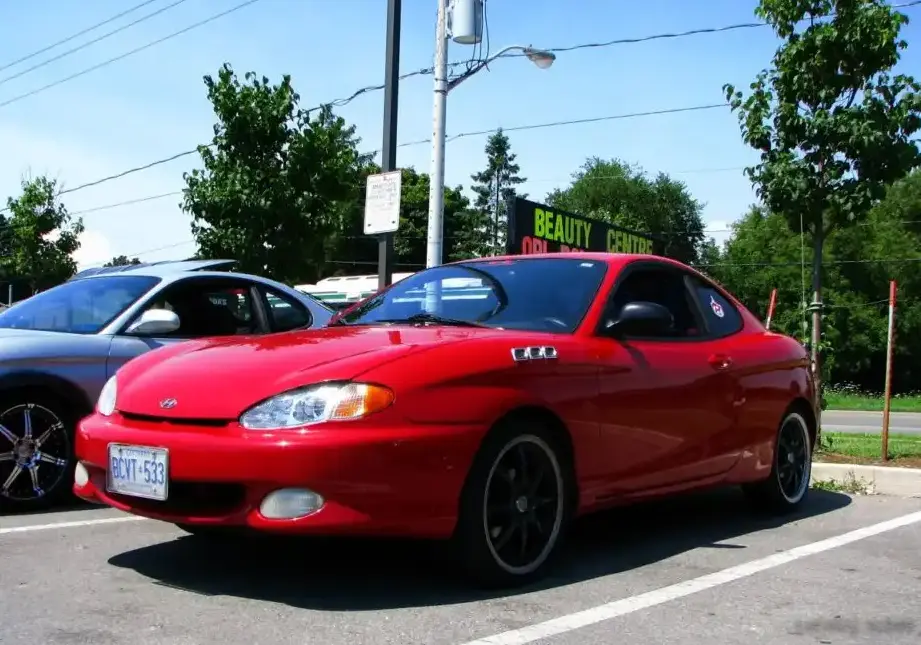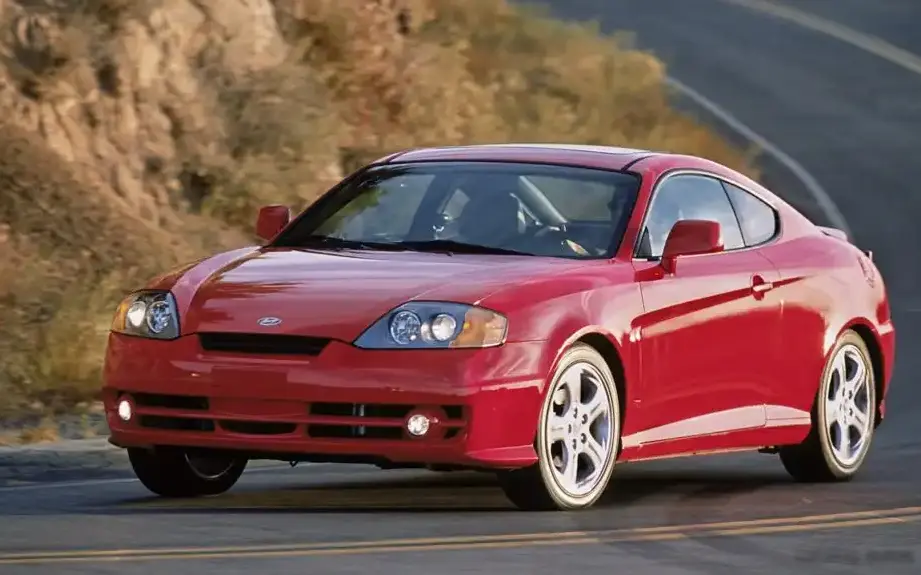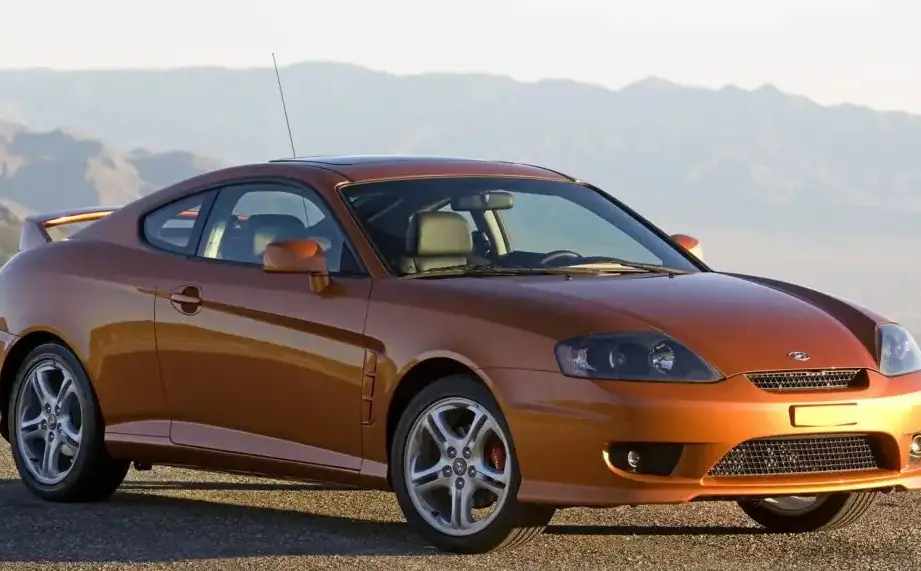
The Hyundai Tiburon II, specifically the facelifted version produced from 2004 to 2006 (internally designated GK), represented a significant step forward for Hyundai in terms of styling and performance. This generation, built on the RD platform, aimed to attract a younger demographic with its sporty coupe design. Within the lineup, the 2.7-liter V6 engine paired with a 5-speed manual transmission occupied a position as the performance-oriented trim, sitting above the base 2.0-liter inline-four models and offering a more engaging driving experience than the available automatic transmission options. This variant was primarily sold in North America and select international markets, where the Tiburon sought to compete with established sports coupes like the Honda Civic Coupe and Mitsubishi Eclipse.
Technical Specifications
| Brand | Hyundai |
| Model | Tiburon |
| Generation | Tiburon II (GK, facelift 2004) |
| Type (Engine) | 2.7 V6 (172 Hp) Manual 5-speed |
| Start of production | September, 2004 |
| End of production | 2006 |
| Powertrain Architecture | Internal Combustion engine |
| Body type | Coupe |
| Seats | 4 |
| Doors | 3 |
| Fuel consumption (urban) | 12.4 l/100 km (19 US mpg) |
| Fuel consumption (extra urban) | 9 l/100 km (26.1 US mpg) |
| Fuel Type | Petrol (Gasoline) |
| Weight-to-power ratio | 7.8 kg/Hp |
| Weight-to-torque ratio | 5.5 kg/Nm |
| Power | 172 Hp @ 6000 rpm |
| Power per litre | 64.8 Hp/l |
| Torque | 245 Nm @ 3800 rpm (180.7 lb.-ft. @ 3800 rpm) |
| Engine layout | Front, Transverse |
| Engine Model/Code | Delta / G6BA |
| Engine displacement | 2656 cm3 (162.08 cu. in.) |
| Number of cylinders | 6 |
| Engine configuration | V-engine |
| Cylinder Bore | 86.7 mm (3.41 in.) |
| Piston Stroke | 75 mm (2.95 in.) |
| Compression ratio | 10:1 |
| Number of valves per cylinder | 4 |
| Fuel injection system | Multi-port manifold injection |
| Engine aspiration | Naturally aspirated engine |
| Valvetrain | DOHC |
| Engine oil capacity | 4.5 l (4.76 US qt | 3.96 UK qt) |
| Coolant capacity | 8 l (8.45 US qt | 7.04 UK qt) |
| Kerb Weight | 1347 kg (2969.63 lbs.) |
| Trunk (boot) space | 419 l (14.8 cu. ft.) |
| Fuel tank capacity | 55 l (14.53 US gal | 12.1 UK gal) |
| Length | 4395 mm (173.03 in.) |
| Width | 1760 mm (69.29 in.) |
| Height | 1330 mm (52.36 in.) |
| Wheelbase | 2530 mm (99.61 in.) |
| Front track | 1490 mm (58.66 in.) |
| Rear track | 1490 mm (58.66 in.) |
| Drivetrain Architecture | Front wheel drive |
| Number of gears | 5 gears, manual transmission |
| Front suspension | Independent, type McPherson with coil spring and anti-roll bar |
| Rear suspension | Independent multi-link spring suspension with stabilizer |
| Front brakes | Ventilated discs |
| Rear brakes | Disc |
| Assisting systems | ABS (Anti-lock braking system) |
| Steering type | Steering rack and pinion |
| Power steering | Hydraulic Steering |
| Tires size | 215/45 R17 |
| Wheel rims size | 7J x 17 |
Powertrain & Engine Architecture
The heart of this Tiburon variant is the Hyundai Delta 2.7-liter V6 engine, bearing the code G6BA. This engine is a naturally aspirated, 60-degree V6 utilizing a cast iron block and aluminum cylinder heads. It features dual overhead camshafts (DOHC) and four valves per cylinder, contributing to its respectable power output. Fuel delivery is managed by a multi-port fuel injection system, providing precise fuel metering for optimal combustion. The engine’s 6000 rpm peak horsepower and 3800 rpm peak torque figures were achieved through careful tuning of the intake and exhaust systems. The 5-speed manual transmission, sourced from Hyundai’s own production, was chosen for its durability and direct driver engagement. Gear ratios were tailored to provide a balance between acceleration and highway cruising efficiency.
Driving Characteristics
The 2.7L V6 with the 5-speed manual offered a noticeable improvement in driving dynamics compared to the base 2.0L Tiburon. Acceleration was brisk, with the engine providing a smooth and linear power delivery. The manual transmission allowed for precise control over gear selection, enhancing the driving experience. While not a track-focused sports car, the Tiburon V6 offered a satisfying level of performance for everyday driving and spirited weekend excursions. The gear ratios were well-matched to the engine’s powerband, providing adequate torque for passing maneuvers and climbing hills. Compared to the automatic transmission versions, the manual offered better fuel economy and a more connected feel.
Equipment & Trim Levels
The 2.7 V6 manual Tiburon typically came equipped with a fairly comprehensive list of standard features. These included air conditioning, power windows and locks, a CD player with multiple speakers, and alloy wheels. Interior upholstery was typically cloth, though leather options were available as upgrades. The dashboard featured a sporty design with metallic accents. Optional extras included a sunroof, upgraded audio system, and side airbags. The overall interior design aimed for a modern and youthful aesthetic.
Chassis & Braking
The Tiburon II utilized an independent suspension system at all four wheels. The front suspension employed a McPherson strut design with coil springs and an anti-roll bar, while the rear featured a multi-link setup with a stabilizer bar. This suspension configuration provided a good balance between ride comfort and handling precision. Braking duties were handled by ventilated discs at the front and solid discs at the rear. The inclusion of ABS (Anti-lock Braking System) was standard, enhancing safety during emergency braking situations. The steering system was a rack-and-pinion setup with hydraulic power assistance, providing responsive and accurate steering feel.
Market Reception & Comparison
The 2.7L V6 Tiburon received generally positive reviews from automotive critics. It was praised for its stylish design, comfortable interior, and respectable performance. However, some critics noted that the handling wasn’t as sharp as some of its competitors, and the interior materials weren’t quite as refined. Fuel economy was also a point of concern, with the V6 engine consuming more fuel than the base 2.0L inline-four. Compared to the 2.0L Tiburon, the V6 offered a significant performance upgrade, but at the cost of increased fuel consumption and a slightly higher price point. The V6 also provided a more premium feel and a more engaging driving experience.
Legacy
The Hyundai Tiburon II, particularly the 2.7L V6 manual variant, has developed a modest following among enthusiasts. The G6BA engine is generally considered to be a reliable unit, although regular maintenance is crucial. Common issues include oil leaks and occasional sensor failures. In the used car market, these Tiburons are relatively affordable and offer a good value for the money. They appeal to buyers looking for a stylish and sporty coupe without breaking the bank. While not a collector’s item, the Tiburon II represents an important milestone in Hyundai’s history, demonstrating the company’s growing ambition and ability to produce competitive vehicles.