
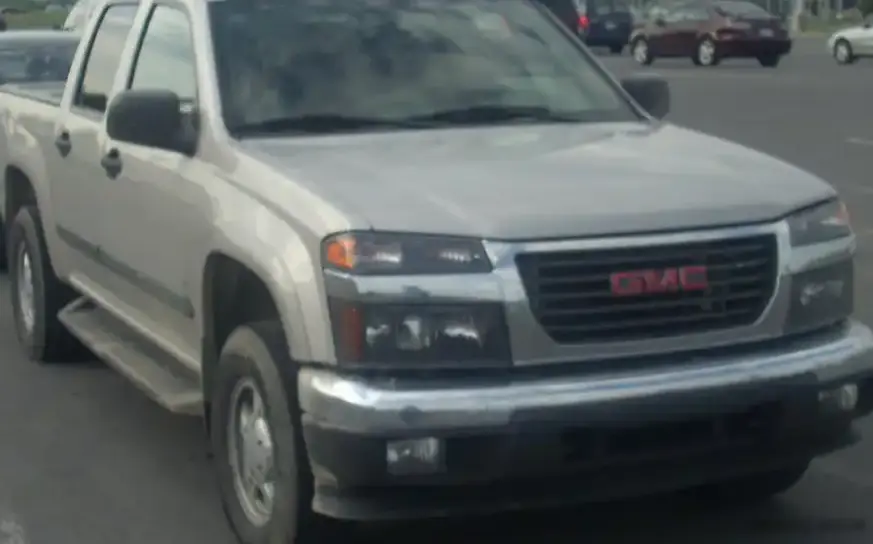
The GMC Canyon I Crew Cab, produced from 2007 to 2012, represented GMC’s entry into the mid-size pickup truck market in North America. Positioned below the full-size Sierra, the Canyon aimed to provide a more manageable and fuel-efficient option for buyers who didn’t require the larger capacity of a full-size truck. The 2.9-liter (178.25 cubic inch) inline-four cylinder engine, producing 185 horsepower and 258 Nm (190.29 lb-ft) of torque, was a key engine offering during this generation, particularly appealing to those prioritizing affordability and basic capability. This variant, often paired with a five-speed manual transmission or a four-speed automatic, served as the base engine for the Crew Cab configuration, offering a balance between utility and cost.
Technical Specifications
| Brand | GMC |
| Model | Canyon |
| Generation | Canyon I Crew Cab |
| Type (Engine) | 2.9 (185 Hp) 4WD |
| Start of production | 2007 |
| End of production | 2012 |
| Powertrain Architecture | Internal Combustion engine |
| Body type | Pick-up |
| Seats | 5-6 |
| Doors | 4 |
| Fuel consumption (urban) | 13 l/100 km (18.1 US mpg) |
| Fuel consumption (extra urban) | 9.8 l/100 km (24 US mpg) |
| Fuel Type | Petrol (Gasoline) |
| Weight-to-power ratio | 9.7 kg/Hp |
| Weight-to-torque ratio | 7 kg/Nm |
| Power | 185 Hp @ 5600 rpm |
| Power per litre | 63.3 Hp/l |
| Torque | 258 Nm @ 2800 rpm (190.29 lb.-ft. @ 2800 rpm) |
| Maximum engine speed | 6300 rpm |
| Engine layout | Front, Transverse |
| Engine Model/Code | LLV |
| Engine displacement | 2921 cm3 (178.25 cu. in.) |
| Number of cylinders | 4 |
| Engine configuration | Inline |
| Cylinder Bore | 95.5 mm (3.76 in.) |
| Piston Stroke | 102 mm (4.02 in.) |
| Compression ratio | 10:1 |
| Number of valves per cylinder | 4 |
| Fuel injection system | Multi-port manifold injection |
| Engine aspiration | Naturally aspirated engine |
| Valvetrain | DOHC, CVVT |
| Engine oil capacity | 4.7 l (4.97 US qt | 4.14 UK qt) |
| Coolant capacity | 9.8 l (10.36 US qt | 8.62 UK qt) |
| Kerb Weight | 1795 kg (3957.3 lbs.) |
| Max. weight | 2404 kg (5299.91 lbs.) |
| Max load | 609 kg (1342.62 lbs.) |
| Trunk (boot) space – minimum | 1040 l (36.73 cu. ft.) |
| Fuel tank capacity | 74.2 l (19.6 US gal | 16.32 UK gal) |
| Length | 5260 mm (207.09 in.) |
| Width | 1742 mm (68.58 in.) |
| Height | 1723 mm (67.83 in.) |
| Wheelbase | 3200 mm (125.98 in.) |
| Front track | 1515 mm (59.65 in.) |
| Rear (Back) track | 1520 mm (59.84 in.) |
| Ride height (ground clearance) | 195.3 mm (7.69 in.) |
| Minimum turning circle | 13.5 m (44.29 ft.) |
| Drivetrain Architecture | All wheel drive (4×4) |
| Number of gears | 5 |
| Type of gearbox | Manual transmission |
| Front suspension | Independent coil spring |
| Rear suspension | Leaf spring |
| Front brakes | Ventilated discs |
| Rear brakes | Drum |
| Assisting systems | ABS (Anti-lock braking system) |
| Steering type | Steering rack and pinion |
| Power steering | Hydraulic Steering |
| Tires size | 225/70 R15; 235/75 R15 |
| Wheel rims size | 6.5J x 15 |
Powertrain & Engine Architecture
The 2.9-liter LLV inline-four engine was a relatively simple design, utilizing a cast iron block and aluminum cylinder head. It featured a dual overhead camshaft (DOHC) valvetrain with variable valve timing (CVVT) on the intake side, aimed at improving fuel efficiency and low-end torque. Fuel delivery was handled by a multi-port fuel injection system. While not a particularly high-tech engine, it was known for its durability and relative ease of maintenance. The four-speed automatic transmission, a common choice for this engine, was designed for smooth operation and adequate performance in everyday driving situations. The manual transmission offered a more engaging driving experience and slightly improved fuel economy.
Driving Characteristics
The 2.9-liter engine in the Canyon Crew Cab provided adequate, but not exhilarating, performance. Acceleration was modest, and passing maneuvers required planning. The automatic transmission, while smooth, could feel somewhat sluggish, particularly when downshifting. The gear ratios were optimized for fuel economy and towing capacity rather than outright speed. Compared to the optional 3.7-liter inline-five or the more powerful V6 engines available in the Canyon, the 2.9-liter felt noticeably less responsive. However, it offered a more relaxed driving experience and better fuel economy, making it suitable for daily commuting and light-duty tasks.
Equipment & Trim Levels
The 2.9-liter engine was typically found in the base and mid-level trim configurations of the Canyon Crew Cab. Standard features generally included air conditioning, power windows and locks, and a basic audio system. Higher trim levels added features such as alloy wheels, upgraded interior materials, and a premium sound system. Optional extras included a towing package, off-road suspension, and a navigation system. The interior upholstery was typically cloth, with leather options available on higher trims. The dashboard layout was functional and straightforward, prioritizing usability over luxury.
Chassis & Braking
The Canyon I Crew Cab utilized a body-on-frame construction, providing a robust and durable platform. The front suspension consisted of independent coil springs, while the rear suspension employed leaf springs. This setup offered a comfortable ride quality, but could feel somewhat bouncy when unloaded. The braking system featured ventilated discs at the front and drum brakes at the rear. Anti-lock braking system (ABS) was standard. The relatively heavy weight of the Crew Cab, combined with the modest power output of the 2.9-liter engine, meant that braking distances were longer compared to lighter vehicles.
Market Reception & Comparison
The 2.9-liter Canyon was generally well-received as an affordable and practical mid-size pickup. Critics praised its durability and ease of maintenance, but noted its lack of power and refinement compared to some competitors. Fuel economy was considered average for its class. Compared to the more powerful engine options within the Canyon lineup, the 2.9-liter offered a lower price point and better fuel efficiency, making it attractive to budget-conscious buyers. However, those seeking more performance or towing capacity often opted for the larger engines.
Legacy
The 2.9-liter LLV engine, while not a groundbreaking design, proved to be a reliable and durable powerplant. Many examples are still on the road today, testament to its robust construction. In the used car market, Canyon Crew Cabs equipped with the 2.9-liter engine are often sought after by buyers looking for an affordable and dependable pickup truck. Maintenance costs are generally low, and parts availability is good. While it may not offer the performance or features of more modern trucks, the 2.9-liter Canyon remains a viable option for those seeking a simple, rugged, and capable workhorse.
