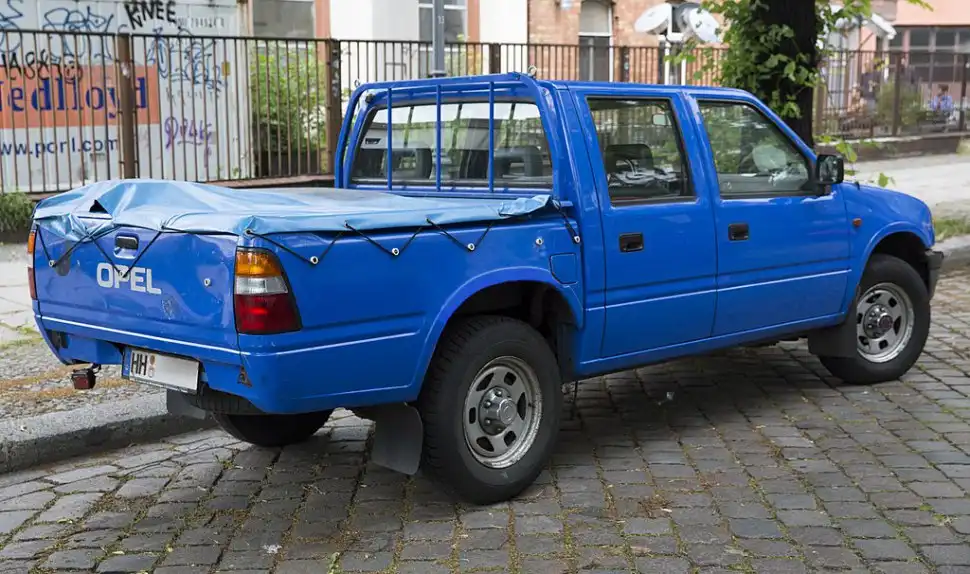
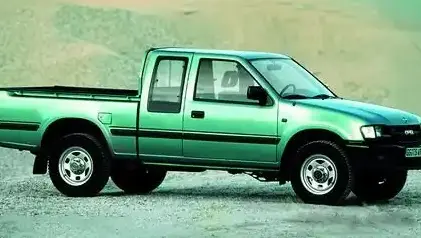
The Opel Campo Single Cab 3.1 TD (109 hp) 4×4 was a utilitarian pickup truck produced by Opel from 1992 to 2001. Positioned as a workhorse vehicle, it catered to buyers needing a robust and capable four-wheel-drive option in the European market. The Campo, based on the Isuzu Faster platform following GM’s partnership with Isuzu, offered a more affordable and practical alternative to larger, more luxurious pickup trucks. This specific 3.1 TD variant represented a mid-range offering within the Campo lineup, balancing diesel fuel efficiency with respectable torque for hauling and off-road capability.
Technical Specifications
| Brand | Opel |
| Model | Campo |
| Generation | Campo Single Cab |
| Type (Engine) | 3.1 TD (109 Hp) 4×4 |
| Start of production | 1992 |
| End of production | June, 2001 |
| Powertrain Architecture | Internal Combustion engine |
| Body type | Pick-up |
| Seats | 2 |
| Doors | 2 |
| Fuel consumption (combined) | 10.8 l/100 km (21.8 US mpg, 26.2 UK mpg, 9.3 km/l) |
| Fuel Type | Diesel |
| Acceleration 0 – 100 km/h | 15.3 sec |
| Acceleration 0 – 62 mph | 15.3 sec |
| Acceleration 0 – 60 mph | 14.5 sec |
| Maximum speed | 153 km/h (95.07 mph) |
| Power | 109 Hp @ 3600 rpm |
| Power per litre | 35.6 Hp/l |
| Torque | 255 Nm @ 1900 rpm (188.08 lb.-ft. @ 1900 rpm) |
| Engine layout | Front, Longitudinal |
| Engine Model/Code | 4JG2T |
| Engine displacement | 3059 cm3 (186.67 cu. in.) |
| Number of cylinders | 4 |
| Engine configuration | Inline |
| Fuel injection system | Precombustion chamber injection |
| Engine aspiration | Turbocharger |
| Engine oil capacity | 6 l (6.34 US qt | 5.28 UK qt) |
| Coolant capacity | 9 l (9.51 US qt | 7.92 UK qt) |
| Fuel tank capacity | 75 l (19.81 US gal | 16.5 UK gal) |
| Length | 4980 mm (196.06 in.) |
| Width | 1690 mm (66.54 in.) |
| Height | 1595 mm (62.8 in.) |
| Wheelbase | 3025 mm (119.09 in.) |
| Drive wheel | All wheel drive (4×4) |
| Number of gears and type of gearbox | 5 gears, manual transmission |
| Front suspension | Independent torsion bar, double wishbone |
| Front brakes | Ventilated discs |
| Rear brakes | Drum |
| Power steering | Hydraulic Steering |
Powertrain & Engine Architecture
The heart of the Campo 3.1 TD was the 4JG2T, a 3.1-liter inline-four cylinder diesel engine. This engine, sourced from Isuzu, featured precombustion chamber injection, a system common in diesel engines of the era. This system involved injecting fuel into a precombustion chamber, which then ignited the main combustion chamber, promoting more complete combustion and reducing noise. The engine was turbocharged, boosting power output to 109 horsepower at 3600 rpm and 255 Nm (188 lb-ft) of torque at a relatively low 1900 rpm. This torque curve made it well-suited for hauling and towing. The engine was mounted longitudinally in the chassis. The five-speed manual transmission was the only gearbox option available with this engine, providing a direct connection to the drivetrain.
Driving Characteristics
The Campo 3.1 TD, with its 109 hp and manual transmission, offered a utilitarian driving experience. Acceleration was modest, taking around 15.3 seconds to reach 100 km/h (62 mph). However, the engine’s strong low-end torque made it capable of handling moderate loads and navigating challenging terrain. The five-speed gearbox allowed for efficient cruising at highway speeds, although engine noise was noticeable. Compared to potential gasoline engine options (which were less common in this model), the diesel offered significantly better fuel economy, but at the expense of refinement and outright performance. The 4×4 system, typically part-time, provided enhanced traction in off-road conditions or slippery surfaces.
Equipment & Trim Levels
The Campo Single Cab 3.1 TD was generally sparsely equipped, reflecting its work-oriented nature. Standard features typically included a basic dashboard, vinyl upholstery, and a robust heating system. Power steering was usually standard, aiding maneuverability. Options were limited but could include upgraded audio systems, and occasionally, more comfortable seating. The interior was designed for durability and ease of cleaning rather than luxury. The Single Cab configuration meant seating for only two occupants, with a dedicated cargo bed behind the cab.
Chassis & Braking
The Campo’s chassis was a body-on-frame construction, providing a rugged and durable platform. The front suspension utilized independent torsion bars and double wishbone setup, offering a reasonable ride quality for a pickup truck. The rear suspension employed leaf springs, designed to handle heavy loads. Braking consisted of ventilated discs on the front wheels and drum brakes on the rear. While adequate for the vehicle’s weight and intended use, the braking system wasn’t particularly sophisticated. The hydraulic steering provided reasonable control, although it lacked the precision of more modern steering systems.
Market Reception & Comparison
The Opel Campo 3.1 TD was generally well-received in the European market as a practical and affordable 4×4 pickup. Critics praised its robust construction, fuel efficiency, and off-road capability. However, it was often criticized for its basic interior, lack of refinement, and modest performance. Compared to other pickups available at the time, such as the Toyota Hilux or Nissan Navara, the Campo offered a more budget-friendly option, but lacked some of their features and sophistication. The 3.1 TD engine was considered a good compromise between power and economy, although some competitors offered more powerful engines.
Legacy
The Opel Campo, and specifically the 3.1 TD variant, has developed a reputation for reliability and durability. The Isuzu-derived diesel engine is known for its longevity, provided it receives regular maintenance. Today, well-maintained examples are sought after by enthusiasts and those needing a dependable work vehicle. While not a collector’s item, the Campo 3.1 TD represents a practical and honest approach to pickup truck design, offering a blend of capability, affordability, and durability that continues to appeal to a niche market. Parts availability can be a challenge, but the robust nature of the vehicle often means that components last a long time. The Campo remains a testament to a simpler era of pickup truck design, prioritizing functionality over luxury.