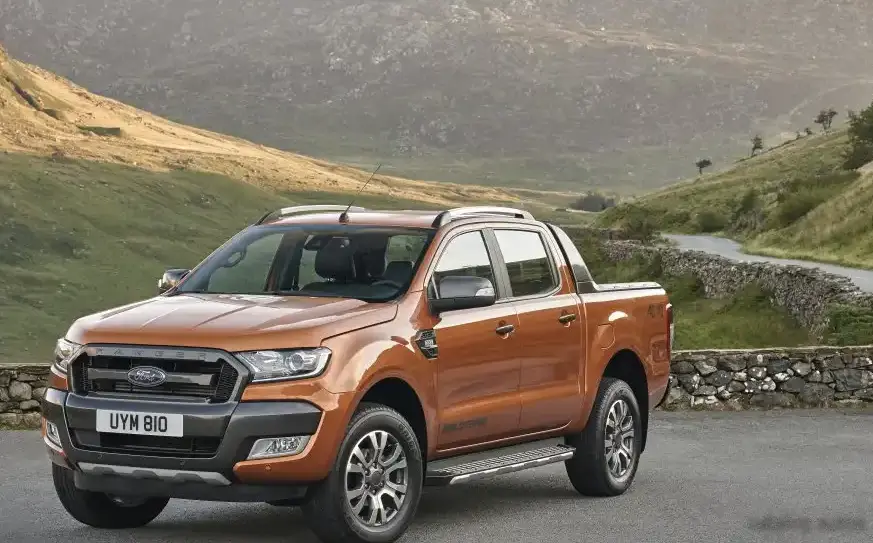
The Ford Ranger III Double Cab, specifically the facelifted version introduced in 2015, represented a significant evolution of Ford’s globally successful mid-size pickup truck. Produced from 2015 to 2018, this iteration of the Ranger was primarily aimed at markets outside of North America, where the smaller dimensions and more fuel-efficient engine options were highly valued. The 3.2 TDCi 4×4 Automatic variant occupied a premium position within the Ranger III lineup, offering a blend of performance, capability, and convenience. It was built on the T6 platform, a robust chassis designed for both on-road comfort and off-road durability.
Technical Specifications
| Brand | Ford |
| Model | Ranger |
| Generation | Ranger III Double Cab (facelift 2015) |
| Type (Engine) | 3.2 TDCi (200 Hp) 4×4 Automatic |
| Start of production | 2015 |
| End of production | 2018 |
| Powertrain Architecture | Internal Combustion engine |
| Body type | Pick-up |
| Seats | 5 |
| Doors | 4 |
| Fuel consumption (urban) | 11.4 l/100 km (20.6 US mpg, 24.8 UK mpg, 8.8 km/l) |
| Fuel consumption (extra urban) | 7.4 l/100 km (31.8 US mpg, 38.2 UK mpg, 13.5 km/l) |
| Fuel consumption (combined) | 8.9 l/100 km (26.4 US mpg, 31.7 UK mpg, 11.2 km/l) |
| CO2 emissions | 234 g/km |
| Fuel Type | Diesel |
| Acceleration 0 – 100 km/h | 10.6 sec |
| Acceleration 0 – 62 mph | 10.6 sec |
| Acceleration 0 – 60 mph | 10.1 sec |
| Maximum speed | 175 km/h (108.74 mph) |
| Emission standard | Euro 5 |
| Weight-to-power ratio | 10.8 kg/Hp, 92.3 Hp/tonne |
| Weight-to-torque ratio | 4.6 kg/Nm, 216.9 Nm/tonne |
| Power | 200 Hp @ 3000 rpm |
| Power per litre | 62.5 Hp/l |
| Torque | 470 Nm @ 1500-2750 rpm (346.65 lb.-ft. @ 1500-2750 rpm) |
| Engine layout | Front, Longitudinal |
| Engine displacement | 3198 cm3 (195.15 cu. in.) |
| Number of cylinders | 5 |
| Engine configuration | Inline |
| Cylinder Bore | 89.9 mm (3.54 in.) |
| Piston Stroke | 100.8 mm (3.97 in.) |
| Compression ratio | 15.7:1 |
| Number of valves per cylinder | 4 |
| Fuel injection system | Diesel Commonrail |
| Engine aspiration | Turbocharger, Intercooler |
| Engine oil capacity | 9.75 l (10.3 US qt | 8.58 UK qt) |
| Coolant | 13.5 l (14.27 US qt | 11.88 UK qt) |
| Kerb Weight | 2167 kg (4777.42 lbs.) |
| Max. weight | 3200 kg (7054.79 lbs.) |
| Max load | 1033 kg (2277.38 lbs.) |
| Fuel tank capacity | 80 l (21.13 US gal | 17.6 UK gal) |
| Length | 5277-5354 mm (207.76 – 210.79 in.) |
| Width | 1860 mm (73.23 in.) |
| Height | 1815-1848 mm (71.46 – 72.76 in.) |
| Wheelbase | 3220 mm (126.77 in.) |
| Front track | 1560 mm (61.42 in.) |
| Rear track | 1560 mm (61.42 in.) |
| Front overhang | 908 mm (35.75 in.) |
| Rear overhang | 1149-1226 mm (45.24 – 48.27 in.) |
| Ride height (ground clearance) | 223-237 mm (8.78 – 9.33 in.) |
| Approach angle | 28° |
| Departure angle | 28° |
| Ramp-over angle | 25° |
| Climb angle | 32° |
| Wading depth | 800 mm (31.5 in.) |
| Drive wheel | All wheel drive (4×4) |
| Number of gears | 6 |
| Gearbox type | automatic transmission |
| Front suspension | Independent coil spring |
| Rear suspension | Dependent suspension of two longitudinal semi-elliptic leaf springs |
| Front brakes | Ventilated discs |
| Rear brakes | Drum |
| Assisting systems | ABS (Anti-lock braking system) |
| Steering type | Steering rack and pinion |
| Power steering | Electric Steering |
| Tires size | 215/70 R16; 255/70 R16; 265/65 R17; 265/60 R18 |
| Wheel rims size | 16; 17; 18 |
Powertrain & Engine Architecture
The heart of the Ranger 3.2 TDCi is the Puma 3.2-liter inline five-cylinder diesel engine. This engine, designated with various codes depending on the market, is a robust and relatively simple design, known for its durability. The 3.2 TDCi utilizes a common-rail direct injection system, delivering fuel at extremely high pressures for optimized combustion. A variable geometry turbocharger (VGT) with an intercooler further enhances performance and efficiency. The engine produces 200 horsepower at 3000 rpm and a substantial 470 Nm (346 lb-ft) of torque between 1500 and 2750 rpm. This broad torque curve is particularly well-suited for the demands of a pickup truck. The engine is longitudinally mounted, and power is delivered to all four wheels via a six-speed automatic transmission. This transmission, while not known for being the most sophisticated, is generally reliable and provides smooth shifts under normal driving conditions.
Driving Characteristics
The 3.2 TDCi automatic Ranger offers a comfortable and capable driving experience. While not a sports truck, the engine’s torque output provides ample power for everyday driving and hauling loads. The automatic transmission is programmed for smooth shifts, prioritizing comfort over outright performance. Acceleration from 0-60 mph takes around 10.1 seconds, which is respectable for a vehicle of this size and weight. The 4×4 system provides excellent traction in various conditions, making it suitable for both on-road and off-road use. Compared to the 2.2-liter TDCi variants, the 3.2 offers significantly more power and torque, resulting in a more confident driving experience, especially when towing or carrying heavy loads. However, the 3.2 consumes more fuel than the smaller engine options.
Equipment & Trim Levels
The 3.2 TDCi Double Cab typically came well-equipped, often representing the higher trim levels within the Ranger III range. Standard features generally included air conditioning, power windows and locks, a basic audio system, and alloy wheels. Higher-spec models added features such as leather upholstery, a more advanced infotainment system with navigation, automatic climate control, and parking sensors. Optional extras included a tow bar, bed liner, and upgraded audio systems. The Double Cab configuration offered seating for five passengers, making it a practical choice for families or work crews.
Chassis & Braking
The Ranger III utilizes a body-on-frame construction, providing a robust and durable platform. The front suspension consists of independent coil springs, while the rear suspension employs a traditional leaf spring setup. This configuration balances ride comfort with load-carrying capacity. Braking duties are handled by ventilated discs at the front and drum brakes at the rear. An Anti-lock Braking System (ABS) is standard. The chassis is designed to handle significant payloads and towing capacities, making it a versatile workhorse.
Market Reception & Comparison
The Ranger 3.2 TDCi 4×4 Automatic was generally well-received by automotive critics. It was praised for its strong engine, capable 4×4 system, and comfortable ride. However, some critics noted that the automatic transmission could feel somewhat sluggish at times. Compared to other pickups in its class, such as the Toyota Hilux and Nissan Navara, the Ranger offered a competitive combination of performance, features, and value. Fuel economy was considered average for a diesel pickup of this size. Reliability was generally good, although some owners reported minor issues with the electronic systems.
Legacy
The Ford Ranger III, and specifically the 3.2 TDCi Automatic variant, has proven to be a durable and reliable vehicle. In the used car market, these Rangers hold their value reasonably well, particularly those that have been well-maintained. The 3.2 TDCi engine is known for its longevity, and with regular servicing, it can provide many years of reliable service. While newer Ranger models have surpassed it in terms of technology and refinement, the Ranger III remains a popular choice for those seeking a capable and affordable pickup truck.