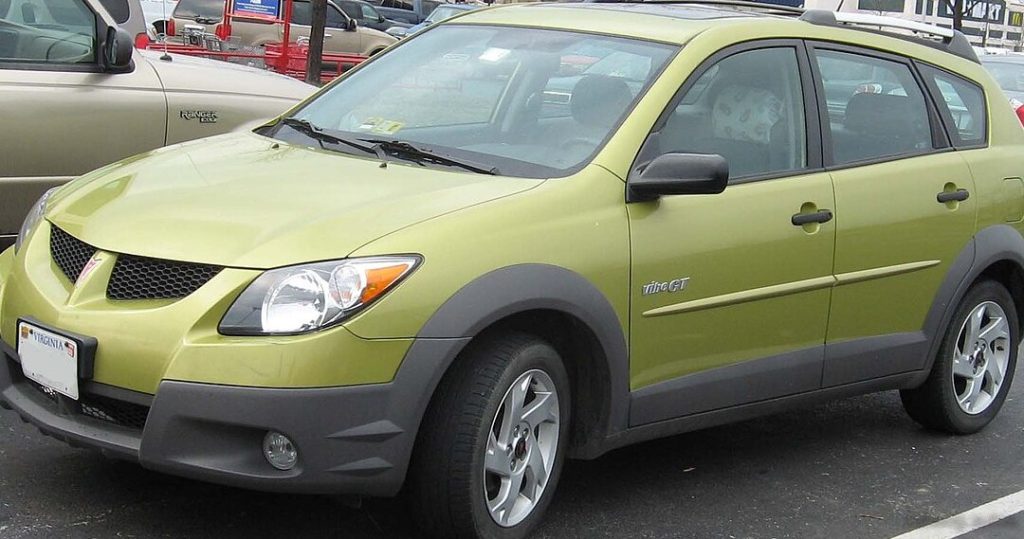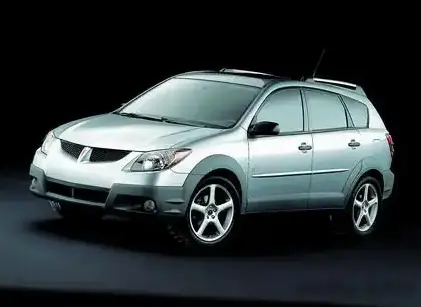
The Pontiac Vibe 1.8i 16V, produced from 2002 to 2008, represented a significant entry for General Motors into the compact wagon segment. This variant, powered by the 1.8-liter LV6 engine producing 130 horsepower, occupied a middle ground within the Vibe lineup, offering a balance between affordability and practicality. The Vibe itself was a collaborative effort, a product of the GM-Toyota joint venture, sharing its platform – the MC/S platform (also known as the 1HX0/A3 platform) – with the Toyota Matrix. Positioned as a more affordable alternative to some of its competitors, the 1.8i 16V aimed to appeal to buyers seeking a versatile and fuel-efficient vehicle for daily commuting and light hauling.
Technical Specifications
| Brand | Pontiac |
| Model | Vibe |
| Generation | Vibe |
| Type (Engine) | 1.8i 16V (130 Hp) |
| Start of production | January, 2002 |
| End of production | 2008 |
| Powertrain Architecture | Internal Combustion engine |
| Body type | Station wagon (estate) |
| Seats | 5 |
| Doors | 5 |
| Fuel consumption (urban) | 7.8 l/100 km (30.2 US mpg) |
| Fuel consumption (extra urban) | 6.5 l/100 km (36.2 US mpg) |
| Fuel Type | Petrol (Gasoline) |
| Acceleration 0 – 100 km/h | 10 sec |
| Acceleration 0 – 62 mph | 10 sec |
| Acceleration 0 – 60 mph | 9.5 sec |
| Maximum speed | 180 km/h (111.85 mph) |
| Weight-to-power ratio | 9.4 kg/Hp |
| Weight-to-torque ratio | 7.2 kg/Nm |
| Power | 130 Hp @ 6000 rpm |
| Power per litre | 72.5 Hp/l |
| Torque | 170 Nm @ 4200 rpm (125.39 lb.-ft. @ 4200 rpm) |
| Engine layout | Front, Transverse |
| Engine Model/Code | LV6 |
| Engine displacement | 1794 cm3 (109.48 cu. in.) |
| Number of cylinders | 4 |
| Engine configuration | Inline |
| Cylinder Bore | 79 mm (3.11 in.) |
| Piston Stroke | 91.5 mm (3.6 in.) |
| Compression ratio | 10:1 |
| Number of valves per cylinder | 4 |
| Fuel injection system | Multi-port manifold injection |
| Engine aspiration | Naturally aspirated engine |
| Valvetrain | DOHC |
| Engine oil capacity | 3.7 l (3.91 US qt | 3.26 UK qt) |
| Coolant capacity | 6.5 l (6.87 US qt | 5.72 UK qt) |
| Kerb Weight | 1225 kg (2700.66 lbs.) |
| Trunk (boot) space – minimum | 870 l (30.72 cu. ft.) |
| Trunk (boot) space – maximum | 1620 l (57.21 cu. ft.) |
| Fuel tank capacity | 55 l (14.53 US gal | 12.1 UK gal) |
| Length | 4365 mm (171.85 in.) |
| Width | 1775 mm (69.88 in.) |
| Height | 1580 mm (62.2 in.) |
| Wheelbase | 2600 mm (102.36 in.) |
| Front track | 1515 mm (59.65 in.) |
| Rear track | 1495 mm (58.86 in.) |
| Drivetrain Architecture | Front wheel drive |
| Number of gears | 5 |
| Gearbox type | Manual transmission |
| Front suspension | Spring Strut |
| Rear suspension | Suspension with traction connecting levers |
| Front brakes | Ventilated discs |
| Rear brakes | Drum |
| Steering type | Steering rack and pinion |
| Power steering | Hydraulic Steering |
| Tires size | 205/55 R16 |
Powertrain & Engine Architecture
The heart of the Vibe 1.8i 16V is the GM-sourced LV6 engine, a 1.8-liter inline-four cylinder powerplant. This engine utilizes a multi-port fuel injection system, delivering fuel directly into the intake ports, and a double overhead camshaft (DOHC) valvetrain, optimizing airflow for improved performance. The LV6 engine, while not known for its outright power, was designed for reliability and fuel efficiency. The 10:1 compression ratio contributed to a reasonable balance between power output and fuel economy. The five-speed manual transmission was the standard offering for this trim, providing drivers with direct control over the engine’s powerband. The engine’s transverse mounting and front-wheel-drive configuration were typical for vehicles in this class.
Driving Characteristics
The 130 horsepower and 170 Nm (125 lb-ft) of torque produced by the 1.8L engine provided adequate, though not exhilarating, performance. Acceleration from 0-60 mph took approximately 9.5 seconds, making it competitive with other compact wagons of the era. The five-speed manual transmission allowed drivers to keep the engine in its optimal power range, but the engine lacked the low-end grunt of larger displacement engines. Compared to the available automatic transmission, the manual offered better fuel economy and a more engaging driving experience. The Vibe 1.8i 16V was best suited for everyday commuting and light-duty tasks, rather than spirited driving.
Equipment & Trim Levels
The Vibe 1.8i 16V typically came standard with features such as air conditioning, power windows and locks, and an AM/FM stereo. Interior upholstery was generally cloth, with a relatively simple and functional dashboard layout. Optional extras included features like a CD player, upgraded sound system, and alloy wheels. The Vibe aimed for practicality over luxury, offering a no-frills interior focused on durability and ease of use. Higher trim levels, such as the Vibe GT, offered more premium features like sport seats and a more powerful engine.
Chassis & Braking
The Vibe 1.8i 16V utilized a relatively conventional chassis setup. Front suspension consisted of MacPherson strut springs, while the rear employed a torsion beam suspension. This configuration provided a comfortable ride, though handling was not particularly sporty. Braking duties were handled by ventilated discs at the front and drum brakes at the rear. The braking system was adequate for everyday driving, but lacked the stopping power of more advanced systems. The relatively lightweight construction of the Vibe helped to offset the limitations of the braking system.
Market Reception & Comparison
The Pontiac Vibe 1.8i 16V was generally well-received by critics as a practical and affordable wagon. Its fuel economy was a strong point, with EPA estimates around 30 mpg in the city and 36 mpg on the highway. However, some reviewers criticized its lack of power and somewhat bland styling. Compared to the Toyota Matrix, which shared the same platform, the Vibe offered a lower price point but lacked some of the Toyota’s refinement. Against competitors like the Dodge Neon and Mazda Protegé, the Vibe offered a unique wagon body style and a good balance of features for the price.
Legacy
The Pontiac Vibe, and specifically the 1.8i 16V variant, has proven to be a relatively reliable vehicle in the used car market. The LV6 engine is known for its durability, and routine maintenance is generally straightforward and affordable. However, like any vehicle of its age, potential buyers should be aware of common issues such as oil leaks and corrosion. The Vibe’s practicality and fuel efficiency continue to make it an attractive option for budget-conscious buyers seeking a versatile and dependable wagon. While the Pontiac brand is no longer in production, the Vibe remains a testament to the successful collaboration between General Motors and Toyota.