Technical Specifications
| Brand | Volkswagen |
| Model | Jetta |
| Generation | Jetta VI |
| Type (Engine) | 1.6 TDI (105 Hp) |
| Start of production | 2010 |
| End of production | 2014 |
| Powertrain Architecture | Internal Combustion engine |
| Body type | Sedan |
| Seats | 5 |
| Doors | 4 |
| Fuel consumption (urban) | 5.7 l/100 km (41.3 US mpg, 49.6 UK mpg, 17.5 km/l) |
| Fuel consumption (extra urban) | 3.9 l/100 km (60.3 US mpg, 72.4 UK mpg, 25.6 km/l) |
| Fuel consumption (combined) | 4.5 l/100 km (52.3 US mpg, 62.8 UK mpg, 22.2 km/l) |
| Fuel Type | Diesel |
| Acceleration 0 – 100 km/h | 11.7 sec |
| Acceleration 0 – 62 mph | 11.7 sec |
| Acceleration 0 – 60 mph | 11.1 sec |
| Maximum speed | 190 km/h (118.06 mph) |
| Emission standard | Euro 5 |
| Weight-to-power ratio | 13.3 kg/Hp, 75.4 Hp/tonne |
| Power | 105 Hp @ 4400 rpm |
| Power per litre | 65.7 Hp/l |
| Engine layout | Front, Transverse |
| Engine Model/Code | CAYC |
| Engine displacement | 1598 cm3 (97.52 cu. in.) |
| Number of cylinders | 4 |
| Engine configuration | Inline |
| Number of valves per cylinder | 2 |
| Fuel injection system | Pump-nozzle (Unit Injector) |
| Engine aspiration | Turbocharger, Intercooler |
| Engine oil capacity | 4.3 l (4.54 US qt | 3.78 UK qt) |
| Kerb Weight | 1392 kg (3068.83 lbs.) |
| Max. weight | 1910 kg (4210.83 lbs.) |
| Max load | 518 kg (1141.99 lbs.) |
| Trunk (boot) space – minimum | 510 l (18.01 cu. ft.) |
| Fuel tank capacity | 55 l (14.53 US gal | 12.1 UK gal) |
| Length | 4644 mm (182.83 in.) |
| Width | 1778 mm (70 in.) |
| Height | 1482 mm (58.35 in.) |
| Wheelbase | 2651 mm (104.37 in.) |
| Front track | 1535 mm (60.43 in.) |
| Rear (Back) track | 1532 mm (60.31 in.) |
| Minimum turning circle | 11.1 m (36.42 ft.) |
| Drivetrain Architecture | The Internal combustion engine (ICE) drives the front wheels of the vehicle. |
| Drive wheel | Front wheel drive |
| Number of gears and type of gearbox | 5 gears, manual transmission |
| Front suspension | Independent, type McPherson with coil spring and anti-roll bar |
| Rear suspension | Independent multi-link spring suspension with stabilizer |
| Front brakes | Ventilated discs |
| Rear brakes | Disc |
| Assisting systems | ABS (Anti-lock braking system) |
| Steering type | Steering rack and pinion |
| Power steering | Electric Steering |
| Tires size | 205/55 R16 |
| Wheel rims size | 6.5J x 16 |
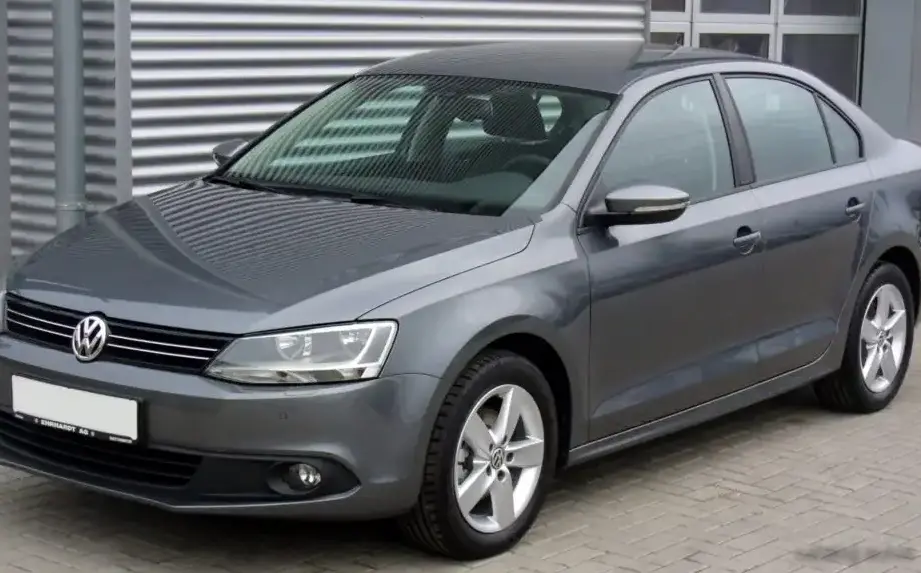
The Volkswagen Jetta VI 1.6 TDI (105 hp) represented a key offering in Volkswagen’s sixth-generation Jetta lineup, produced from 2010 to 2014. It was designed to appeal to buyers seeking a fuel-efficient and practical sedan. This variant utilized the CAYC engine code, a 1.6-liter common rail diesel engine, and was typically paired with a five-speed manual transmission, although a seven-speed DSG dual-clutch transmission was also available as an option. In the broader Jetta VI range, which included petrol engines and more powerful diesel options like the 2.0 TDI, the 1.6 TDI served as the entry point into the diesel lineup, offering a balance between affordability and economy.
Powertrain & Engine Architecture
The heart of the Jetta VI 1.6 TDI is the CAYC engine, a 1.6-liter inline-four cylinder diesel engine. This engine is a member of Volkswagen’s EA188 engine family, known for its robust design and potential for tuning. The CAYC engine features a turbocharger with an intercooler to boost power and efficiency. It employs a pump-nozzle (unit injector) fuel injection system, which delivers fuel directly into the combustion chamber at extremely high pressure. This system contributes to the engine’s efficiency and reduced emissions. The engine also incorporates 2 valves per cylinder. The five-speed manual transmission used in this variant is a standard gearbox, providing a relatively direct driving experience. The optional seven-speed DSG (Direct-Shift Gearbox) offered quicker and smoother shifts, enhancing both performance and fuel economy. The DSG transmission is a dual-clutch system that pre-selects the next gear, resulting in near-seamless gear changes.
Driving Characteristics
The 105 hp output of the 1.6 TDI engine, coupled with the five-speed manual transmission, resulted in a driving experience focused on fuel economy rather than outright performance. Acceleration from 0 to 60 mph took around 11.1 seconds, and the top speed was approximately 118 mph. The engine delivered its peak torque at relatively low RPMs, providing adequate pulling power for everyday driving situations. However, compared to the more powerful 2.0 TDI variants, the 1.6 TDI felt noticeably slower, especially when fully loaded or tackling steep inclines. The gear ratios in the five-speed manual transmission were spaced to prioritize fuel efficiency, meaning that the engine often needed to be revved higher to achieve quicker acceleration. The optional DSG transmission improved responsiveness and provided a more refined driving experience, but it didn’t dramatically alter the overall performance characteristics.
Equipment & Trim Levels
The Jetta VI 1.6 TDI (105 hp) typically came with a base level of equipment, designed to offer good value for money. Standard features generally included air conditioning, power windows, power mirrors, a basic audio system with CD player, and steel wheels with wheel covers. Higher trim levels, such as Trendline and Comfortline, added features like alloy wheels, upgraded audio systems, cruise control, and automatic climate control. Optional extras included a sunroof, leather upholstery, and a navigation system. Interior upholstery was typically cloth, with a functional and durable design. The dashboard layout was straightforward and user-friendly, with clearly labeled controls. Safety features included ABS brakes, front airbags, and side airbags.
Chassis & Braking
The Jetta VI 1.6 TDI utilized an independent McPherson strut suspension at the front and an independent multi-link suspension at the rear. This suspension setup provided a comfortable ride quality and decent handling characteristics. The front suspension incorporated a stabilizer bar to reduce body roll during cornering. The braking system consisted of ventilated discs at the front and solid discs at the rear. ABS (Anti-lock Braking System) was standard, enhancing braking performance and stability. The steering was a rack-and-pinion system with electric power steering, providing a light and responsive feel. The tires were typically 205/55 R16, offering a good balance between grip and rolling resistance.
Market Reception & Comparison
The Jetta VI 1.6 TDI (105 hp) was generally well-received by critics as a practical and economical option. It was praised for its fuel efficiency and comfortable ride. However, some reviewers noted that the engine lacked power, particularly when compared to the more potent diesel variants. Compared to the 2.0 TDI models, the 1.6 TDI offered significantly lower running costs but at the expense of performance. The 1.6 TDI also provided a more affordable entry point into the Jetta range, making it attractive to budget-conscious buyers. Fuel economy figures consistently hovered around 52.3 US mpg, making it a very economical choice for daily commuting.
Legacy
The Volkswagen Jetta VI 1.6 TDI (105 hp) has proven to be a relatively reliable powertrain in the used car market. The 1.6 TDI engine is known for its durability, although it’s important to ensure that the vehicle has been properly maintained, including regular oil changes and filter replacements. Common issues can include turbocharger wear and potential problems with the pump-nozzle fuel injection system. However, these issues are not widespread and can often be addressed with preventative maintenance. Today, these vehicles represent an affordable and fuel-efficient option for buyers seeking a practical sedan. The Jetta VI 1.6 TDI remains a popular choice for those prioritizing economy and reliability over outright performance.