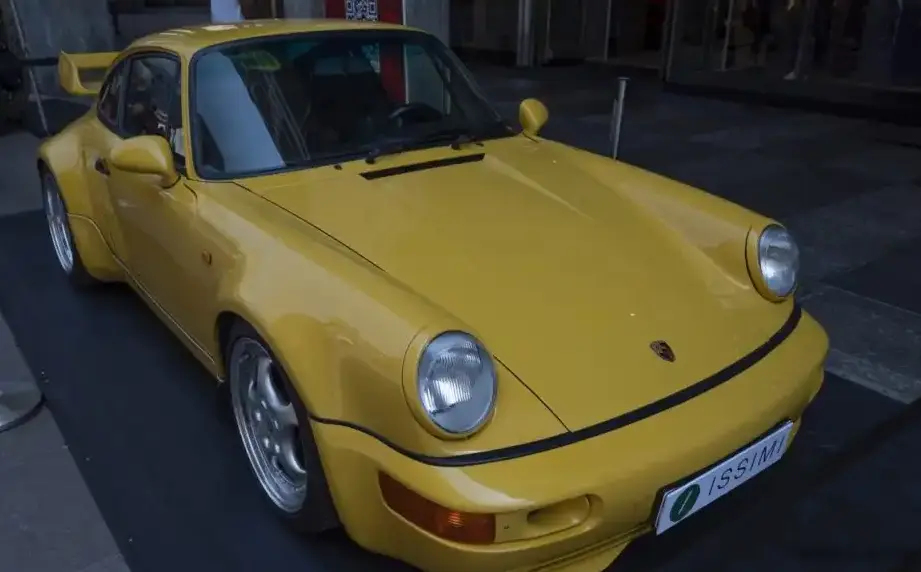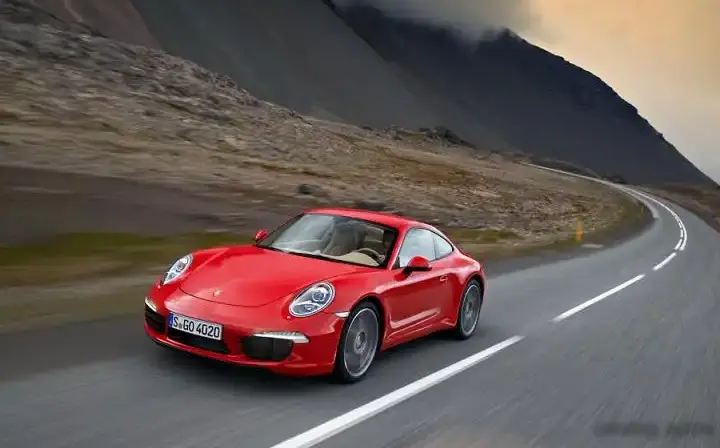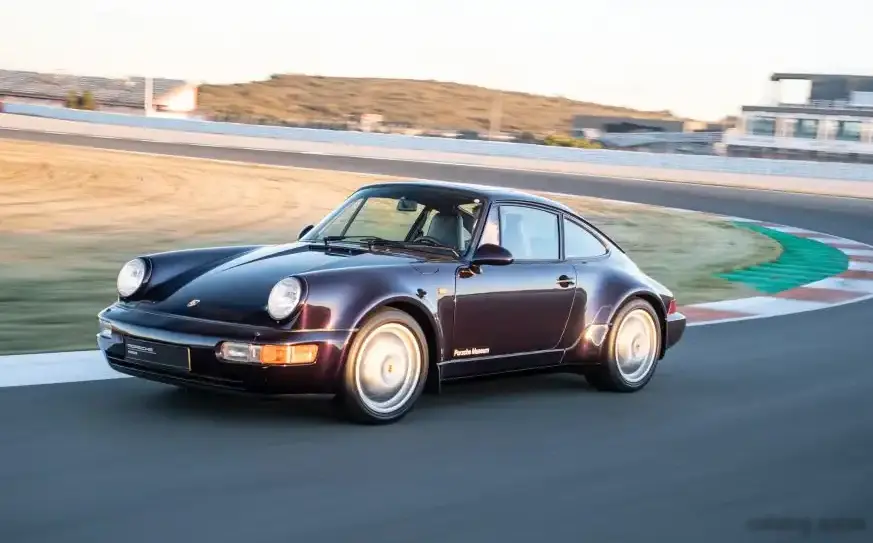
The Porsche 911 (964) Carrera 2 3.6, produced from 1989 to 1993, represents a significant evolution in the iconic 911 lineage. This variant, powered by a 3.6-liter naturally aspirated flat-six engine producing 250 horsepower, served as a core model within the 964 generation, bridging the gap between the earlier, more analog 911s and the increasingly sophisticated models that followed. It was positioned as the performance-oriented, naturally aspirated offering in a lineup that would later include turbocharged variants and the more affordable Carrera 2 with a smaller 3.6L engine. The 964 generation itself was a crucial step for Porsche, introducing significant advancements in technology and refinement while retaining the core characteristics that defined the 911 for decades.
Technical Specifications
| Brand | Porsche |
| Model | 911 |
| Generation | 911 (964) |
| Type (Engine) | Carrera 2 3.6 (250 Hp) |
| Start of production | 1989 |
| End of production | 1993 |
| Powertrain Architecture | Internal Combustion engine |
| Body type | Coupe |
| Seats | 4 |
| Doors | 2 |
| Fuel consumption (urban) | 17.1 l/100 km (13.8 US mpg) |
| Fuel consumption (extra urban) | 7.8 l/100 km (30.2 US mpg) |
| Fuel Type | Petrol (Gasoline) |
| Acceleration 0 – 100 km/h | 5.7 sec |
| Acceleration 0 – 62 mph | 5.7 sec |
| Acceleration 0 – 60 mph | 5.4 sec |
| Maximum speed | 260 km/h (161.56 mph) |
| Weight-to-power ratio | 5.4 kg/Hp |
| Weight-to-torque ratio | 4.4 kg/Nm |
| Power | 250 Hp @ 6100 rpm |
| Torque | 310 Nm @ 4800 rpm (228.64 lb.-ft. @ 4800 rpm) |
| Engine layout | Rear, Longitudinal |
| Engine Model/Code | M64.01 |
| Engine displacement | 3600 cm3 (219.69 cu. in.) |
| Number of cylinders | 6 |
| Engine configuration | Boxer |
| Cylinder Bore | 100 mm (3.94 in.) |
| Piston Stroke | 76.4 mm (3.01 in.) |
| Compression ratio | 11.3:1 |
| Number of valves per cylinder | 2 |
| Fuel injection system | Multi-port manifold injection |
| Engine aspiration | Naturally aspirated |
| Engine oil capacity | 11.5 l (12.15 US qt | 10.12 UK qt) |
| Kerb Weight | 1350 kg (2976.24 lbs.) |
| Max. weight | 1690 kg (3725.81 lbs.) |
| Max load | 340 kg (749.57 lbs.) |
| Trunk (boot) space – minimum | 90 l (3.18 cu. ft.) |
| Fuel tank capacity | 77 l (20.34 US gal | 16.94 UK gal) |
| Length | 4250 mm (167.32 in.) |
| Width | 1652 mm (65.04 in.) |
| Height | 1310 mm (51.57 in.) |
| Wheelbase | 2272 mm (89.45 in.) |
| Front track | 1380 mm (54.33 in.) |
| Rear (Back) track | 1374 mm (54.09 in.) |
| Ride height (ground clearance) | 120 mm (4.72 in.) |
| Minimum turning circle | 11.95 m (39.21 ft.) |
| Drivetrain Architecture | Rear wheel drive |
| Number of gears | 5 gears, manual transmission |
| Front suspension | Independent type McPherson, Wishbone |
| Rear suspension | Independent coil spring |
| Front brakes | Ventilated discs |
| Rear brakes | Ventilated discs |
| Assisting systems | ABS (Anti-lock braking system) |
| Steering type | Steering rack and pinion |
| Power steering | Hydraulic Steering |
| Tires size | 205/50 R16; 225/50 R16 |
| Wheel rims size | 6J x 16; 8J x 16 |
Powertrain & Engine Architecture
The heart of the 964 Carrera 2 3.6 is the M64.01 engine, a 3.6-liter flat-six. This engine represented a substantial upgrade over the 3.2-liter engines found in earlier 911s. It retained the signature Porsche boxer configuration, known for its low center of gravity and smooth operation. The M64.01 featured multi-port fuel injection, a significant improvement over the earlier CIS (Continuous Injection System) found in older 911s, contributing to improved throttle response and efficiency. The engine also benefited from hydraulic valve lifters, reducing maintenance requirements. The 5-speed manual transmission was the standard offering, known for its precise shift feel and robust construction. The engine’s design prioritized smooth power delivery and reliability over outright peak horsepower, making it a very usable and enjoyable engine for everyday driving.
Driving Characteristics
The Carrera 2 3.6 offered a balanced driving experience. With 250 horsepower and 228 lb-ft of torque, it provided brisk acceleration – 0 to 60 mph in around 5.4 seconds – and a top speed of 161.56 mph. While not as brutally fast as later turbocharged 911s, the naturally aspirated engine delivered a linear powerband, making it predictable and confidence-inspiring. The manual transmission’s gear ratios were well-matched to the engine’s characteristics, allowing for spirited driving on both winding roads and open highways. Compared to the later 3.8L Carrera 2, the 3.6 offered a slightly more manageable power delivery, making it a more approachable option for drivers less experienced with high-performance sports cars. The rear-wheel-drive configuration, combined with the engine’s rearward placement, contributed to the 911’s characteristic handling balance, requiring attentive driving but rewarding skilled drivers with exceptional cornering ability.
Equipment & Trim Levels
The 964 Carrera 2 3.6 came reasonably well-equipped as standard. Interior features included comfortable sport seats, a leather-wrapped steering wheel, and basic instrumentation. Air conditioning was typically standard. Optional extras were plentiful, allowing buyers to customize their 911 to their preferences. Popular options included a limited-slip differential, sport suspension, upgraded audio systems, and various interior trim packages. The exterior was typically finished in a range of solid and metallic paint colors. The 964 also introduced power windows and central locking as standard features, representing a step up in comfort and convenience compared to earlier 911s.
Chassis & Braking
The 964 generation 911 featured a significantly updated chassis compared to its predecessor. The suspension utilized independent coil springs all around, with McPherson struts at the front and semi-trailing arms at the rear. This setup provided improved ride quality and handling. Ventilated disc brakes were standard on all four wheels, offering excellent stopping power. ABS (Anti-lock Braking System) was also standard, enhancing safety. The chassis was reinforced compared to earlier 911s, improving rigidity and handling precision. The steering was a rack-and-pinion system with hydraulic power assistance, providing precise and responsive steering feel.
Market Reception & Comparison
The 964 Carrera 2 3.6 was generally well-received by automotive critics. It was praised for its improved refinement, handling, and performance compared to earlier 911s. Critics noted the engine’s smooth power delivery and the improved usability of the car. Compared to the later, more powerful 3.8L Carrera 2, the 3.6 was often seen as a more balanced and approachable option. Fuel economy was reasonable for a sports car of its era, averaging around 17.1 l/100 km in urban driving and 7.8 l/100 km on the highway. Reliability was generally good, although maintenance costs could be high due to the car’s complex engineering and the need for specialized Porsche service.
Legacy
The 964 Carrera 2 3.6 remains a highly sought-after classic Porsche. The M64.01 engine is known for its durability and relatively straightforward maintenance, making it a reliable choice for enthusiasts. The 964 generation as a whole is considered a pivotal moment in 911 history, representing a successful blend of classic design and modern technology. Today, well-maintained examples of the Carrera 2 3.6 command strong prices in the used car market, reflecting their enduring appeal and historical significance. It’s a car that offers a pure and engaging driving experience, embodying the spirit of the original 911 while providing a level of refinement and usability that was previously unavailable.