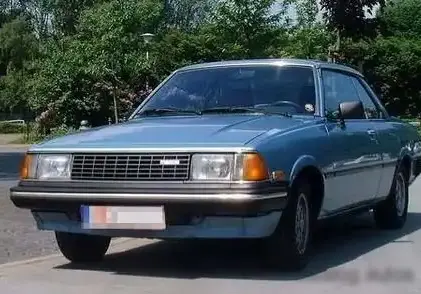
The Mazda Capella Wagon 2.0i, produced between 1988 and 1997, represented Mazda’s entry into the increasingly popular station wagon market. Part of the broader Capella (also known as the 626 outside of Japan) lineage, the wagon variant offered a practical and spacious alternative to sedans, appealing to families and those requiring increased cargo capacity. This specific 2.0i trim, boasting 140 horsepower, occupied a mid-range position within the Capella Wagon lineup, offering a balance between performance and affordability. It was primarily sold in Japan and select export markets, competing with similar offerings from Toyota, Nissan, and Honda.
Technical Specifications
| Brand | Mazda |
| Model | Capella |
| Generation | Capella Wagon |
| Type (Engine) | 2.0i (140 Hp) |
| Start of production | 1988 |
| End of production | 1997 |
| Powertrain Architecture | Internal Combustion engine |
| Body type | Station wagon (estate) |
| Seats | 5 |
| Doors | 5 |
| Fuel Type | Petrol (Gasoline) |
| Weight-to-power ratio | 8.9 kg/Hp, 112.9 Hp/tonne |
| Weight-to-torque ratio | 6.7 kg/Nm, 150 Nm/tonne |
| Power | 140 Hp @ 6500 rpm |
| Power per litre | 70.2 Hp/l |
| Torque | 186 Nm @ 4000 rpm (137.19 lb.-ft. @ 4000 rpm) |
| Engine layout | Front, Transverse |
| Engine displacement | 1995 cm3 (121.74 cu. in.) |
| Number of cylinders | 4 |
| Engine configuration | Inline |
| Cylinder Bore | 84 mm (3.31 in.) |
| Piston Stroke | 90 mm (3.54 in.) |
| Compression ratio | 9.7:1 |
| Number of valves per cylinder | 4 |
| Fuel injection system | Multi-port manifold injection |
| Engine aspiration | Naturally aspirated engine |
| Valvetrain | DOHC |
| Kerb Weight | 1240 kg (2733.73 lbs.) |
| Fuel tank capacity | 60 l (15.85 US gal | 13.2 UK gal) |
| Length | 4590 mm (180.71 in.) |
| Width | 1690 mm (66.54 in.) |
| Height | 1430 mm (56.3 in.) |
| Wheelbase | 2575 mm (101.38 in.) |
| Front track | 1455 mm (57.28 in.) |
| Rear (Back) track | 1465 mm (57.68 in.) |
| Minimum turning circle | 10 m (32.81 ft.) |
| Drivetrain Architecture | The Internal combustion engine (ICE) drives the front wheels of the vehicle. |
| Drive wheel | Front wheel drive |
| Number of gears and type of gearbox | 5 gears, manual transmission |
| Front brakes | Ventilated discs |
| Rear brakes | Drum |
| Tires size | 185/70 R14 |
| Wheel rims size | 5.5J x 14 |
Powertrain & Engine Architecture
The heart of the Capella Wagon 2.0i was the Mazda F2 engine, a 1.995-liter inline-four cylinder gasoline engine. This engine utilized a double overhead camshaft (DOHC) valvetrain, operating four valves per cylinder, which contributed to its relatively high output for its displacement. Fuel delivery was managed by a multi-port fuel injection system, ensuring precise fuel metering for improved efficiency and performance. The engine’s 9.7:1 compression ratio was a typical value for naturally aspirated engines of the era. The F2 engine was known for its smooth operation and reasonable reliability. The five-speed manual transmission was the standard offering, providing drivers with full control over the engine’s power band. The transmission featured a conventional shift linkage and was generally regarded as durable and easy to operate.
Driving Characteristics
The 140 horsepower and 186 Nm (137.19 lb-ft) of torque provided by the 2.0i engine delivered adequate performance for everyday driving. While not a sports car, the Capella Wagon 2.0i offered sufficient power for highway cruising and overtaking maneuvers. The five-speed manual transmission allowed drivers to keep the engine in its optimal power range, maximizing acceleration. Compared to lower-powered variants, the 2.0i offered a noticeably more responsive driving experience. However, it didn’t possess the outright performance of larger-engined models available in other markets. The front-wheel-drive configuration provided predictable handling, although it could exhibit some understeer when pushed hard. The gear ratios were tuned for a balance between fuel economy and acceleration, with a relatively tall fifth gear for efficient highway cruising.
Equipment & Trim Levels
The 2.0i trim level of the Capella Wagon typically included features such as power steering, central locking, and electric windows. Interior appointments generally consisted of cloth upholstery, with options for upgraded materials available. The dashboard layout was functional and straightforward, with clearly labeled controls. Depending on the market and optional packages, features like air conditioning, a cassette player (later CD player), and alloy wheels could be added. The wagon’s interior was designed with practicality in mind, offering ample space for passengers and cargo. The rear seats could be folded down to create a larger cargo area, enhancing the vehicle’s versatility.
Chassis & Braking
The Capella Wagon utilized a MacPherson strut front suspension and a torsion beam rear suspension. This setup provided a comfortable ride quality while maintaining reasonable handling characteristics. The front brakes were ventilated discs, offering good stopping power, while the rear brakes were drum brakes, a cost-saving measure common in vehicles of this class. The steering was rack-and-pinion, providing precise and responsive steering feel. The 185/70 R14 tires offered a good balance between grip and ride comfort. Stabilizer bars were fitted to both the front and rear axles to reduce body roll during cornering.
Market Reception & Comparison
The Mazda Capella Wagon 2.0i was generally well-received by automotive critics for its practicality, spaciousness, and comfortable ride. The 2.0i engine was praised for its smooth operation and adequate performance. Compared to lower-powered variants, the 2.0i offered a more enjoyable driving experience. However, some critics noted that the interior materials were not as refined as those found in some competing models. Fuel economy was considered to be reasonable for a vehicle of its size and class. In terms of reliability, the Capella Wagon generally proved to be a dependable vehicle, although routine maintenance was essential to prevent issues.
Legacy
The Mazda Capella Wagon, and specifically the 2.0i variant, has developed a modest following among enthusiasts. The F2 engine is known for its durability and relative simplicity, making it a relatively easy engine to maintain. Today, well-maintained examples of the Capella Wagon 2.0i are becoming increasingly rare, and are sought after by collectors and those looking for a classic Japanese wagon. While not a high-performance vehicle, the Capella Wagon 2.0i represents a practical and reliable choice for those seeking a spacious and comfortable family car from the late 1980s and early 1990s. Its blend of practicality, affordability, and reasonable performance has ensured its place as a notable vehicle in Mazda’s history.