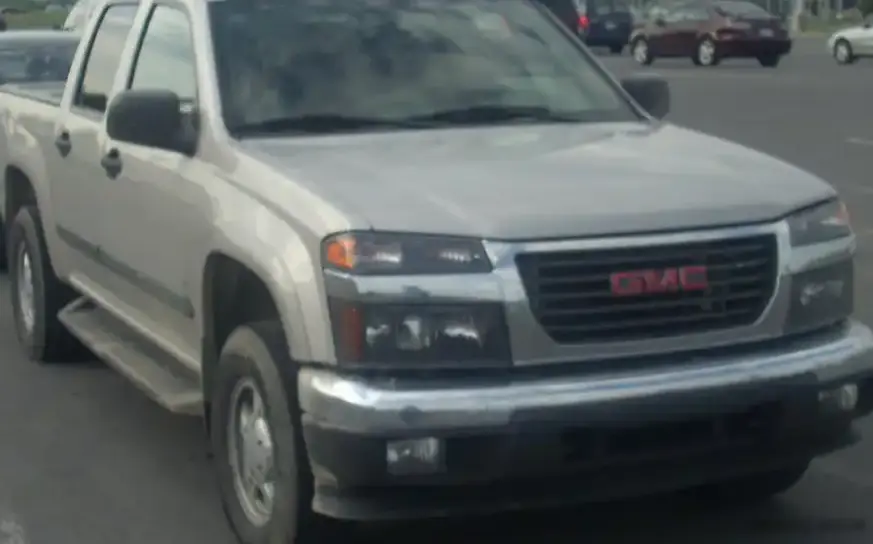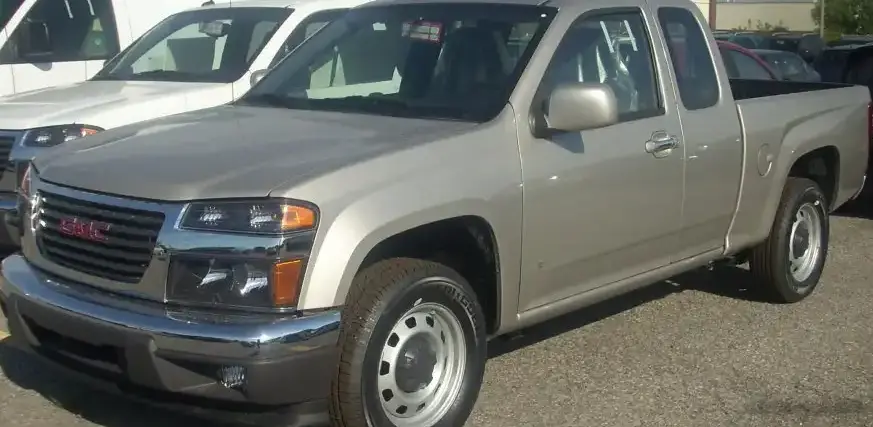
The GMC Canyon I Extended Cab, produced from 2004 to 2006, represented GMC’s entry into the burgeoning mid-size pickup truck market in North America. Positioned below the full-size Sierra, the Canyon aimed to offer a more manageable and fuel-efficient alternative for buyers who didn’t require the larger truck’s capabilities. The 2.8-liter (175 hp) variant, paired with a five-speed manual transmission, served as the base engine option, targeting buyers prioritizing affordability and basic utility. This configuration occupied the lower end of the Canyon lineup, with the more powerful 4.2-liter inline-six and later the 5.3-liter V8 offering increased performance for those willing to spend more.
Technical Specifications
| Brand | GMC |
| Model | Canyon |
| Generation | Canyon I Extended Cab |
| Type (Engine) | 2.8 (175 Hp) |
| Start of production | 2004 |
| End of production | 2006 |
| Powertrain Architecture | Internal Combustion engine |
| Body type | Pick-up |
| Seats | 4-5 |
| Doors | 4 |
| Fuel Type | Petrol (Gasoline) |
| Weight-to-power ratio | 8.7 kg/Hp, 115.1 Hp/tonne |
| Weight-to-torque ratio | 6.1 kg/Nm, 165 Nm/tonne |
| Power | 175 Hp @ 5600 rpm |
| Power per litre | 63.2 Hp/l |
| Torque | 251 Nm @ 2800 rpm, 185.13 lb.-ft. @ 2800 rpm |
| Maximum engine speed | 6300 rpm |
| Engine layout | Front, Longitudinal |
| Engine Model/Code | LK5 Vortec 2800 |
| Engine displacement | 2770 cm3, 169.04 cu. in. |
| Number of cylinders | 4 |
| Engine configuration | Inline |
| Cylinder Bore | 93 mm, 3.66 in. |
| Piston Stroke | 102 mm, 4.02 in. |
| Compression ratio | 10:1 |
| Number of valves per cylinder | 4 |
| Fuel injection system | Multi-port manifold injection |
| Engine aspiration | Naturally aspirated engine |
| Valvetrain | DOHC, CVVT |
| Engine oil capacity | 4.7 l, 4.97 US qt | 4.14 UK qt |
| Coolant | 9.8 l, 10.36 US qt | 8.62 UK qt |
| Kerb Weight | 1521 kg, 3353.23 lbs |
| Max. weight | 2268 kg, 5000.08 lbs |
| Max load | 747 kg, 1646.85 lbs |
| Trunk (boot) space – minimum | 1243 l, 43.9 cu. ft. |
| Fuel tank capacity | 74.2 l, 19.6 US gal | 16.32 UK gal |
| Length | 5260 mm, 207.09 in. |
| Width | 1717 mm, 67.6 in. |
| Height | 1646 mm, 64.8 in. |
| Wheelbase | 3198 mm, 125.91 in. |
| Front track | 1460 mm, 57.48 in. |
| Rear (Back) track | 1460 mm, 57.48 in. |
| Ride height (ground clearance) | 216 mm, 8.5 in. |
| Minimum turning circle (turning diameter) | 13.6 m, 44.62 ft. |
| Drivetrain Architecture | The Internal combustion engine (ICE) drives the rear wheels of the vehicle. |
| Drive wheel | Rear wheel drive |
| Number of gears and type of gearbox | 5 gears, manual transmission |
| Front suspension | Independent coil spring |
| Rear suspension | Leaf spring |
| Front brakes | Ventilated discs |
| Rear brakes | Drum |
| Assisting systems | ABS (Anti-lock braking system) |
| Steering type | Steering rack and pinion |
| Power steering | Hydraulic Steering |
| Tires size | 205/75 R15; 225/70 R15 |
| Wheel rims size | 15 |
Introduction
The GMC Canyon I Extended Cab 2.8L, produced between 2004 and 2006, was a key component of GMC’s strategy to compete in the increasingly popular mid-size pickup segment. Built on the GMT325 platform (shared with the Chevrolet Colorado), the Canyon offered a more compact and affordable alternative to the larger Sierra. The Extended Cab configuration provided additional rear seating and storage space compared to the standard cab models. The 2.8-liter engine, designated LK5, was the entry-level powertrain, designed to appeal to buyers prioritizing fuel economy and a lower purchase price. It was a direct response to the growing demand for smaller, more efficient trucks in the American market.
Powertrain & Engine Architecture
The heart of the Canyon 2.8L was the LK5 Vortec 2800 engine, a 2.8-liter (2770 cc) inline-four cylinder powerplant. This engine featured a cast iron block and an aluminum cylinder head, incorporating dual overhead camshafts (DOHC) and variable valve timing (CVVT) for improved efficiency and performance. Fuel delivery was handled by a multi-port fuel injection system. The engine produced 175 horsepower at 5600 rpm and 185 lb-ft of torque at 2800 rpm. The five-speed manual transmission was the standard pairing for this engine, offering a relatively direct driving experience. The transmission’s gear ratios were tuned for a balance of fuel economy and everyday usability, prioritizing low-end torque for hauling and towing, albeit with limited overall acceleration.
Driving Characteristics
The 2.8-liter Canyon, equipped with the five-speed manual, offered a functional, if not particularly exhilarating, driving experience. Acceleration was modest, with the engine feeling strained when pushed hard, especially when loaded. The manual transmission allowed for greater driver control and engagement compared to the optional four-speed automatic. The gear ratios were spaced to maximize fuel efficiency, but this came at the expense of quick acceleration. The truck felt competent around town and capable of handling moderate payloads, but struggled with steep inclines or when towing heavier trailers. Compared to the 4.2-liter inline-six, the 2.8L lacked significant power, making it less suitable for demanding tasks. However, the 2.8L’s lighter weight contributed to slightly better handling and fuel economy.
Equipment & Trim Levels
The base Canyon 2.8L typically came with a fairly basic level of equipment. Standard features included air conditioning, a basic audio system, and cloth upholstery. The Extended Cab configuration added a small rear seat, suitable for occasional passengers. Optional extras included power windows and locks, cruise control, and an upgraded audio system. Higher trim levels, such as the SLE and SLT, added more luxurious features like leather upholstery, alloy wheels, and premium sound systems. The interior design was functional and durable, prioritizing practicality over aesthetics. The dashboard layout was straightforward, with easy-to-use controls.
Chassis & Braking
The Canyon I utilized a body-on-frame construction, providing a robust and durable platform. The front suspension consisted of independent coil springs, while the rear suspension employed leaf springs. This setup prioritized load-carrying capacity and durability over ride comfort. The braking system featured ventilated discs at the front and drum brakes at the rear. Anti-lock brakes (ABS) were standard. The steering was rack-and-pinion, providing reasonably precise handling. The 2.8L models typically came with 15-inch wheels and tires, offering a balance of ride comfort and durability. The rear leaf springs were tuned to handle moderate payloads, but the suspension could become harsh when the truck was unloaded.
Market Reception & Comparison
The Canyon 2.8L received mixed reviews from automotive critics. While praised for its affordability and fuel economy, it was often criticized for its lack of power and unrefined driving experience. Compared to the 4.2-liter inline-six, the 2.8L felt underpowered, especially when towing or hauling. However, the 2.8L offered significantly better fuel economy, making it an attractive option for buyers who prioritized efficiency. The 2.8L’s manual transmission was appreciated by enthusiasts, but the automatic transmission was often criticized for its sluggish performance. In terms of reliability, the 2.8L engine proved to be generally dependable, although some owners reported issues with the fuel injection system and the variable valve timing system.
Legacy
The GMC Canyon I 2.8L, while not a performance standout, established a foothold for GMC in the mid-size pickup market. The LK5 Vortec 2800 engine, while eventually superseded by more powerful and efficient powertrains, proved to be a reasonably reliable and durable unit. Today, these trucks can be found on the used car market at affordable prices, making them attractive options for buyers seeking a basic and functional pickup. However, potential buyers should be aware of the engine’s limitations and the potential for age-related maintenance issues. The Canyon I 2.8L represents a transitional period in the American pickup truck market, bridging the gap between traditional full-size trucks and the growing demand for smaller, more efficient alternatives.