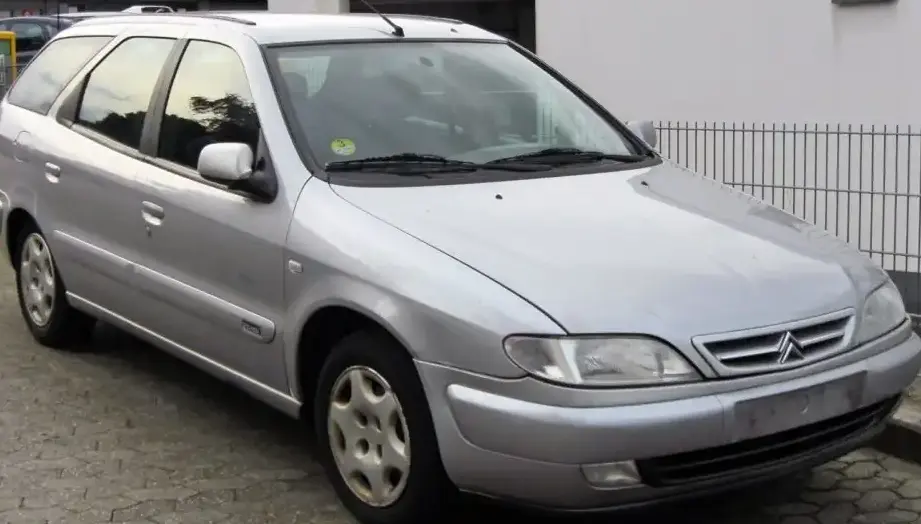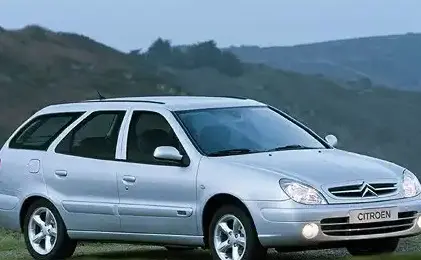
The Citroën Xsara Break 2.0 16V, produced between February 2003 and 2004, represents a compelling offering within the second generation (N2) Xsara Break lineup. Positioned as a mid-range to upper-mid-range variant, it aimed to provide a balance of performance, practicality, and comfort for family-oriented buyers in the European market. The Xsara Break, as a whole, was Citroën’s entry in the competitive compact estate car segment, rivaling vehicles like the Ford Focus Estate and Peugeot 307 SW. This particular 2.0 16V model distinguished itself with a more powerful engine option compared to the base 1.4 and 1.6 liter variants, offering a noticeable upgrade in driving experience.
Technical Specifications
| Brand | Citroen |
| Model | Xsara |
| Generation | Xsara Break (N2, Phase III) |
| Type (Engine) | 2.0 16V (136 Hp) |
| Start of production | February, 2003 |
| End of production | 2004 |
| Powertrain Architecture | Internal Combustion engine |
| Body type | Station wagon (estate) |
| Seats | 5 |
| Doors | 5 |
| Fuel consumption (urban) | 11.4 l/100 km (20.6 US mpg, 24.8 UK mpg, 8.8 km/l) |
| Fuel consumption (extra urban) | 5.6 l/100 km (42 US mpg, 50.4 UK mpg, 17.9 km/l) |
| Fuel consumption (combined) | 7.7 l/100 km (30.5 US mpg, 36.7 UK mpg, 13 km/l) |
| CO2 emissions | 184 g/km |
| Fuel Type | Petrol (Gasoline) |
| Acceleration 0 – 100 km/h | 9.8 sec |
| Acceleration 0 – 62 mph | 9.8 sec |
| Acceleration 0 – 60 mph | 9.3 sec |
| Maximum speed | 210 km/h (130.49 mph) |
| Emission standard | Euro 3 D4 |
| Weight-to-power ratio | 9 kg/Hp, 111.7 Hp/tonne |
| Weight-to-torque ratio | 6.4 kg/Nm, 156 Nm/tonne |
| Power | 136 Hp @ 6000 rpm |
| Power per litre | 68.1 Hp/l |
| Torque | 190 Nm @ 4100 rpm (140.14 lb.-ft. @ 4100 rpm) |
| Engine layout | Front, Transverse |
| Engine Model/Code | RFN EW10J4 |
| Engine displacement | 1997 cm3 (121.86 cu. in.) |
| Number of cylinders | 4 |
| Engine configuration | Inline |
| Cylinder Bore | 85 mm (3.35 in.) |
| Piston Stroke | 88 mm (3.46 in.) |
| Compression ratio | 10.8:1 |
| Number of valves per cylinder | 4 |
| Fuel injection system | Multi-port manifold injection |
| Engine aspiration | Naturally aspirated engine |
| Valvetrain | DOHC |
| Engine oil capacity | 4.25 l (4.49 US qt | 3.74 UK qt) |
| Coolant | 7 l (7.4 US qt | 6.16 UK qt) |
| Kerb Weight | 1218 kg (2685.23 lbs.) |
| Max. weight | 1728 kg (3809.59 lbs.) |
| Max load | 510 kg (1124.36 lbs.) |
| Trunk (boot) space – minimum | 517 l (18.26 cu. ft.) |
| Trunk (boot) space – maximum | 1512 l (53.4 cu. ft.) |
| Fuel tank capacity | 54 l (14.27 US gal | 11.88 UK gal) |
| Max. roof load | 100 kg (220.46 lbs.) |
| Permitted trailer load with brakes (12%) | 1100 kg (2425.08 lbs.) |
| Permitted trailer load without brakes | 630 kg (1388.91 lbs.) |
| Permitted towbar download | 70 kg (154.32 lbs.) |
| Length | 4369 mm (172.01 in.) |
| Width | 1705 mm (67.13 in.) |
| Width including mirrors | 2014 mm (79.29 in.) |
| Height | 1420 mm (55.91 in.) |
| Wheelbase | 2540 mm (100 in.) |
| Front track | 1433 mm (56.42 in.) |
| Rear (Back) track | 1442 mm (56.77 in.) |
| Front overhang | 880 mm (34.65 in.) |
| Rear overhang | 949 mm (37.36 in.) |
| Minimum turning circle | 11.5 m (37.73 ft.) |
| Drivetrain Architecture | The Internal combustion engine (ICE) drives the front wheels of the vehicle. |
| Drive wheel | Front wheel drive |
| Number of gears and type of gearbox | 5 gears, manual transmission |
| Front suspension | Independent, type McPherson with coil spring and anti-roll bar |
| Rear suspension | Torsion |
| Front brakes | Ventilated discs |
| Rear brakes | Disc |
| Assisting systems | ABS (Anti-lock braking system) |
| Steering type | Steering rack and pinion |
| Power steering | Hydraulic Steering |
| Tires size | 195/55 R15 |
| Wheel rims size | 6J x 15 |
INTRODUCTION
The Citroën Xsara Break 2.0 16V (N2, Phase III) was produced during a pivotal period for Citroën, as the brand sought to modernize its image while retaining its reputation for comfort and innovation. The N2 generation Xsara, launched in 1997, benefited from a mid-life refresh in 2003, designated as Phase III. This update included subtle styling changes, improved interior materials, and refinements to the engine range. The 2.0 16V engine, identified by the RFN engine code, was a key component of this update, offering a significant performance boost over the lower-capacity engines available in the range. It was built on the PSA Group’s 1HX0/A3 platform, shared with the Peugeot 307.
Powertrain & Engine Architecture
The heart of the Xsara Break 2.0 16V is the RFN (also sometimes EW10J4) engine, a 1997cc inline-four cylinder petrol engine. This engine is a naturally aspirated unit featuring a double overhead camshaft (DOHC) valvetrain with four valves per cylinder. It utilizes a multi-port fuel injection system, delivering fuel directly into the intake ports. The engine’s design prioritized a balance between power and fuel efficiency, employing a compression ratio of 10.8:1. The 2.0 16V engine was known for its relatively smooth operation and responsive power delivery. The engine was typically paired with a five-speed manual transmission, although a four-speed automatic transmission was also offered, albeit less commonly. The automatic transmission, while providing convenience, did impact acceleration and fuel economy compared to the manual version.
Driving Characteristics
The 2.0 16V engine provided a noticeable improvement in performance compared to the 1.4 and 1.6 liter variants. With 136 horsepower, the Xsara Break 2.0 16V could accelerate from 0 to 62 mph in approximately 9.8 seconds, and achieve a top speed of 130.49 mph. The engine’s 190 Nm (140.14 lb-ft) of torque, available at 4100 rpm, provided ample pulling power for overtaking and carrying a full load. The five-speed manual transmission allowed drivers to effectively utilize the engine’s powerband, while the optional automatic transmission offered a more relaxed driving experience, albeit with some reduction in responsiveness. The suspension, tuned for comfort, provided a relatively smooth ride, although it wasn’t as sporty as some of its rivals. The steering was light and precise, making the Xsara Break easy to maneuver in urban environments.
Equipment & Trim Levels
The 2.0 16V variant of the Xsara Break typically came equipped with a generous level of standard features. These included power steering, central locking, electric front windows, and an RDS stereo. Higher trim levels, such as the Exclusive, added features like air conditioning, alloy wheels, rear electric windows, and a trip computer. Optional extras included a sunroof, leather upholstery, and a CD changer. The interior was generally well-appointed, with comfortable seats and a functional dashboard layout. The Phase III update brought improvements to the interior plastics, enhancing the overall perceived quality.
Chassis & Braking
The Xsara Break 2.0 16V utilized an independent McPherson strut suspension system at the front, providing good handling and ride comfort. The rear suspension employed a torsion beam setup, which was cost-effective and provided adequate stability. The braking system consisted of ventilated discs at the front and solid discs at the rear. Anti-lock Braking System (ABS) was standard, enhancing safety by preventing wheel lockup during hard braking. The chassis was designed to provide a balance between comfort and handling, prioritizing ride quality over outright sportiness.
Market Reception & Comparison
The Citroën Xsara Break 2.0 16V was generally well-received by automotive critics. It was praised for its comfortable ride, spacious interior, and the performance offered by the 2.0 16V engine. However, some critics noted that the interior styling was somewhat dated compared to some of its rivals. Compared to the lower-capacity engines in the Xsara Break range, the 2.0 16V offered a significant performance upgrade, but at the cost of slightly increased fuel consumption. Compared to rivals like the Ford Focus Estate and Peugeot 307 SW, the Xsara Break offered a unique blend of French comfort and practicality. The automatic transmission version, while convenient, was often criticized for its sluggish performance and reduced fuel economy.
Legacy
The RFN engine, found in the Xsara Break 2.0 16V, is generally considered to be a reliable unit, provided it is properly maintained. Common issues include occasional oil leaks and sensor failures, but these are typically relatively inexpensive to repair. Today, the Xsara Break 2.0 16V can be found on the used car market at affordable prices. It represents a practical and comfortable estate car for those seeking a spacious and reliable vehicle. While it may not offer the latest technology or the most exciting driving experience, it remains a capable and affordable option for families and those needing a versatile vehicle.