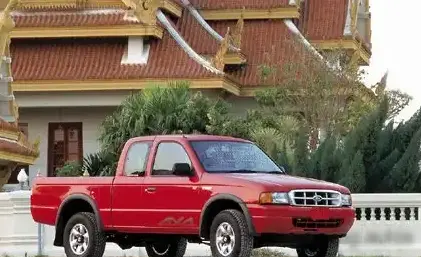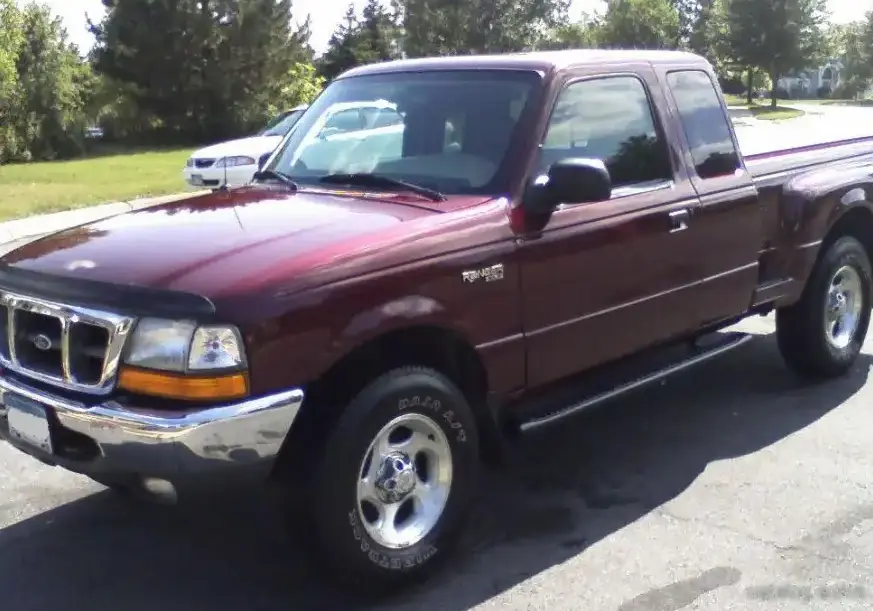
The Ford Ranger III Regular Cab (facelift 2019) 2.0 EcoBlue 4×4, produced from January 2019 to 2022, represents a mid-cycle refresh of the globally-sold Ranger pickup. This variant, powered by a 2.0-liter turbocharged diesel engine producing 130 horsepower, occupied an important position in the Ranger lineup, particularly in markets outside of North America where smaller displacement diesel engines were favored for their fuel efficiency and suitability for various work and lifestyle applications. It served as a more economical and accessible entry point into the Ranger range, appealing to buyers who didn’t require the higher performance of the more powerful engine options. The facelift brought updated styling, improved technology, and refinements to the existing platform, enhancing the Ranger’s competitiveness in the mid-size pickup segment.
Technical Specifications
| Brand | Ford |
| Model | Ranger |
| Generation | Ranger III Regular Cab (facelift 2019) |
| Type (Engine) | 2.0 EcoBlue (130 Hp) 4×4 |
| Start of production | January, 2019 |
| End of production | 2022 |
| Powertrain Architecture | Internal Combustion engine |
| Body type | Pick-up |
| Seats | 2 |
| Doors | 2 |
| Fuel consumption (combined) | 6.9-7.2 l/100 km (34.1 – 32.7 US mpg, 40.9 – 39.2 UK mpg, 14.5 – 13.9 km/l) |
| CO2 emissions | 178-188 g/km |
| Fuel Type | Diesel |
| Acceleration 0 – 100 km/h | 11.1 sec |
| Acceleration 0 – 62 mph | 11.1 sec |
| Acceleration 0 – 60 mph | 10.5 sec |
| Maximum speed | 165 km/h (102.53 mph) |
| Emission standard | Euro 6d-TEMP |
| Weight-to-power ratio | 15.5 kg/Hp, 64.4 Hp/tonne |
| Weight-to-torque ratio | 5.9 kg/Nm, 168.5 Nm/tonne |
| Power | 130 Hp |
| Power per litre | 65.1 Hp/l |
| Torque | 340 Nm (250.77 lb.-ft.) |
| Engine displacement | 1997 cm3 (121.86 cu. in.) |
| Number of cylinders | 4 |
| Engine configuration | Inline |
| Number of valves per cylinder | 4 |
| Fuel injection system | Diesel Commonrail |
| Engine aspiration | Turbocharger, Intercooler |
| Engine oil capacity | 8.1 l (8.56 US qt | 7.13 UK qt) |
| Coolant | 10.6 l (11.2 US qt | 9.33 UK qt) |
| Kerb Weight | 2018 kg (4448.93 lbs.) |
| Max. weight | 3200 kg (7054.79 lbs.) |
| Max load | 1182 kg (2605.86 lbs.) |
| Fuel tank capacity | 80 l (21.13 US gal | 17.6 UK gal) |
| AdBlue tank | 20 l (5.28 US gal | 4.4 UK gal) |
| Permitted trailer load with brakes (12%) | 2500 kg (5511.56 lbs.) |
| Permitted trailer load without brakes | 750 kg (1653.47 lbs.) |
| Length | 5282 mm (207.95 in.) |
| Width | 1867 mm (73.5 in.) |
| Width with mirrors folded | 1977 mm (77.83 in.) |
| Width including mirrors | 2163 mm (85.16 in.) |
| Height | 1800 mm (70.87 in.) |
| Wheelbase | 3220 mm (126.77 in.) |
| Front track | 1560 mm (61.42 in.) |
| Rear (Back) track | 1560 mm (61.42 in.) |
| Ride height (ground clearance) | 232 mm (9.13 in.) |
| Minimum turning circle | 12.7 m (41.67 ft.) |
| Approach angle | 28.0° |
| Departure angle | 27.0° |
| Ramp-over angle | 24.0° |
| Climb angle | 35.0° |
| Wading depth | 800 mm (31.5 in.) |
| Drive wheel | All wheel drive (4×4) |
| Number of gears and type of gearbox | 6 gears, manual transmission |
| Front brakes | Disc |
| Rear brakes | Drum |
| Assisting systems | ABS (Anti-lock braking system) |
| Tires size | 255/70 R16 |
| Wheel rims size | 7J x 16 |
Powertrain & Engine Architecture
The heart of this Ranger variant is the 2.0 EcoBlue diesel engine, part of Ford’s global engine family. This engine, often identified by engine codes like E8J, utilizes a common-rail direct injection system, delivering fuel at extremely high pressure for optimized combustion. A turbocharger with an intercooler is employed to boost power and torque, mitigating turbo lag and improving efficiency. The 2.0 EcoBlue features a four-valve-per-cylinder configuration, enhancing breathing and contributing to its power output. The 130 horsepower version was specifically tuned for fuel economy and drivability, rather than outright performance. The engine is paired with a six-speed manual transmission, chosen for its robustness and efficiency. While an automatic transmission was available on other Ranger trims, the 130 hp version was primarily offered with the manual gearbox in many markets.
Driving Characteristics
The 2.0 EcoBlue 130 hp Ranger offers a practical and economical driving experience. Acceleration is modest, taking around 11.1 seconds to reach 62 mph (100 km/h), and 10.5 seconds to 60 mph. The engine delivers a usable amount of torque – 340 Nm (250.77 lb.-ft.) – which is sufficient for everyday driving and light hauling. The six-speed manual transmission allows for precise control, and the gear ratios are well-suited for maintaining momentum on inclines. Compared to the higher-output 2.0-liter Bi-Turbo or the larger 3.2-liter five-cylinder diesel options, this variant prioritizes fuel efficiency over outright performance. It’s a more relaxed driving experience, ideal for urban commutes and longer journeys where maximizing fuel economy is a priority.
Equipment & Trim Levels
The 2.0 EcoBlue 130 hp Ranger typically came with a base level of equipment, focusing on functionality and practicality. Standard features generally included air conditioning, power steering, a basic audio system with Bluetooth connectivity, and steel wheels. Safety features such as ABS, electronic stability control, and driver/passenger airbags were also standard. Higher trim levels, available as options, could add features like alloy wheels, a more advanced infotainment system with touchscreen display, cruise control, and parking sensors. Interior upholstery was typically cloth, with a durable and functional design. The Regular Cab configuration meant seating for two occupants, making it ideal for commercial use or individuals who didn’t require passenger space.
Chassis & Braking
The Ranger III chassis is a robust ladder-frame construction, providing a solid foundation for both on- and off-road driving. The front suspension utilizes independent double wishbones, while the rear suspension employs leaf springs. This setup provides a good balance between ride comfort and load-carrying capacity. Braking is handled by disc brakes at the front and drum brakes at the rear, which are adequate for the vehicle’s weight and performance. The 4×4 system provides selectable four-wheel drive, allowing drivers to engage all-wheel drive for improved traction in challenging conditions. Ground clearance of 232 mm (9.13 in.) and respectable approach, departure, and ramp-over angles contribute to the Ranger’s off-road capability.
Market Reception & Comparison
The 2.0 EcoBlue 130 hp Ranger was generally well-received in markets where fuel efficiency and affordability were key considerations. Critics praised its economical fuel consumption and its suitability for everyday tasks. However, some reviewers noted its lack of outright performance compared to the more powerful Ranger variants. Compared to the 3.2-liter diesel, the 2.0 EcoBlue offered significantly better fuel economy but less towing capacity and a slower acceleration time. Against competitors like the Toyota Hilux and Nissan Navara, the Ranger offered a competitive package in terms of price, features, and fuel efficiency.
Legacy
The 2.0 EcoBlue engine has proven to be a relatively reliable powertrain, although, like any diesel engine, it requires regular maintenance and the use of high-quality fuel and oil. The Ranger III, in general, has established a reputation for durability and dependability. On the used car market, the 2.0 EcoBlue 130 hp variant represents a good value proposition for buyers seeking a practical and economical pickup truck. Its lower price point and fuel-efficient engine make it an attractive option for those who don’t require the higher performance of the more expensive Ranger trims. The availability of parts and service is generally good, ensuring that these vehicles can be maintained and kept on the road for many years to come.