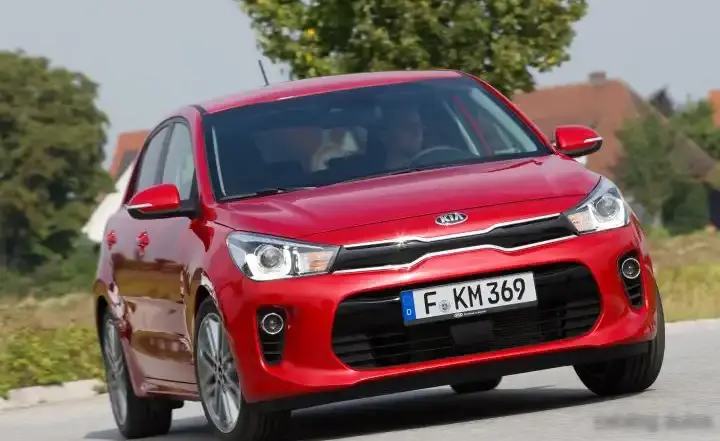
The Kia Rio IV Hatchback (YB) 1.4 MPI with 100 horsepower and an automatic transmission was a key offering in Kia’s lineup from February 2017 to June 2019. Positioned as an entry-level to mid-range trim within the fourth generation Rio (YB) series, this variant aimed to provide affordability and ease of use for urban commuters and first-time car buyers. The YB Rio represented a significant step forward for Kia in terms of design, build quality, and available technology, competing directly with established players like the Hyundai Accent, Ford Fiesta, and Volkswagen Polo in the subcompact hatchback segment. This particular engine and transmission combination was primarily sold in European and Asian markets, with limited availability in North America.
Technical Specifications
| Brand | Kia |
| Model | Rio |
| Generation | Rio IV Hatchback (YB) |
| Type (Engine) | 1.4 MPI (100 Hp) Automatic |
| Start of production | February, 2017 |
| End of production | June, 2019 |
| Powertrain Architecture | Internal Combustion engine |
| Body type | Hatchback |
| Seats | 5 |
| Doors | 5 |
| Fuel consumption (combined) | 5.9-6.1 l/100 km (39.9 – 38.6 US mpg, 47.9 – 46.3 UK mpg, 16.9 – 16.4 km/l) |
| CO2 emissions | 135-140 g/km |
| Fuel Type | Petrol (Gasoline) |
| Acceleration 0 – 100 km/h | 13.9 sec |
| Acceleration 0 – 62 mph | 13.9 sec |
| Acceleration 0 – 60 mph | 13.2 sec |
| Maximum speed | 166 km/h (103.15 mph) |
| Emission standard | Euro 6 b |
| Weight-to-power ratio | 11.6 kg/Hp, 86.4 Hp/tonne |
| Weight-to-torque ratio | 8.7 kg/Nm, 114.9 Nm/tonne |
| Power | 100 Hp @ 6000 rpm |
| Power per litre | 73.1 Hp/l |
| Torque | 133 Nm @ 4000 rpm (98.1 lb.-ft. @ 4000 rpm) |
| Engine layout | Front, Transverse |
| Engine Model/Code | Kappa / G4LC |
| Engine displacement | 1368 cm3 (83.48 cu. in.) |
| Number of cylinders | 4 |
| Engine configuration | Inline |
| Cylinder Bore | 72 mm (2.83 in.) |
| Piston Stroke | 84 mm (3.31 in.) |
| Compression ratio | 10.5:1 |
| Number of valves per cylinder | 4 |
| Fuel injection system | Multi-port manifold injection |
| Engine aspiration | Naturally aspirated engine |
| Engine oil capacity | 3.5 l (3.7 US qt | 3.08 UK qt) |
| Coolant | 5.5 l (5.81 US qt | 4.84 UK qt) |
| Kerb Weight | 1158 kg (2552.95 lbs.) |
| Max. weight | 1600 kg (3527.4 lbs.) |
| Max load | 442 kg (974.44 lbs.) |
| Trunk (boot) space – minimum | 325 l (11.48 cu. ft.) |
| Trunk (boot) space – maximum | 980 l (34.61 cu. ft.) |
| Fuel tank capacity | 45 l (11.89 US gal | 9.9 UK gal) |
| Permitted trailer load with brakes (12%) | 800 kg (1763.7 lbs.) |
| Permitted trailer load without brakes | 450 kg (992.08 lbs.) |
| Length | 4065 mm (160.04 in.) |
| Width | 1725 mm (67.91 in.) |
| Height | 1450 mm (57.09 in.) |
| Wheelbase | 2580 mm (101.57 in.) |
| Front track | 1518 mm (59.76 in.) |
| Rear (Back) track | 1524 mm (60 in.) |
| Front overhang | 830 mm (32.68 in.) |
| Rear overhang | 655 mm (25.79 in.) |
| Ride height (ground clearance) | 135 mm (5.31 in.) |
| Minimum turning circle (turning diameter) | 10.2 m (33.46 ft.) |
| Drivetrain Architecture | The Internal combustion engine (ICE) drives the front wheels of the vehicle. |
| Drive wheel | Front wheel drive |
| Number of gears and type of gearbox | 4 gears, automatic transmission |
| Front suspension | Independent, type McPherson with coil spring and anti-roll bar |
| Rear suspension | Semi-independent, coil spring, Elastic beam |
| Front brakes | Ventilated discs |
| Rear brakes | Drum |
| Assisting systems | ABS (Anti-lock braking system) |
| Steering type | Steering rack and pinion |
| Power steering | Electric Steering |
| Tires size | 185/65 R15; 195/55 R16; 205/45 R17 |
| Wheel rims size | 15; 16; 17 |
INTRODUCTION
The Kia Rio IV Hatchback (YB) 1.4 MPI Automatic, produced between 2017 and 2019, represented a significant evolution in Kia’s subcompact offering. Built on the 1HX0/A3 platform, shared with the Hyundai Accent, this variant was designed to appeal to buyers seeking a practical, fuel-efficient, and affordable hatchback. The 1.4-liter engine paired with a four-speed automatic transmission was intended to provide a comfortable and convenient driving experience, particularly in congested urban environments. It served as a stepping stone into the Rio lineup, offering a balance between price and features compared to higher-trim models.
Powertrain & Engine Architecture
At the heart of this Rio variant lies the Kia Kappa 1.4-liter naturally aspirated inline-four cylinder engine, designated G4LC. This engine utilizes a multi-point fuel injection system, delivering fuel directly into the intake ports. The engine features a dual overhead camshaft (DOHC) valvetrain with four valves per cylinder, contributing to improved breathing and efficiency. The 1.4 MPI engine produces 100 horsepower at 6000 rpm and 133 Nm (98.1 lb-ft) of torque at 4000 rpm. The engine’s relatively simple design prioritized reliability and ease of maintenance. The four-speed automatic transmission, while not the most modern unit, was chosen for its cost-effectiveness and smooth operation. It featured typical torque converter technology and offered a ‘Drive’ and ‘Manual’ shift mode, allowing for some driver control over gear selection.
Driving Characteristics
The 1.4 MPI Automatic Rio offered a comfortable, if not particularly exhilarating, driving experience. The four-speed automatic transmission, while smooth, lacked the responsiveness and efficiency of more modern transmissions with a greater number of gears. Acceleration from 0-60 mph took approximately 13.2 seconds, and the top speed was limited to 166 km/h (103.15 mph). The gear ratios were tuned for fuel economy and everyday drivability rather than outright performance. Compared to the manual transmission version of the same engine, the automatic resulted in a slight decrease in fuel efficiency and a marginally slower 0-60 mph time. Higher-trim Rio models equipped with more powerful engines, such as the 1.6L, offered significantly improved acceleration and overall performance, but at a higher price point.
Equipment & Trim Levels
The 1.4 MPI Automatic Rio typically came standard with features such as air conditioning, power windows and locks, a basic audio system with USB connectivity, and steel wheels with wheel covers. Safety features included ABS, airbags, and stability control. Higher trim levels offered upgrades such as alloy wheels, a touchscreen infotainment system with Apple CarPlay and Android Auto compatibility, a rearview camera, and automatic climate control. Interior upholstery was typically cloth, with a straightforward dashboard layout focused on functionality. Optional extras included a sunroof, upgraded audio system, and parking sensors.
Chassis & Braking
The Rio IV Hatchback utilized a McPherson strut front suspension with a coil spring and anti-roll bar, providing a comfortable ride and predictable handling. The rear suspension employed a semi-independent torsion beam setup, which was cost-effective and space-efficient. The front brakes were ventilated discs, offering adequate stopping power, while the rear brakes were drums, a cost-saving measure common in this segment. The steering was electrically assisted, providing light and easy steering feel, ideal for urban driving. The relatively lightweight construction of the vehicle (1158 kg / 2552.95 lbs) helped to offset the modest power output.
Market Reception & Comparison
The Kia Rio IV Hatchback 1.4 MPI Automatic was generally well-received by critics as a practical and affordable option in the subcompact segment. Reviewers praised its comfortable ride, spacious interior, and generous warranty. However, the four-speed automatic transmission was often criticized for its lack of responsiveness and efficiency compared to newer transmissions. Fuel economy was competitive, ranging from 5.9 to 6.1 l/100 km, but slightly lower than the manual transmission version. Compared to rivals like the Ford Fiesta and Volkswagen Polo, the Rio offered a compelling value proposition, often undercutting them in price while offering a similar level of equipment.
Legacy
The Kia Rio IV Hatchback 1.4 MPI Automatic has proven to be a relatively reliable vehicle in the used car market. The Kappa 1.4-liter engine is known for its durability and low maintenance costs. The four-speed automatic transmission, while not the most sophisticated, has also proven to be generally reliable. Common issues reported by owners include minor electrical glitches and wear and tear on suspension components. Today, these Rios represent an affordable and practical option for budget-conscious buyers seeking a dependable subcompact hatchback. Their simple mechanical design and readily available parts contribute to their continued appeal in the used car market.