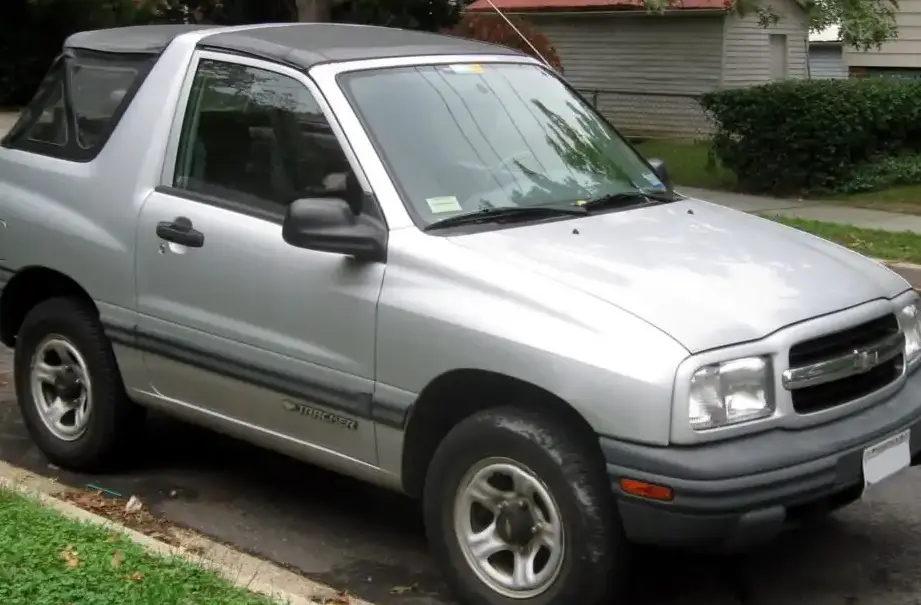
The Chevrolet Tracker Convertible II, specifically the 2.0 i 16V variant producing 122 horsepower, represents a unique offering in the compact SUV market. Produced from 1998 to 2004, this model was primarily aimed at buyers seeking a distinctive, open-air vehicle with a degree of practicality. It was based on the Suzuki Escudo/Vitara platform, a result of GM’s partnership with Suzuki, and sold under various names globally. In the United States, the Tracker Convertible II occupied a niche position, appealing to those wanting a more affordable and unconventional alternative to larger, more established SUVs. This particular 2.0L engine and five-speed manual transmission combination sat in the middle of the Tracker Convertible II lineup, offering a balance between performance and fuel economy.
Technical Specifications
| Brand | Chevrolet |
| Model | Tracker |
| Generation | Tracker Convertible II |
| Type (Engine) | 2.0 i 16V (122 Hp) |
| Start of production | 1998 |
| End of production | 2004 |
| Powertrain Architecture | Internal Combustion engine |
| Body type | SUV |
| Seats | 5 |
| Doors | 3 |
| Fuel consumption (urban) | 10.2 l/100 km (23.1 US mpg) |
| Fuel consumption (extra urban) | 9.4 l/100 km (25 US mpg) |
| Fuel Type | Petrol (Gasoline) |
| Maximum speed | 150 km/h (93.21 mph) |
| Weight-to-power ratio | 9.9 kg/Hp |
| Weight-to-torque ratio | 6.6 kg/Nm |
| Power | 122 Hp @ 6000 rpm |
| Power per litre | 61.2 Hp/l |
| Torque | 182 Nm @ 3000 rpm (134.24 lb.-ft. @ 3000 rpm) |
| Engine layout | Front, Longitudinal |
| Engine Model/Code | J20A |
| Engine displacement | 1995 cm3 (121.74 cu. in.) |
| Number of cylinders | 4 |
| Engine configuration | Inline |
| Cylinder Bore | 84 mm (3.31 in.) |
| Piston Stroke | 90 mm (3.54 in.) |
| Compression ratio | 9.5:1 |
| Number of valves per cylinder | 4 |
| Fuel injection system | Multi-port manifold injection |
| Engine aspiration | Naturally aspirated engine |
| Valvetrain | OHC |
| Engine oil capacity | 5.2 l (5.49 US qt | 4.58 UK qt) |
| Coolant | 6.5 l (6.87 US qt | 5.72 UK qt) |
| Kerb Weight | 1210 kg (2667.59 lbs.) |
| Max. weight | 1530 kg (3373.07 lbs.) |
| Max load | 320 kg (705.48 lbs.) |
| Trunk (boot) space – minimum | 290 l (10.24 cu. ft.) |
| Trunk (boot) space – maximum | 680 l (24.01 cu. ft.) |
| Fuel tank capacity | 56 l (14.79 US gal | 12.32 UK gal) |
| Length | 3780 mm (148.82 in.) |
| Width | 1694 mm (66.69 in.) |
| Height | 1689 mm (66.5 in.) |
| Wheelbase | 2200 mm (86.61 in.) |
| Front track | 1460 mm (57.48 in.) |
| Rear (Back) track | 1460 mm (57.48 in.) |
| Drivetrain Architecture | Rear wheel drive |
| Number of gears and type of gearbox | 5 gears, manual transmission |
| Front suspension | Spring Strut |
| Rear suspension | Coil spring |
| Front brakes | Disc |
| Rear brakes | Drum |
| Assisting systems | ABS (Anti-lock braking system) |
| Steering type | Worm-reduction unit |
| Power steering | Hydraulic Steering |
| Tires size | 195/75 R15 |
Powertrain & Engine Architecture
The heart of the Tracker Convertible II 2.0 i 16V is the J20A engine, a 1.995-liter inline-four cylinder gasoline engine. This engine, derived from Suzuki’s designs, features a single overhead camshaft (SOHC) valvetrain with four valves per cylinder. It utilizes a multi-port fuel injection system, providing a reasonable balance between fuel efficiency and performance. The engine’s 9.5:1 compression ratio contributes to its respectable power output for its size. The 122 horsepower peak is achieved at 6000 rpm, while the 182 Nm (134 lb-ft) of torque is available at 3000 rpm. This engine is known for its relative simplicity and durability, though it lacks the sophistication of more modern engine technologies. The five-speed manual transmission paired with this engine offers a fairly direct driving experience, allowing the driver to make the most of the available power. Gear ratios are tuned for everyday usability rather than outright acceleration.
Driving Characteristics
The 2.0L engine and manual transmission combination in the Tracker Convertible II provides a reasonably engaging driving experience. While not particularly quick, the engine delivers adequate power for merging onto highways and navigating city streets. The five-speed manual allows for precise control, and the relatively light weight of the vehicle (1210 kg / 2667.59 lbs) helps to mitigate the effects of the modest horsepower. Compared to the base engine options, the 2.0L offers a noticeable improvement in acceleration and overall responsiveness. However, it doesn’t match the performance of larger SUVs. The rear-wheel-drive configuration contributes to a balanced feel, although it doesn’t offer the all-weather capability of an all-wheel-drive system. The convertible top, while adding to the open-air experience, does slightly compromise structural rigidity.
Equipment & Trim Levels
The Tracker Convertible II 2.0 i 16V typically came with a standard equipment list that included power steering, air conditioning, and basic audio system. Interior upholstery was typically cloth, with a relatively simple dashboard layout. Optional extras included alloy wheels, upgraded audio systems, and a leather-wrapped steering wheel. The trim level for this engine configuration generally positioned it as a mid-range offering, bridging the gap between the base models and any potential higher-spec trims. The focus was on providing a well-rounded package with a good balance of features and affordability.
Chassis & Braking
The Tracker Convertible II utilizes a relatively simple chassis design. Front suspension consists of a spring strut setup, while the rear employs a coil spring arrangement. The front brakes are discs, providing adequate stopping power, while the rear brakes are drums, a cost-saving measure common in this class of vehicle. An Anti-lock Braking System (ABS) was included as a standard safety feature. The suspension is tuned for comfort rather than sporty handling, providing a reasonably smooth ride on most road surfaces. Stabilizer bars were present, contributing to reduced body roll during cornering.
Market Reception & Comparison
The Chevrolet Tracker Convertible II 2.0 i 16V received mixed reviews from automotive critics. It was praised for its unique styling, affordability, and open-air driving experience. However, it was also criticized for its relatively basic interior, modest performance, and somewhat compromised structural rigidity due to the convertible top. Compared to other compact SUVs of the time, the Tracker offered a more distinctive and affordable alternative, but it lacked the refinement and practicality of some of its competitors. Fuel economy was considered average for its class, and reliability was generally good, although maintenance costs could be higher due to the vehicle’s age and potential for component wear.
Legacy
Today, the Chevrolet Tracker Convertible II 2.0 i 16V has become a sought-after vehicle among enthusiasts looking for a unique and affordable convertible SUV. The J20A engine is known for its durability, and with proper maintenance, it can provide many years of reliable service. Parts availability can be a challenge, as the vehicle is no longer in production, but a dedicated community of owners and online resources can help with sourcing components. The Tracker Convertible II represents a quirky and memorable chapter in Chevrolet’s history, and its enduring appeal lies in its distinctive styling and open-air driving experience.