
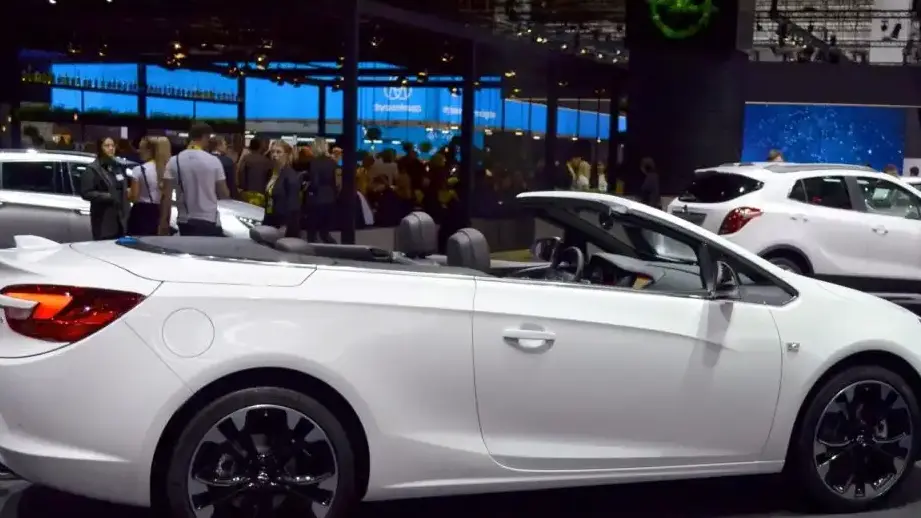
The Opel Cascada 2.0 CDTI BiTurbo Ecotec, produced from January 2013 to August 2015, represented a sophisticated offering in the mid-size convertible segment. Positioned as a premium variant within the Cascada lineup, it aimed to combine respectable performance with fuel efficiency, appealing to buyers seeking a stylish and comfortable open-top experience. The Cascada itself was Opel’s attempt to re-enter the convertible market, offering a more refined alternative to existing options and leveraging the platform shared with the Chevrolet Cruze and Astra models. This particular 2.0 CDTI BiTurbo variant was a flagship engine choice, offering a significant power upgrade over the base models.
Technical Specifications
| Brand | Opel |
| Model | Cascada |
| Generation | Cascada |
| Type (Engine) | 2.0 CDTI (195 Hp) BiTurbo Ecotec start/stop |
| Start of production | January, 2013 |
| End of production | August, 2015 |
| Powertrain Architecture | Internal Combustion engine |
| Body type | Cabriolet |
| Seats | 4 |
| Doors | 2 |
| Fuel consumption (urban) | 6.3-6.4 l/100 km (37.3 – 36.8 US mpg, 44.8 – 44.1 UK mpg, 15.9 – 15.6 km/l) |
| Fuel consumption (extra urban) | 4.6 l/100 km (51.1 US mpg, 61.4 UK mpg, 21.7 km/l) |
| Fuel consumption (combined) | 5.2-5.3 l/100 km (45.2 – 44.4 US mpg, 54.3 – 53.3 UK mpg, 19.2 – 18.9 km/l) |
| CO2 emissions | 138-139 g/km |
| Fuel Type | Diesel |
| Acceleration 0 – 100 km/h | 9.4 sec |
| Acceleration 0 – 62 mph | 9.4 sec |
| Acceleration 0 – 60 mph | 8.9 sec |
| Maximum speed | 230 km/h (142.92 mph) |
| Emission standard | Euro 5 |
| Weight-to-power ratio | 8.7 kg/Hp, 114.6 Hp/tonne |
| Weight-to-torque ratio | 4.3 kg/Nm, 235.2 Nm/tonne |
| Power | 195 Hp @ 4000 rpm |
| Power per litre | 99.7 Hp/l |
| Torque | 400 Nm @ 1750-2500 rpm (295.02 lb.-ft. @ 1750-2500 rpm) |
| Engine layout | Front, Transverse |
| Engine Model/Code | A20DTR |
| Engine displacement | 1956 cm3 (119.36 cu. in.) |
| Number of cylinders | 4 |
| Engine configuration | Inline |
| Cylinder Bore | 83 mm (3.27 in.) |
| Piston Stroke | 90.4 mm (3.56 in.) |
| Fuel injection system | Diesel Commonrail |
| Engine aspiration | Twin-Turbo, Intercooler |
| Engine oil capacity | 4.5 l (4.76 US qt | 3.96 UK qt) |
| Kerb Weight | 1701-1816 kg (3750.06 – 4003.59 lbs.) |
| Max. weight | 2105-2200 kg (4640.73 – 4850.17 lbs.) |
| Max load | 384-404 kg (846.58 – 890.67 lbs.) |
| Trunk (boot) space – minimum | 280 l (9.89 cu. ft.) |
| Trunk (boot) space – maximum | 630 l (22.25 cu. ft.) |
| Fuel tank capacity | 56 l (14.79 US gal | 12.32 UK gal) |
| Permitted trailer load with brakes (12%) | 1250-1300 kg (2755.78 – 2866.01 lbs.) |
| Permitted trailer load without brakes | 750 kg (1653.47 lbs.) |
| Length | 4696 mm (184.88 in.) |
| Width | 1839 mm (72.4 in.) |
| Width including mirrors | 2020 mm (79.53 in.) |
| Height | 1443 mm (56.81 in.) |
| Wheelbase | 2695 mm (106.1 in.) |
| Front track | 1587 mm (62.48 in.) |
| Rear (Back) track | 1587 mm (62.48 in.) |
| Ride height (ground clearance) | 145 mm (5.71 in.) |
| Drag coefficient (Cd) | 0.30 |
| Minimum turning circle (turning diameter) | 12.2 m (40.03 ft.) |
| Drivetrain Architecture | The Internal combustion engine (ICE) drives the front wheels of the vehicle. |
| Drive wheel | Front wheel drive |
| Number of gears and type of gearbox | 6 gears, manual transmission |
| Front brakes | Ventilated discs |
| Rear brakes | Disc |
| Assisting systems | ABS (Anti-lock braking system) |
| Steering type | Steering rack and pinion |
| Power steering | Electric Steering |
Powertrain & Engine Architecture
The heart of the Cascada 2.0 CDTI BiTurbo was the A20DTR engine, a 1956cc inline-four cylinder diesel. This engine utilized a sophisticated common-rail direct injection system, delivering fuel at extremely high pressures for optimized combustion. The “BiTurbo” designation refers to the engine’s use of two turbochargers – a smaller, variable geometry turbocharger for quick response at low engine speeds, and a larger turbocharger for increased power at higher RPMs. This configuration minimized turbo lag and provided a broad, usable powerband. The engine also featured an intercooler to further enhance performance by cooling the compressed intake air. The engine incorporated a start/stop system to improve fuel economy in urban driving conditions. The engine was transversely mounted in the front of the vehicle, driving the front wheels.
Driving Characteristics
The 195 hp and 400 Nm (295 lb-ft) of torque delivered by the 2.0 CDTI BiTurbo provided the Cascada with brisk acceleration. The 0-60 mph sprint took approximately 8.9 seconds, and the car could reach a top speed of 143 mph. While not a sports car, the engine offered ample power for comfortable highway cruising and overtaking. The six-speed manual transmission allowed for precise control, although the gear ratios were tuned more for fuel efficiency than outright performance. Compared to the lower-powered 1.6-liter diesel variants, the 2.0 CDTI BiTurbo offered a significantly more engaging driving experience, with noticeably stronger acceleration and a more relaxed feel at higher speeds. The twin-turbo setup minimized the typical diesel turbo lag, providing a responsive throttle response.
Equipment & Trim Levels
The 2.0 CDTI BiTurbo typically came with a generous level of standard equipment. This included features like automatic climate control, leather upholstery, alloy wheels, a touchscreen infotainment system with navigation, and parking sensors. Optional extras included a premium sound system, heated seats, and advanced driver assistance systems such as adaptive cruise control and lane departure warning. The Cascada aimed for a premium feel, and the interior was well-appointed with quality materials. Trim levels varied slightly depending on the market, but the 2.0 CDTI BiTurbo was generally positioned as a mid-to-high range offering.
Chassis & Braking
The Cascada utilized a MacPherson strut front suspension and a multi-link rear suspension, providing a comfortable and controlled ride. The suspension was tuned to balance handling with ride comfort, making it suitable for both city driving and long-distance journeys. Braking duties were handled by ventilated discs at the front and solid discs at the rear, equipped with ABS (Anti-lock Braking System) for enhanced safety. The steering was electrically assisted, providing a light and precise feel.
Market Reception & Comparison
The Opel Cascada 2.0 CDTI BiTurbo was generally well-received by automotive critics. It was praised for its stylish design, comfortable ride, and refined engine. The twin-turbo diesel engine was particularly lauded for its performance and fuel efficiency. However, some critics noted that the Cascada was not as sporty to drive as some of its rivals. Compared to other trims in the Cascada lineup, the 2.0 CDTI BiTurbo offered a significant performance upgrade, but at a higher price point. Fuel economy was competitive, averaging around 45 mpg in combined driving. Reliability reports were generally positive, although diesel engines can be susceptible to issues with the fuel injection system and turbochargers over time.
Legacy
The Opel Cascada, while not a massive sales success, represented a return to form for Opel in the convertible market. The 2.0 CDTI BiTurbo engine proved to be a reliable and capable powerplant, and examples continue to be found on the used car market today. While maintenance costs for diesel engines can be higher than for gasoline engines, the Cascada 2.0 CDTI BiTurbo offers a compelling combination of style, comfort, and fuel efficiency for buyers seeking an affordable open-top experience. The A20DTR engine itself is known for its durability when properly maintained, making it a relatively safe bet for used car buyers.
