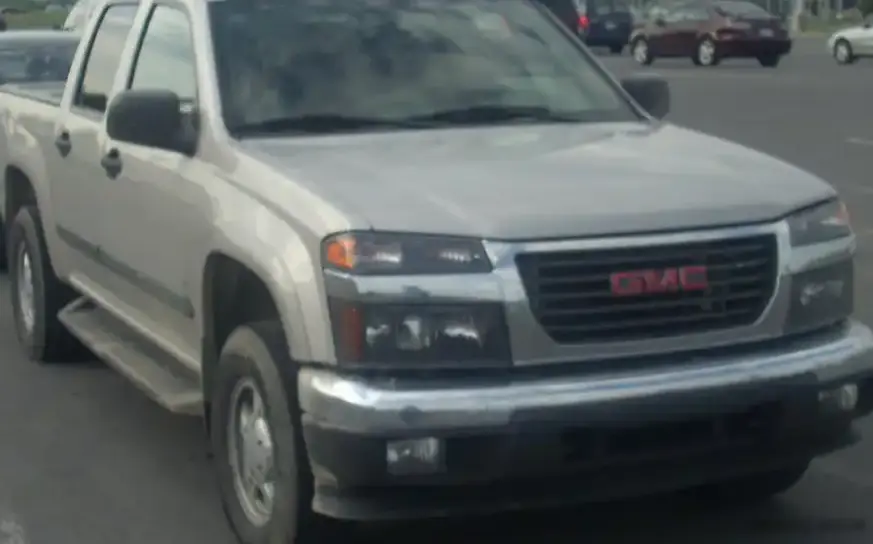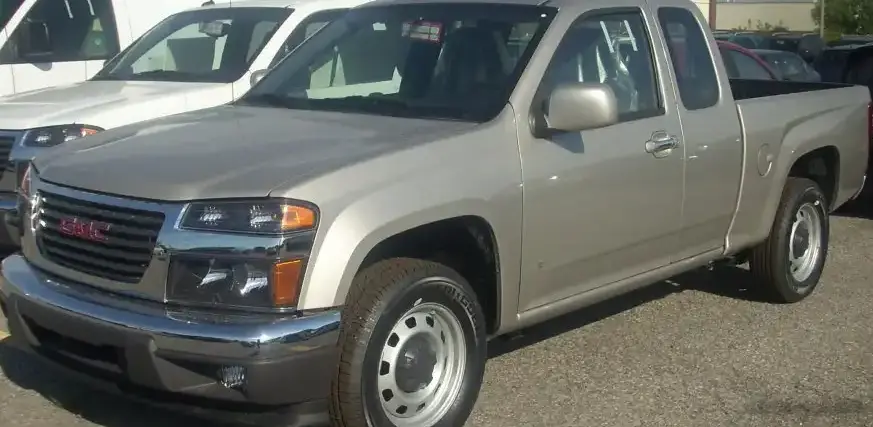
The GMC Canyon I Extended Cab, produced from 2007 to 2012, represented GMC’s entry into the mid-size pickup truck market in North America. Positioned below the full-size Sierra, the Canyon aimed to provide a more manageable and fuel-efficient option for buyers who didn’t require the larger capacity of a full-size truck. The 2.9-liter inline-four cylinder engine paired with a four-speed automatic transmission was a key configuration during this generation, serving as the base engine option and appealing to buyers prioritizing affordability and practicality. This variant was primarily sold in North America, competing with offerings from Toyota, Nissan, and Ford.
Technical Specifications
| Brand | GMC |
| Model | Canyon |
| Generation | Canyon I Extended Cab |
| Type (Engine) | 2.9 (185 Hp) 4WD Automatic |
| Start of production | 2007 |
| End of production | 2012 |
| Powertrain Architecture | Internal Combustion engine |
| Body type | Pick-up |
| Seats | 4-5 |
| Doors | 4 |
| Fuel consumption (urban) | 14.7 l/100 km (16 US mpg, 19.2 UK mpg) |
| Fuel consumption (extra urban) | 10.2 l/100 km (23.1 US mpg, 27.7 UK mpg) |
| Fuel Type | Petrol (Gasoline) |
| Weight-to-power ratio | 9.6 kg/Hp |
| Weight-to-torque ratio | 6.9 kg/Nm |
| Power | 185 Hp @ 5600 rpm |
| Power per litre | 63.3 Hp/l |
| Torque | 258 Nm @ 2800 rpm (190.29 lb.-ft. @ 2800 rpm) |
| Maximum engine speed | 6300 rpm |
| Engine layout | Front, Transverse |
| Engine Model/Code | LLV |
| Engine displacement | 2921 cm3 (178.25 cu. in.) |
| Number of cylinders | 4 |
| Engine configuration | Inline |
| Cylinder Bore | 95.5 mm (3.76 in.) |
| Piston Stroke | 102 mm (4.02 in.) |
| Compression ratio | 10:1 |
| Number of valves per cylinder | 4 |
| Fuel injection system | Multi-port manifold injection |
| Engine aspiration | Naturally aspirated engine |
| Valvetrain | DOHC, CVVT |
| Engine oil capacity | 4.7 l (4.97 US qt | 4.14 UK qt) |
| Coolant | 9.8 l (10.36 US qt | 8.62 UK qt) |
| Kerb Weight | 1777 kg (3917.61 lbs.) |
| Max. weight | 2404 kg (5299.91 lbs.) |
| Max load | 627 kg (1382.3 lbs.) |
| Trunk (boot) space – minimum | 1245 l (43.97 cu. ft.) |
| Fuel tank capacity | 74.2 l (19.6 US gal | 16.32 UK gal) |
| Length | 5260 mm (207.09 in.) |
| Width | 1742 mm (68.58 in.) |
| Height | 1718 mm (67.64 in.) |
| Wheelbase | 3200 mm (125.98 in.) |
| Front track | 1515 mm (59.65 in.) |
| Rear (Back) track | 1520 mm (59.84 in.) |
| Ride height (ground clearance) | 191.4 mm (7.54 in.) |
| Minimum turning circle (turning diameter) | 13.5 m (44.29 ft.) |
| Drive wheel | All wheel drive (4×4) |
| Number of gears and type of gearbox | 4 gears, automatic transmission Hydra-Matic |
| Front suspension | Independent coil spring |
| Rear suspension | Leaf spring |
| Front brakes | Ventilated discs |
| Rear brakes | Drum |
| Assisting systems | ABS (Anti-lock braking system) |
| Steering type | Steering rack and pinion |
| Power steering | Hydraulic Steering |
| Tires size | 225/70 R15; 235/75 R15 |
| Wheel rims size | 6.5J x 15 |
Powertrain & Engine Architecture
The heart of this Canyon variant was the LLV 2.9-liter inline-four cylinder engine. This engine, a product of General Motors’ design, featured a cast iron block and aluminum cylinder head. It utilized multi-port fuel injection and a double overhead camshaft (DOHC) valvetrain with variable valve timing (CVVT) to optimize performance and efficiency. The engine produced 185 horsepower at 5600 rpm and 190 lb-ft of torque at 2800 rpm. The Hydra-Matic 4L60-E four-speed automatic transmission was the sole transmission option for this engine. This transmission was known for its durability but was considered somewhat dated by the end of the Canyon’s production run, lacking the fuel efficiency of newer transmissions with more gears.
Driving Characteristics
The 2.9-liter engine and four-speed automatic combination delivered adequate, but not exhilarating, performance. Acceleration was modest, and the truck felt noticeably slower when fully loaded or climbing hills compared to Canyon models equipped with the optional 3.7-liter inline-five or 4.2-liter inline-six engines. The automatic transmission’s gear ratios were geared more towards fuel economy and towing capability than outright speed. Real-world driving often involved the transmission downshifting frequently to maintain momentum, especially on inclines. While the 4L60-E was a reliable unit, its shift quality wasn’t as smooth or responsive as more modern automatic transmissions.
Equipment & Trim Levels
The 2.9-liter engine was typically found in the base and mid-level trim packages of the Canyon Extended Cab. Standard features generally included air conditioning, power windows and locks, and an AM/FM stereo. Higher trim levels added features like cruise control, upgraded cloth upholstery, and a premium sound system. Optional extras included a towing package, off-road suspension, and various appearance upgrades. The interior design was functional and utilitarian, prioritizing durability over luxury. The Extended Cab configuration offered limited rear seating, best suited for occasional passengers or cargo.
Chassis & Braking
The GMC Canyon utilized a body-on-frame construction, providing a robust platform for hauling and towing. The front suspension consisted of independent coil springs, while the rear suspension employed leaf springs. This setup prioritized load-carrying capacity over ride comfort. The base models, including those with the 2.9-liter engine, typically featured ventilated disc brakes in the front and drum brakes in the rear. Anti-lock brakes (ABS) were standard. The steering system was a hydraulic rack-and-pinion setup, providing reasonable steering feel and responsiveness.
Market Reception & Comparison
Critics generally viewed the 2.9-liter Canyon as a competent but unremarkable offering. It was praised for its affordability and fuel economy compared to larger trucks, but criticized for its lack of power and refinement. Compared to the optional engines, the 2.9-liter version was significantly slower and less capable of handling heavy loads. The 3.7-liter inline-five offered a noticeable improvement in performance, while the 4.2-liter inline-six provided the most power and towing capacity. Fuel economy for the 2.9-liter engine was rated at around 16 mpg city and 23 mpg highway, which was competitive for its class at the time.
Legacy
The 2.9-liter engine and 4L60-E transmission combination proved to be relatively reliable, with many examples still on the road today. However, like any older vehicle, maintenance is key to longevity. Common issues include oil leaks, corrosion, and wear and tear on suspension components. In the used car market, the 2.9-liter Canyon is often the most affordable option, making it an attractive choice for budget-conscious buyers. While it may not offer the performance or features of higher-trim models, it remains a capable and dependable pickup truck for light-duty tasks.