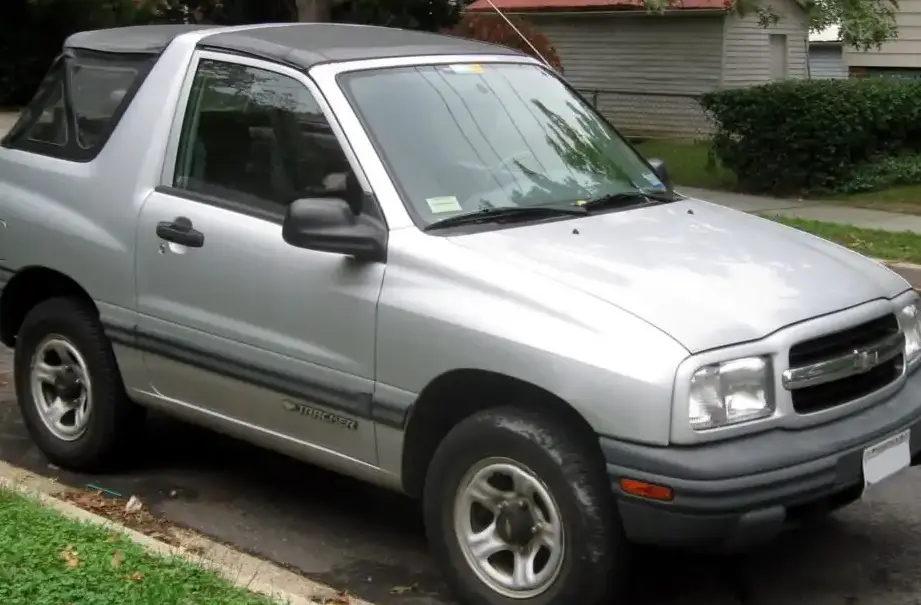
The Chevrolet Tracker Convertible II, specifically the 2.5 i V6 4WD Automatic variant, was produced between 2001 and 2004. This model represented a unique offering in the compact SUV segment, combining open-air motoring with all-wheel-drive capability. Positioned as a somewhat niche vehicle, it aimed to appeal to buyers seeking a fun, versatile, and relatively affordable SUV. It was based on the Suzuki Vitara Grand Escudo, a result of GM’s partnership with Suzuki, and shared its platform with other GM small SUVs of the era. The Tracker Convertible II was primarily sold in North America, offering an alternative to more conventional SUVs and crossovers.
Technical Specifications
| Brand | Chevrolet |
| Model | Tracker |
| Generation | Tracker Convertible II |
| Type | 2.5 i V6 4WD (167 Hp) Automatic |
| Start of production | 2001 |
| End of production | 2004 |
| Powertrain Architecture | Internal Combustion engine |
| Body type | SUV |
| Seats | 5 |
| Doors | 3 |
| Fuel Type | Petrol (Gasoline) |
| Maximum speed | 170 km/h (105.63 mph) |
| Weight-to-power ratio | 7.4 kg/Hp, 135.8 Hp/tonne |
| Weight-to-torque ratio | 5.6 kg/Nm, 178.9 Nm/tonne |
| Power | 167 Hp @ 6500 rpm |
| Power per litre | 67 Hp/l |
| Torque | 220 Nm @ 4000 rpm (162.26 lb.-ft. @ 4000 rpm) |
| Engine layout | Front, Longitudinal |
| Engine Model/Code | H25A |
| Engine displacement | 2494 cm3 (152.19 cu. in.) |
| Number of cylinders | 6 |
| Engine configuration | V-engine |
| Cylinder Bore | 84 mm (3.31 in.) |
| Piston Stroke | 75 mm (2.95 in.) |
| Compression ratio | 9.5:1 |
| Number of valves per cylinder | 4 |
| Fuel injection system | Multi-port manifold injection |
| Engine aspiration | Naturally aspirated engine |
| Valvetrain | OHC |
| Engine oil capacity | 5.5 l (5.81 US qt | 4.84 UK qt) |
| Coolant | 8 l (8.45 US qt | 7.04 UK qt) |
| Kerb Weight | 1230 kg (2711.69 lbs.) |
| Max. weight | 1580 kg (3483.3 lbs.) |
| Max load | 350 kg (771.62 lbs.) |
| Trunk (boot) space – minimum | 290 l (10.24 cu. ft.) |
| Trunk (boot) space – maximum | 680 l (24.01 cu. ft.) |
| Fuel tank capacity | 56 l (14.79 US gal | 12.32 UK gal) |
| Length | 3780 mm (148.82 in.) |
| Width | 1694 mm (66.69 in.) |
| Height | 1689 mm (66.5 in.) |
| Wheelbase | 2200 mm (86.61 in.) |
| Front track | 1460 mm (57.48 in.) |
| Rear (Back) track | 1460 mm (57.48 in.) |
| Drive wheel | All wheel drive (4×4) |
| Number of gears and type of gearbox | 4 gears, automatic transmission |
| Front suspension | Spring Strut |
| Rear suspension | Coil spring |
| Front brakes | Ventilated discs |
| Rear brakes | Drum |
| Assisting systems | ABS (Anti-lock braking system) |
| Steering type | Worm-reduction unit |
| Power steering | Hydraulic Steering |
| Tires size | 215/75 R15 |
| Wheel rims size | 15 |
Powertrain & Engine Architecture
The heart of the Tracker Convertible II 2.5 i V6 was the H25A engine, a 2.5-liter, naturally aspirated V6. This engine produced 167 horsepower at 6500 rpm and 220 Nm (162.26 lb-ft) of torque at 4000 rpm. The H25A featured a cast iron block and aluminum cylinder heads, a configuration common for durability and weight reduction. Fuel delivery was handled by a multi-port fuel injection system, providing adequate, though not exceptional, performance. The engine utilized an overhead camshaft (OHC) valvetrain with four valves per cylinder. Paired with this engine was a four-speed automatic transmission, which was chosen for its ease of use and suitability for the target demographic. This transmission, while reliable, wasn’t known for its sporty responsiveness or fuel efficiency.
Driving Characteristics
The 2.5L V6 and four-speed automatic combination provided adequate, but not exhilarating, performance. Acceleration was reasonable for everyday driving, but the Tracker Convertible II wasn’t designed for quick sprints. The automatic transmission’s gear ratios were geared more towards comfort and fuel economy than outright performance. Compared to a manual transmission equipped Tracker, the automatic version felt noticeably slower. The all-wheel-drive system provided enhanced traction in various conditions, making it a capable vehicle for light off-roading and inclement weather. However, the added weight of the AWD system and automatic transmission did impact overall fuel economy.
Equipment & Trim Levels
The Tracker Convertible II 2.5 i V6 4WD Automatic typically came with a fairly standard set of features for its price point. Standard equipment included air conditioning, power windows and locks, and an AM/FM stereo. Interior upholstery was typically cloth, with optional leather available. The dashboard layout was functional but not particularly luxurious. Optional extras included a CD player, upgraded sound system, and alloy wheels. The convertible top was manually operated, a cost-saving measure that kept the vehicle’s price competitive.
Chassis & Braking
The Tracker Convertible II utilized a body-on-frame construction, contributing to its ruggedness. Front suspension consisted of a spring strut setup, while the rear employed a coil spring arrangement. Braking duties were handled by ventilated discs at the front and drum brakes at the rear. An anti-lock braking system (ABS) was standard, enhancing safety. The steering system was a worm-reduction unit with hydraulic power assist. The suspension tuning prioritized ride comfort over sporty handling, resulting in a somewhat soft and compliant ride.
Market Reception & Comparison
The Chevrolet Tracker Convertible II was generally well-received by critics as a unique and affordable option in the small SUV segment. However, its relatively low power output and somewhat dated automatic transmission were points of criticism. Compared to other trims in the Tracker lineup, such as the base four-cylinder models, the V6 offered significantly more power and refinement. However, it came at a higher price and with reduced fuel economy. Compared to competitors like the Honda CR-V or Toyota RAV4, the Tracker Convertible II offered a more distinctive and adventurous image, but lacked the same level of refinement and fuel efficiency.
Legacy
The Chevrolet Tracker Convertible II, particularly the 2.5 i V6 4WD Automatic variant, has developed a modest following among enthusiasts. The H25A V6 engine is generally considered to be a reliable unit, although regular maintenance is crucial. The four-speed automatic transmission, while not the most advanced, has proven to be reasonably durable. Today, these vehicles are relatively rare and can be found in good condition with reasonable mileage. Their unique combination of open-air motoring, all-wheel-drive capability, and affordability makes them appealing to collectors and those seeking a distinctive and fun-to-drive SUV.