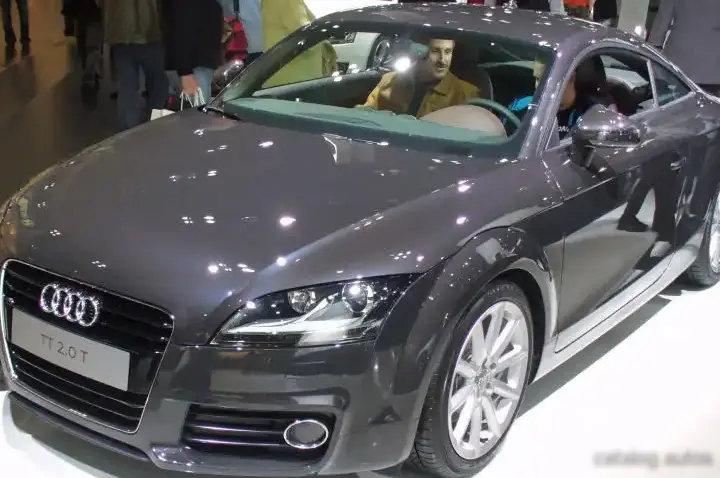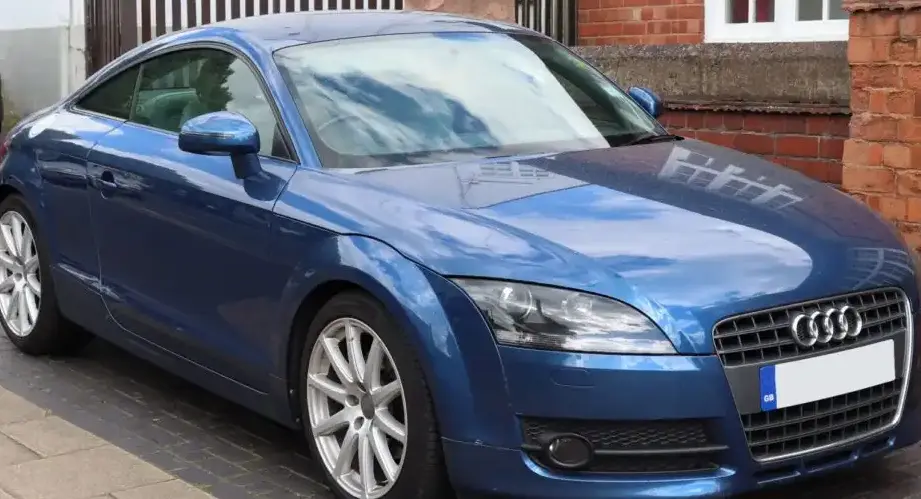
The Audi TT Coupe (8J) 3.2i V6 24V quattro S tronic represents a high-performance variant within the second generation (8J) of Audi’s iconic TT Coupe. Produced from 2006 to 2010, this model combined a potent 3.2-liter V6 engine with Audi’s quattro all-wheel-drive system and the S tronic dual-clutch transmission. It occupied the top echelon of the 8J TT Coupe lineup, offering a significant step up in performance and refinement compared to the 1.8-liter and 2.0-liter turbocharged models. The 8J platform, shared with the Volkswagen Golf Mk5 and other models within the Volkswagen Group, provided a solid foundation for the TT’s sporty character.
Technical Specifications
| Brand | Audi |
| Model | TT |
| Generation | TT Coupe (8J) |
| Type (Engine) | 3.2i V6 24V (250 Hp) quattro S tronic |
| Start of production | 2006 |
| End of production | 2010 |
| Powertrain Architecture | Internal Combustion engine |
| Body type | Coupe |
| Seats | 4 |
| Doors | 3 |
| Fuel consumption (urban) | 12.9 l/100 km (18.2 US mpg, 21.9 UK mpg, 7.8 km/l) |
| Fuel consumption (extra urban) | 7.3 l/100 km (32.2 US mpg, 38.7 UK mpg, 13.7 km/l) |
| Fuel consumption (combined) | 9.4 l/100 km (25 US mpg, 30.1 UK mpg, 10.6 km/l) |
| CO2 emissions | 224 g/km |
| Fuel Type | Petrol (Gasoline) |
| Acceleration 0 – 100 km/h | 5.7 sec |
| Acceleration 0 – 62 mph | 5.7 sec |
| Acceleration 0 – 60 mph | 5.4 sec |
| Maximum speed | 250 km/h (155.34 mph) |
| Emission standard | Euro 4 |
| Weight-to-power ratio | 5.7 kg/Hp, 174.8 Hp/tonne |
| Weight-to-torque ratio | 4.5 kg/Nm, 223.8 Nm/tonne |
| Power | 250 Hp @ 6300 rpm |
| Torque | 320 Nm @ 2800-3200 rpm (236.02 lb.-ft. @ 2800-3200 rpm) |
| Engine layout | Front, Transverse |
| Engine Model/Code | BUB |
| Engine displacement | 3189 cm3 (194.6 cu. in.) |
| Number of cylinders | 6 |
| Engine configuration | V-engine |
| Cylinder Bore | 84 mm (3.31 in.) |
| Piston Stroke | 95.9 mm (3.78 in.) |
| Compression ratio | 11.3:1 |
| Number of valves per cylinder | 4 |
| Fuel injection system | Multi-port manifold injection |
| Engine aspiration | Naturally aspirated engine |
| Valvetrain | DOHC |
| Engine oil capacity | 5.5 l (5.81 US qt | 4.84 UK qt) |
| Coolant | 12.7 l (13.42 US qt | 11.17 UK qt) |
| Kerb Weight | 1430 kg (3152.61 lbs.) |
| Max. weight | 1830 kg (4034.46 lbs.) |
| Max load | 400 kg (881.85 lbs.) |
| Trunk (boot) space – minimum | 290 l (10.24 cu. ft.) |
| Trunk (boot) space – maximum | 700 l (24.72 cu. ft.) |
| Fuel tank capacity | 60 l (15.85 US gal | 13.2 UK gal) |
| Length | 4178 mm (164.49 in.) |
| Width | 1842 mm (72.52 in.) |
| Height | 1352 mm (53.23 in.) |
| Wheelbase | 2468 mm (97.17 in.) |
| Front track | 1572 mm (61.89 in.) |
| Rear (Back) track | 1558 mm (61.34 in.) |
| Drag coefficient (Cd) | 0.30 |
| Minimum turning circle | 10.96 m (35.96 ft.) |
| Drive wheel | All wheel drive (4×4) |
| Number of gears and type of gearbox | 6 gears, automatic transmission S tronic |
| Front suspension | Independent, type McPherson with coil spring and anti-roll bar |
| Rear suspension | Independent multi-link suspension |
| Front brakes | Ventilated discs |
| Rear brakes | Ventilated discs |
| Assisting systems | ABS (Anti-lock braking system) |
| Steering type | Steering rack and pinion |
| Tires size | 245/45 R17 |
| Wheel rims size | 8.5J x 17 |
Powertrain & Engine Architecture
The heart of the 3.2i quattro S tronic is the BUB engine code, a 3.2-liter naturally aspirated V6. This engine features a 60-degree V-angle, contributing to its smooth operation and relatively compact size. It utilizes multi-port fuel injection and a double overhead camshaft (DOHC) valvetrain with four valves per cylinder. The engine’s 11.3:1 compression ratio helps extract maximum power from the gasoline. The S tronic transmission is a six-speed dual-clutch gearbox, offering rapid, seamless shifts and contributing to the car’s sporty driving experience. Unlike traditional automatic transmissions, the S tronic pre-selects the next gear, minimizing interruption in power delivery.
Driving Characteristics
The 3.2i quattro S tronic delivers a noticeably more engaging driving experience than the lower-powered TT variants. The 250 horsepower and 236 lb-ft of torque provide brisk acceleration, with 0-60 mph times consistently around 5.4 seconds. The S tronic transmission’s quick shifts and the quattro all-wheel-drive system’s excellent traction contribute to confident handling in various conditions. While the 1.8T models offered good fuel economy, the 3.2 V6 prioritizes performance, resulting in higher fuel consumption. The gear ratios are tuned for a balance of acceleration and highway cruising, providing ample power for overtaking maneuvers.
Equipment & Trim Levels
The 3.2i quattro S tronic typically came well-equipped, reflecting its position as the range-topping model. Standard features often included leather upholstery, automatic climate control, a premium sound system, and xenon headlights. Optional extras could include navigation system, sport seats, and various customization options for interior trim and exterior styling. The interior design was driver-focused, with a clean and modern aesthetic. The aluminum trim accents and high-quality materials further enhanced the premium feel.
Chassis & Braking
The 8J TT Coupe featured a McPherson strut front suspension and a multi-link rear suspension, providing a good balance of comfort and handling. The 3.2i model often received slightly stiffer suspension tuning compared to the base models. Ventilated disc brakes were standard on all four wheels, providing ample stopping power. The quattro all-wheel-drive system distributes power between the front and rear axles as needed, enhancing stability and traction. The electronic stability control (ESC) system further aids in maintaining control during challenging driving conditions.
Market Reception & Comparison
The Audi TT Coupe (8J) 3.2i V6 quattro S tronic was generally well-received by automotive critics. It was praised for its powerful engine, engaging handling, and refined interior. However, some reviewers noted the higher fuel consumption compared to the turbocharged models. Compared to the 1.8T and 2.0T variants, the 3.2i offered a more visceral driving experience and a higher level of performance. The 3.2i was positioned as a direct competitor to other premium sports coupes, such as the BMW Z4 and Porsche Cayman.
Legacy
The BUB engine, while not known for any widespread critical failures, requires regular maintenance, including oil changes and timing belt replacements. The S tronic transmission is generally reliable but can be expensive to repair if issues arise. Today, the 3.2i quattro S tronic is a sought-after model among TT enthusiasts, appreciated for its unique combination of performance, style, and refinement. Well-maintained examples command a premium in the used car market, representing a compelling option for those seeking a sporty and engaging coupe with a distinctive character.