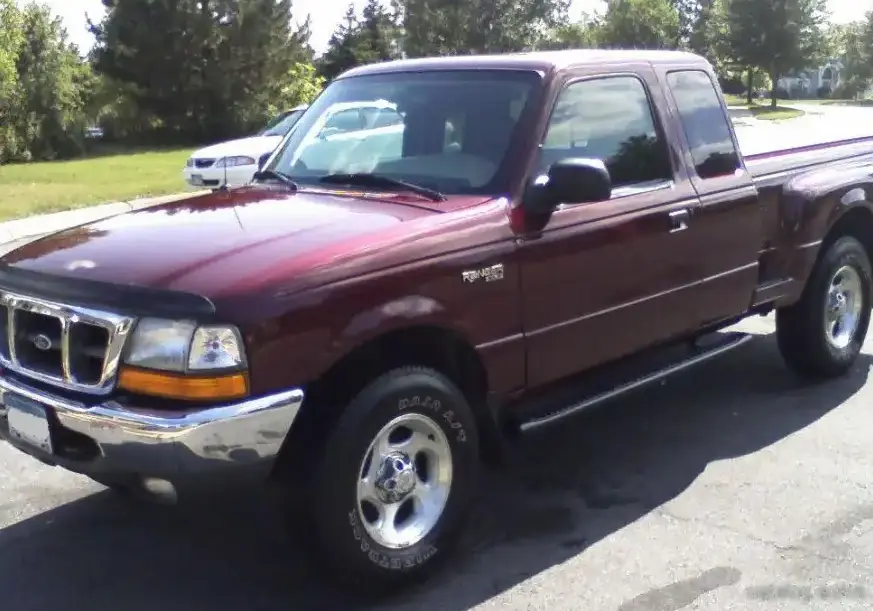
The Ford Ranger III Single Cab (facelift 2015) 2.5 is a compact pickup truck produced by Ford between 2015 and 2018. This iteration represents a mid-cycle refresh of the globally-marketed Ranger TKE platform, primarily sold in markets outside of North America. The 2.5-liter engine variant occupied a middle ground in the Ranger lineup, offering a balance between affordability and capability, positioned below the more powerful diesel options and above base-model trims. It was designed to appeal to buyers needing a workhorse vehicle for commercial or personal use, prioritizing practicality and durability over outright performance.
Technical Specifications
| Brand | Ford |
| Model | Ranger |
| Generation | Ranger III Single Cab (facelift 2015) |
| Type (Engine) | 2.5 (166 Hp) |
| Start of production | 2015 |
| End of production | 2018 |
| Powertrain Architecture | Internal Combustion engine |
| Body type | Pick-up |
| Seats | 2 |
| Doors | 2 |
| Fuel Type | Petrol (Gasoline) |
| Weight-to-power ratio | 10.1 kg/Hp, 99.4 Hp/tonne |
| Weight-to-torque ratio | 7.4 kg/Nm, 135.3 Nm/tonne |
| Power | 166 Hp @ 5500 rpm |
| Power per litre | 66.4 Hp/l |
| Torque | 226 Nm @ 4500 rpm (166.69 lb.-ft. @ 4500 rpm) |
| Engine layout | Front, Longitudinal |
| Engine displacement | 2499 cm3 (152.5 cu. in.) |
| Number of cylinders | 4 |
| Engine configuration | Inline |
| Number of valves per cylinder | 4 |
| Fuel injection system | Multi-port manifold injection |
| Engine aspiration | Naturally aspirated engine |
| Engine oil capacity | 6.7 l (7.08 US qt | 5.9 UK qt) |
| Kerb Weight | 1670 kg (3681.72 lbs) |
| Max. weight | 2925 kg (6448.52 lbs) |
| Max load | 1255 kg (2766.8 lbs) |
| Fuel tank capacity | 80 l (21.13 US gal | 17.6 UK gal) |
| Permitted trailer load with brakes (12%) | 1500 kg (3306.93 lbs) |
| Length | 5277-5354 mm (207.76 – 210.79 in) |
| Width | 1860 mm (73.23 in) |
| Height | 1703 mm (67.05 in) |
| Wheelbase | 3220 mm (126.77 in) |
| Front track | 1590 mm (62.6 in) |
| Rear (Back) track | 1590 mm (62.6 in) |
| Front overhang | 908 mm (35.75 in) |
| Rear overhang | 1149 mm (45.24 in) |
| Ride height (ground clearance) | 135 mm (5.31 in) |
| Approach angle | 28° |
| Departure angle | 28° |
| Ramp-over (brakeover) angle | 25° |
| Climb angle | 32° |
| Wading depth | 600 mm (23.62 in) |
| Drivetrain Architecture | The Internal combustion engine (ICE) drives the rear wheels of the vehicle. |
| Drive wheel | Rear wheel drive |
| Number of gears and type of gearbox | 5 gears, manual transmission |
| Front suspension | Independent coil spring |
| Rear suspension | Dependent suspension of two longitudinal semi-elliptic leaf springs |
| Front brakes | Ventilated discs |
| Rear brakes | Drum |
| Assisting systems | ABS (Anti-lock braking system) |
| Steering type | Steering rack and pinion |
| Power steering | Electric Steering |
| Tires size | 215/70 R16; 255/70 R16; 265/65 R17; 265/60 R18 |
| Wheel rims size | 16; 17; 18 |
INTRODUCTION
The 2015-2018 Ford Ranger III Single Cab 2.5 represented a significant update to Ford’s global compact pickup offering. Built on the TKE platform, this Ranger was primarily aimed at markets in Asia, Australia, South Africa, and parts of Europe, where smaller, more fuel-efficient pickups were favored. The facelift brought revised styling, improved interior materials, and updated technology. The 2.5-liter gasoline engine, paired with a five-speed manual transmission, was positioned as an entry-level option, offering a more affordable alternative to the more common diesel powertrains. The single-cab configuration further emphasized its utilitarian focus, prioritizing cargo space and work-oriented functionality.
Powertrain & Engine Architecture
The heart of this Ranger variant is the 2.5-liter inline-four cylinder gasoline engine. While specific engine codes varied by region, it generally featured a cast iron block and an aluminum cylinder head. The engine utilized a multi-port fuel injection system, delivering fuel directly into the intake ports. This system, while not as sophisticated as direct injection, provided reliable performance and reasonable fuel economy. The engine’s valvetrain employed two valves per cylinder (four valves total), operated by a single overhead camshaft. The five-speed manual transmission was a standard offering, providing a relatively direct connection between the engine and the rear wheels. The transmission’s gear ratios were tuned for a balance of acceleration and fuel efficiency, prioritizing usability in everyday driving conditions. The longitudinal engine layout allowed for a more efficient drivetrain configuration, maximizing cargo space.
Driving Characteristics
The 166 horsepower and 226 Nm (166.69 lb-ft) of torque produced by the 2.5-liter engine provided adequate, but not exceptional, performance. Acceleration was modest, and the Ranger felt noticeably slower than its diesel counterparts. The five-speed manual transmission allowed drivers to keep the engine in its optimal power band, but required frequent shifting, especially when carrying a load or tackling inclines. The rear-wheel-drive configuration provided a simple and robust drivetrain, but limited traction in slippery conditions. Compared to higher-output versions, the 2.5-liter engine offered a smoother, more refined driving experience, with less engine noise and vibration. However, it lacked the low-end torque and pulling power of the diesel engines, making it less suitable for heavy-duty tasks.
Equipment & Trim Levels
The Ranger III Single Cab 2.5 typically came with a fairly basic level of equipment, reflecting its position as an entry-level work truck. Standard features generally included power steering, air conditioning, and a basic audio system. Interior upholstery was typically vinyl or a durable cloth material. The dashboard layout was functional and straightforward, with easy-to-use controls. Optional extras included power windows, central locking, and an upgraded audio system. Higher trim levels offered additional features such as alloy wheels, fog lights, and a more comprehensive interior trim package. Safety features were generally limited to ABS brakes and a driver’s airbag.
Chassis & Braking
The Ranger III utilized a body-on-frame construction, providing a robust and durable chassis. The front suspension consisted of independent coil springs, offering a comfortable ride on paved roads. The rear suspension employed a traditional leaf spring setup, designed to handle heavy loads. Braking duties were handled by ventilated discs at the front and drum brakes at the rear. The ABS system helped to prevent wheel lockup during hard braking, improving stability and control. The chassis was designed to provide a good balance of ride comfort and load-carrying capacity. Stabilizer bars were typically fitted to the front suspension to reduce body roll during cornering.
Market Reception & Comparison
The Ranger III Single Cab 2.5 received mixed reviews. Critics generally praised its affordability and durability, but noted its lack of performance compared to the diesel options. Fuel economy was considered reasonable for a gasoline-powered pickup, but still lagged behind the more efficient diesel engines. In terms of reliability, the 2.5-liter engine proved to be generally dependable, with few major issues reported. However, the rear drum brakes were often criticized for their limited stopping power, especially when carrying a load. Compared to the 2.2-liter and 3.2-liter diesel variants, the 2.5-liter engine offered a lower purchase price but sacrificed performance and fuel efficiency.
Legacy
The Ford Ranger III Single Cab 2.5 remains a popular choice in the used car market, particularly in regions where it was originally sold. Its affordability, durability, and simple mechanical design make it an attractive option for buyers seeking a reliable work truck. While not as sought-after as the diesel variants, the 2.5-liter engine has proven to be reasonably reliable over the long term. Parts availability is generally good, and maintenance costs are relatively low. The Ranger III’s legacy lies in its ability to provide a practical and affordable transportation solution for a wide range of users, cementing its place as a workhorse in many parts of the world.