
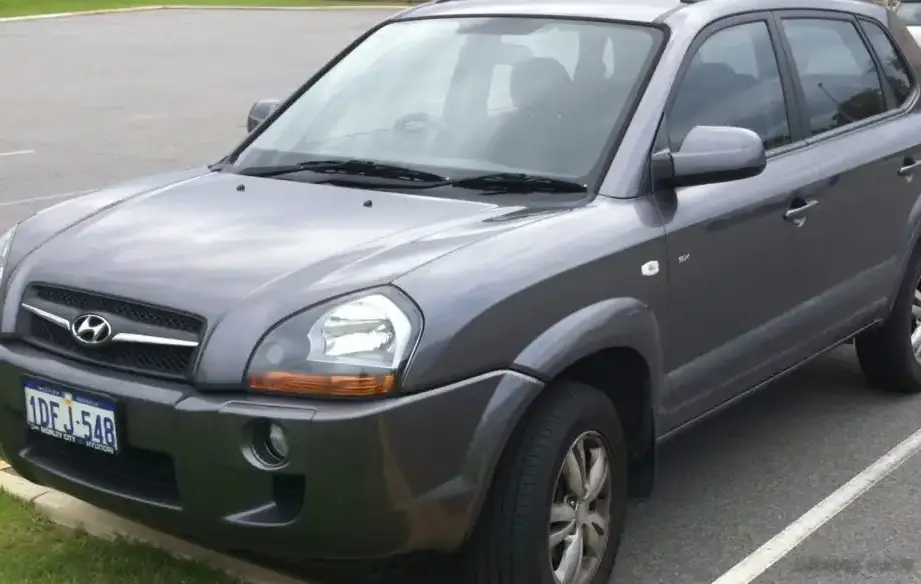
Technical Specifications
| Brand | Hyundai |
| Model | Tucson |
| Generation | Tucson I |
| Type (Engine) | 2.0 CRDi 4WD (112 Hp) |
| Start of production | 2005 |
| End of production | 2006 |
| Powertrain Architecture | Internal Combustion engine |
| Body type | SUV |
| Seats | 5 |
| Doors | 5 |
| Fuel consumption (urban) | 9.2 l/100 km (25.6 US mpg) |
| Fuel consumption (extra urban) | 5.9 l/100 km (39.9 US mpg) |
| Fuel Type | Diesel |
| Acceleration 0 – 100 km/h | 13.8 sec |
| Acceleration 0 – 62 mph | 13.8 sec |
| Acceleration 0 – 60 mph | 13.1 sec |
| Maximum speed | 168 km/h (104.39 mph) |
| Weight-to-power ratio | 14.2 kg/Hp |
| Weight-to-torque ratio | 6.2 kg/Nm |
| Power | 112 Hp @ 4000 rpm |
| Torque | 255 Nm @ 2000 rpm (188.08 lb.-ft. @ 2000 rpm) |
| Engine layout | Front, Transverse |
| Engine Model/Code | D4EA |
| Engine displacement | 1991 cm3 (121.5 cu. in.) |
| Number of cylinders | 4 |
| Engine configuration | Inline |
| Cylinder Bore | 83 mm (3.27 in.) |
| Piston Stroke | 92 mm (3.62 in.) |
| Compression ratio | 17.7:1 |
| Number of valves per cylinder | 4 |
| Fuel injection system | Diesel Commonrail |
| Engine aspiration | Turbocharger, Intercooler |
| Valvetrain | OHC |
| Engine oil capacity | 5.9 l (6.23 US qt | 5.19 UK qt) |
| Coolant | 8.7 l (9.19 US qt | 7.65 UK qt) |
| Kerb Weight | 1585 kg (3494.33 lbs.) |
| Max. weight | 2210 kg (4872.22 lbs.) |
| Max load | 625 kg (1377.89 lbs.) |
| Trunk (boot) space – minimum | 644 l (22.74 cu. ft.) |
| Fuel tank capacity | 58 l (15.32 US gal | 12.76 UK gal) |
| Length | 4325 mm (170.28 in.) |
| Width | 1795 mm (70.67 in.) |
| Height | 1680 mm (66.14 in.) |
| Wheelbase | 2630 mm (103.54 in.) |
| Front track | 1540 mm (60.63 in.) |
| Rear (Back) track | 1550 mm (61.02 in.) |
| Drive wheel | All wheel drive (4×4) |
| Number of gears and type of gearbox | 5 gears, manual transmission |
| Front suspension | Spring Strut |
| Rear suspension | Transverse stabilizer |
| Front brakes | Ventilated discs |
| Rear brakes | Disc |
| Assisting systems | ABS (Anti-lock braking system) |
| Steering type | Steering rack and pinion |
| Power steering | Hydraulic Steering |
| Tires size | 235/60 R16 |
The Hyundai Tucson I 2.0 CRDi 4WD was a compact SUV produced by Hyundai between 2005 and 2006. It marked Hyundai’s initial foray into the burgeoning compact SUV market, designed to offer a practical and affordable all-wheel-drive vehicle for families and individuals. This specific variant, powered by the 2.0-liter CRDi diesel engine and equipped with a five-speed manual transmission, occupied a mid-range position within the Tucson I lineup, balancing fuel efficiency, torque, and all-weather capability. The Tucson I (codenamed JM) was built upon the platform shared with the Hyundai Elantra, leveraging existing engineering to create a competitive SUV.
Powertrain & Engine Architecture
At the core of the Tucson I 2.0 CRDi 4WD was the Hyundai D4EA engine, a 1.991-liter inline-four cylinder diesel. This engine employed a second-generation common-rail direct injection system, injecting fuel at extremely high pressure to optimize combustion efficiency and minimize emissions. The D4EA featured a single overhead camshaft (OHC) design operating four valves per cylinder. A turbocharger, coupled with an intercooler, was utilized to increase power output and enhance torque throughout the engine’s operational range. The engine produced a peak of 112 horsepower at 4,000 rpm, while delivering a substantial 255 Nm (188 lb-ft) of torque from as low as 2,000 rpm. This torque characteristic made the Tucson well-suited for tasks like towing and navigating difficult terrain. The five-speed manual transmission provided a direct connection to the engine, offering good control and responsiveness.
Driving Characteristics
The 2.0 CRDi 4WD Tucson delivered a competent, though not particularly sporty, driving experience. The 112 hp output, combined with the vehicle’s weight (approximately 3,494 lbs), resulted in a 0-60 mph acceleration time of around 13.1 seconds. While not exceptionally quick, the abundant low-end torque made everyday driving and overtaking maneuvers manageable. The five-speed manual transmission was well-matched to the engine’s characteristics, with gear ratios providing adequate acceleration in most situations. Compared to the gasoline-powered Tucson variants, the 2.0 CRDi offered significantly improved fuel economy and a more relaxed cruising experience. The all-wheel-drive system also provided a noticeable advantage in traction, particularly on slippery surfaces. Compared to higher-output diesel versions available in European markets, this 112 hp variant felt less powerful, but it was often favored for its lower running costs and simpler mechanical design.
Equipment & Trim Levels
The 2.0 CRDi 4WD trim level generally included standard features such as air conditioning, power windows and locks, and an AM/FM radio with a CD player. Safety features included dual front airbags, ABS brakes, and seatbelt pretensioners. Interior upholstery was typically cloth, with a relatively simple and functional dashboard layout. Optional extras available for this trim could include alloy wheels, a sunroof, and upgraded audio systems. The Tucson I prioritized a practical and value-oriented approach, so luxury features were generally limited.
Chassis & Braking
The Tucson I utilized a MacPherson strut front suspension and a multi-link rear suspension, providing a comfortable ride quality. The all-wheel-drive system employed a viscous coupling to distribute torque between the front and rear axles as needed. Braking was handled by ventilated discs at the front and solid discs at the rear. The ABS system helped maintain steering control during hard braking. The suspension was tuned for a balance between ride comfort and handling, prioritizing stability over sporty dynamics. Stabilizer bars were included at both the front and rear to minimize body roll during cornering.
Market Reception & Comparison
The Hyundai Tucson I 2.0 CRDi 4WD was generally well-received by automotive critics as a capable and affordable compact SUV. It was praised for its fuel efficiency, spacious interior, and all-weather capability. However, some reviewers noted that the engine was somewhat noisy and lacked the refinement of some of its competitors. Compared to other trims in the Tucson lineup, the 2.0 CRDi 4WD offered a compelling value proposition for buyers seeking a balance between performance and economy. It was often considered a more sensible choice than the more powerful gasoline engines, particularly for those prioritizing fuel efficiency and torque.
Legacy
The Hyundai Tucson I 2.0 CRDi 4WD has proven to be a relatively reliable vehicle, with the D4EA engine generally considered durable and long-lasting. Routine maintenance includes regular oil changes, filter replacements, and timing belt service (if applicable). The all-wheel-drive system is generally robust, but it’s important to inspect the viscous coupling for signs of wear. In the used car market, these Tucsons are often sought after for their affordability and practicality. While they may not offer the latest technology or features, they remain a viable option for buyers looking for a dependable and capable compact SUV. The Tucson I established a foundation for Hyundai’s success in the SUV segment, paving the way for subsequent generations of the Tucson that have become increasingly popular and sophisticated.
