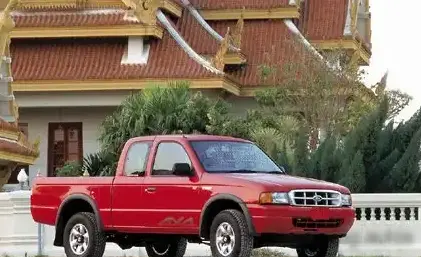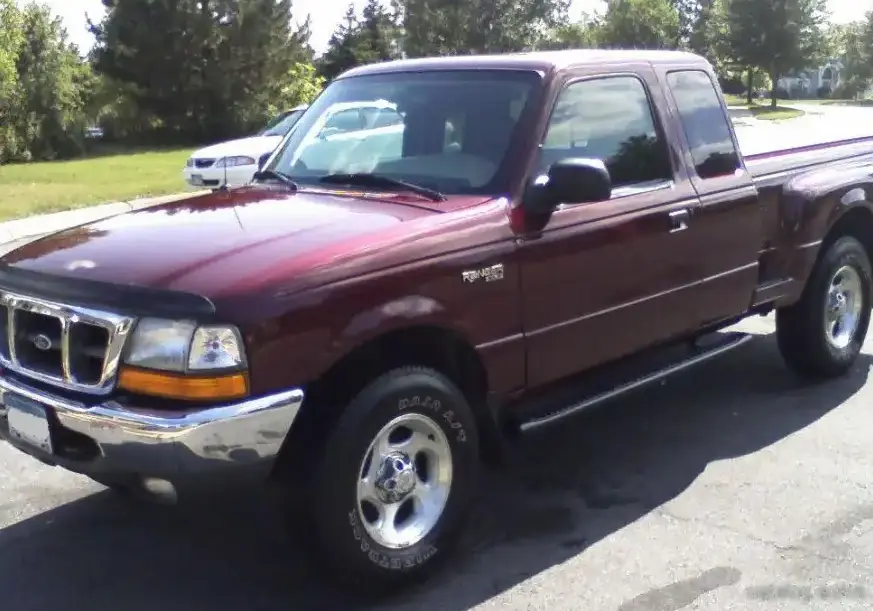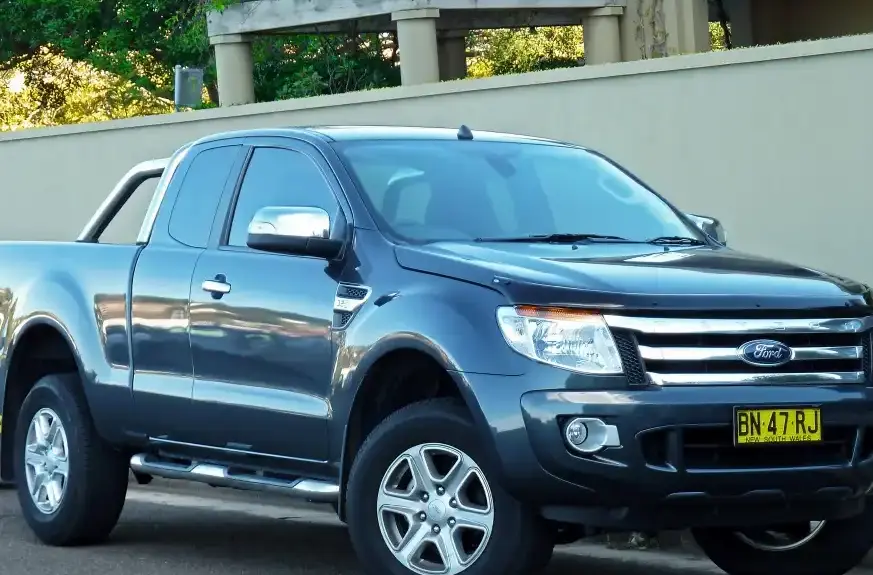
The Ford Ranger III Super Cab 2.2 TDCi 4×4, produced between 2011 and 2015, represents a significant iteration of Ford’s globally successful mid-size pickup truck. This variant, powered by the 2.2-liter Duratorq turbodiesel engine producing 150 horsepower, was primarily aimed at the European, Australian, and South African markets, where demand for fuel-efficient and capable work vehicles was high. It occupied a middle ground in the Ranger III lineup, offering a balance between affordability, performance, and practicality, slotting below the more powerful 3.2-liter five-cylinder diesel and above the lower-powered 2.5-liter engine options. The Super Cab configuration provided additional passenger space compared to the standard cab, making it suitable for both work and family use.
Technical Specifications
| Brand | Ford |
| Model | Ranger |
| Generation | Ranger III Super Cab |
| Type (Engine) | 2.2 TDCi (150 Hp) 4×4 |
| Start of production | 2011 |
| End of production | 2015 |
| Powertrain Architecture | Internal Combustion engine |
| Body type | Pick-up |
| Seats | 5 |
| Doors | 2 |
| Fuel consumption (urban) | 9.7 l/100 km (24.2 US mpg) |
| Fuel consumption (extra urban) | 7.5 l/100 km (31.4 US mpg) |
| Fuel consumption (combined) | 8.3 l/100 km (28.3 US mpg) |
| CO2 emissions | 219 g/km |
| Fuel Type | Diesel |
| Acceleration 0 – 100 km/h | 11.8 sec |
| Acceleration 0 – 62 mph | 11.8 sec |
| Acceleration 0 – 60 mph | 11.2 sec |
| Maximum speed | 175 km/h (108.74 mph) |
| Emission standard | Euro 4 |
| Weight-to-power ratio | 13 kg/Hp |
| Weight-to-torque ratio | 5.2 kg/Nm |
| Power | 150 Hp @ 3700 rpm |
| Torque | 375 Nm @ 1500-2500 rpm (276.59 lb.-ft.) |
| Engine layout | Front, Longitudinal |
| Engine displacement | 2198 cm3 (134.13 cu. in.) |
| Number of cylinders | 4 |
| Engine configuration | Inline |
| Cylinder Bore | 86 mm (3.39 in.) |
| Piston Stroke | 94.6 mm (3.72 in.) |
| Compression ratio | 15.7:1 |
| Number of valves per cylinder | 4 |
| Fuel injection system | Diesel Commonrail |
| Engine aspiration | Turbocharger, Intercooler |
| Engine oil capacity | 8.6 l (9.09 US qt) |
| Coolant capacity | 11.5 l (12.15 US qt) |
| Kerb Weight | 1946 kg (4290.2 lbs.) |
| Max. weight | 3200 kg (7054.79 lbs.) |
| Max load | 1254 kg (2764.6 lbs.) |
| Trunk (boot) space | 1450 l (51.21 cu. ft.) |
| Fuel tank capacity | 80 l (21.13 US gal) |
| Length | 5359 mm (210.98 in.) |
| Width | 1850 mm (72.83 in.) |
| Height | 1804 mm (71.02 in.) |
| Wheelbase | 3220 mm (126.77 in.) |
| Front track | 1560 mm (61.42 in.) |
| Rear track | 1560 mm (61.42 in.) |
| Ride height (ground clearance) | 229 mm (9.02 in.) |
| Drive wheel | All wheel drive (4×4) |
| Number of gears | 6 |
| Gearbox type | Manual transmission |
| Front suspension | Independent coil spring |
| Rear suspension | Dependent suspension of two longitudinal semi-elliptic leaf springs |
| Front brakes | Ventilated discs |
| Rear brakes | Drum |
| Assisting systems | ABS (Anti-lock braking system) |
| Steering type | Steering rack and pinion |
| Power steering | Hydraulic |
| Tires size | 255/70 R16; 265/65 R17; 265/60 R18 |
| Wheel rims size | 16; 17; 18 |
Powertrain & Engine Architecture
The heart of the Ranger III Super Cab 2.2 TDCi is the Puma 2.2-liter inline-four diesel engine. This engine, part of Ford’s Duratorq family, utilizes a common-rail direct injection system, delivering fuel at extremely high pressure for improved combustion efficiency and reduced emissions. The engine code for this specific output was typically ‘P22Z’. A variable geometry turbocharger (VGT) with an intercooler further enhances performance by providing increased air intake. The engine features four valves per cylinder and a robust cast iron block, contributing to its durability. The 150 horsepower and 375 Nm (276.59 lb-ft) of torque are delivered across a broad rev range, peaking between 1500 and 2500 rpm. The 4×4 system is typically a part-time system, allowing the driver to switch between two-wheel drive and four-wheel drive as needed. The six-speed manual transmission was the most common pairing for this engine, offering a good balance of fuel economy and driver control.
Driving Characteristics
The 2.2 TDCi 4×4 Ranger offered a practical and capable driving experience. While not a performance-oriented pickup, the 150 hp engine provided sufficient power for everyday driving and hauling moderate loads. Acceleration from 0-60 mph took around 11.2 seconds, and the top speed was approximately 108.74 mph. The manual transmission allowed for precise gear selection, and the broad torque curve meant that the truck felt responsive even when fully loaded. Compared to the higher-output 3.2-liter version, the 2.2 TDCi felt less powerful, particularly when climbing hills or towing heavy trailers. However, it offered significantly better fuel economy. The 4×4 system provided excellent traction in off-road conditions, making it a versatile vehicle for both work and recreational use. The ride quality, typical of a body-on-frame pickup, was firm but acceptable, and the steering provided adequate feedback.
Equipment & Trim Levels
The Ranger III Super Cab 2.2 TDCi 4×4 was available in various trim levels, typically including base, XL, and XLT. The base models offered essential features such as air conditioning, power steering, and a basic audio system. XL trims added features like alloy wheels, upgraded interior trim, and a more comprehensive audio system. The XLT trim, the highest available, included features such as leather upholstery, climate control, and a navigation system (optional). Standard safety equipment included ABS brakes and driver and passenger airbags. Optional extras included a limited-slip differential, a tow bar, and various accessories for the cargo bed.
Chassis & Braking
The Ranger III utilized a traditional body-on-frame construction, providing a robust and durable platform. The front suspension consisted of independent coil springs, while the rear suspension employed a dependent leaf spring setup. This configuration provided a good balance of ride comfort and load-carrying capacity. Braking duties were handled by ventilated discs at the front and drum brakes at the rear. The hydraulic power steering provided a reasonable level of assistance, making the truck easy to maneuver. The 4×4 system featured a transfer case allowing the driver to select between 2H (two-wheel drive high range), 4H (four-wheel drive high range), and 4L (four-wheel drive low range) for increased traction in challenging terrain.
Market Reception & Comparison
The Ford Ranger III Super Cab 2.2 TDCi 4×4 was well-received in its target markets. Critics praised its fuel efficiency, practicality, and off-road capability. It was often compared to rivals such as the Toyota Hilux, Nissan Navara, and Mitsubishi L200. The Ranger generally offered a more modern interior and a more refined driving experience than some of its competitors. However, some critics noted that the 2.2-liter engine could feel underpowered when fully loaded or towing. Fuel economy was a key selling point, with the 2.2 TDCi consistently achieving better figures than the larger-displacement engines in the lineup. Reliability was generally good, although some owners reported issues with the diesel particulate filter (DPF) system.
Legacy
The Ford Ranger III Super Cab 2.2 TDCi 4×4 remains a popular choice in the used car market. Its combination of practicality, fuel efficiency, and off-road capability makes it a versatile vehicle for a wide range of buyers. The Duratorq engine is known for its durability, although regular maintenance is essential to prevent issues with the DPF and fuel injection system. Parts availability is generally good, and the Ranger’s relatively simple mechanical design makes it relatively easy to repair. The Ranger III laid the groundwork for the significantly updated Ranger models that followed, solidifying Ford’s position as a leading manufacturer of mid-size pickup trucks.