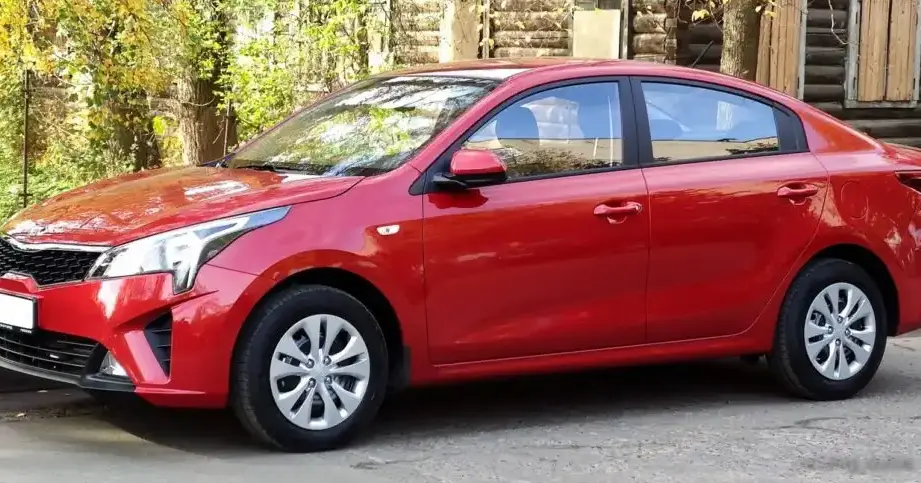
The Kia Rio IV Sedan, specifically the facelifted model introduced in 2020, represented a significant step forward for Kia in the competitive subcompact sedan segment. The 1.6 Gamma engine paired with a six-speed automatic transmission was a key variant within the Rio IV lineup, positioned as a comfortable and practical option for buyers prioritizing ease of use over outright performance. This configuration, designated for the FB/UC chassis, aimed to balance fuel efficiency with adequate power for everyday driving needs in markets where manual transmissions were less popular. Production of this variant spanned from 2020 onwards, continuing through subsequent model years with minor updates.
Technical Specifications
| Brand | Kia |
| Model | Rio |
| Generation | Rio IV Sedan (FB/UC, facelift 2020) |
| Type (Engine) | 1.6 Gamma (123 Hp) Automatic |
| Start of production | 2020 |
| Powertrain Architecture | Internal Combustion engine |
| Body type | Sedan |
| Seats | 5 |
| Doors | 4 |
| Fuel consumption (urban) | 8.9 l/100 km (26.4 US mpg) |
| Fuel consumption (extra urban) | 5.3 l/100 km (44.4 US mpg) |
| Fuel consumption (combined) | 6.6 l/100 km (35.6 US mpg) |
| Fuel Type | Petrol (Gasoline) |
| Acceleration 0 – 100 km/h | 11.2 sec |
| Acceleration 0 – 62 mph | 11.2 sec |
| Acceleration 0 – 60 mph | 10.6 sec |
| Maximum speed | 192 km/h (119.3 mph) |
| Emission standard | Euro 5 |
| Weight-to-power ratio | 9.7 kg/Hp |
| Weight-to-torque ratio | 7.9 kg/Nm |
| Power | 123 Hp @ 6300 rpm |
| Torque | 151 Nm @ 4850 rpm (111.37 lb.-ft. @ 4850 rpm) |
| Engine layout | Front, Transverse |
| Engine displacement | 1591 cm3 (97.09 cu. in.) |
| Number of cylinders | 4 |
| Engine configuration | Inline |
| Cylinder Bore | 77 mm (3.03 in.) |
| Piston Stroke | 85.4 mm (3.36 in.) |
| Compression ratio | 10.5:1 |
| Number of valves per cylinder | 4 |
| Fuel injection system | Multi-port manifold injection |
| Engine aspiration | Naturally aspirated engine |
| Kerb Weight | 1198 kg (2641.14 lbs.) |
| Max. weight | 1610 kg (3549.44 lbs.) |
| Max load | 412 kg (908.3 lbs.) |
| Trunk (boot) space | 480 l (16.95 cu. ft.) |
| Fuel tank capacity | 50 l (13.21 US gal | 11 UK gal) |
| Length | 4420 mm (174.02 in.) |
| Width | 1740 mm (68.5 in.) |
| Height | 1470 mm (57.87 in.) |
| Wheelbase | 2600 mm (102.36 in.) |
| Front track | 1516 mm (59.69 in.) |
| Rear track | 1524 mm (60 in.) |
| Ride height (ground clearance) | 160 mm (6.3 in.) |
| Drivetrain Architecture | Front wheel drive |
| Number of gears | 6 |
| Gearbox type | Automatic transmission |
| Front brakes | Ventilated discs |
| Rear brakes | Drum |
| Tires size | 185/65 R15 88H; 195/55 R16 87H; 205/45 R17 88V |
Powertrain & Engine Architecture
The heart of this Rio variant is Kia’s 1.6-liter Gamma inline-four cylinder engine. This engine, internally designated as the G4FG, is a naturally aspirated powerplant featuring multi-point fuel injection. The Gamma engine family is known for its relatively simple design, contributing to its reliability and ease of maintenance. The 123 horsepower output is achieved at 6,300 rpm, while peak torque of 151 Nm (111 lb-ft) arrives at 4,850 rpm. The engine utilizes a timing chain, reducing maintenance compared to timing belts. Paired with the engine is a six-speed automatic transmission. This transmission, while not offering the sportiness of a dual-clutch unit, provides smooth and predictable shifts, prioritizing comfort and convenience. The transmission’s gear ratios are tuned for fuel efficiency and relaxed cruising, rather than aggressive acceleration.
Driving Characteristics
The 1.6L automatic Rio delivers a comfortable, if not particularly exhilarating, driving experience. Acceleration from 0-60 mph takes around 10.6 seconds, making it suitable for city driving and highway merging, but not for spirited performance. The automatic transmission contributes to a smooth ride, but can sometimes feel hesitant during quick overtaking maneuvers. The gear ratios are optimized for fuel economy, meaning the engine often operates at lower rpm, which can result in a slight delay in response when pressing the accelerator. Compared to the manual transmission versions of the Rio, the automatic sacrifices some responsiveness, but gains in ease of use. Higher-output engine options, though available in some markets, offered significantly more power but at the expense of fuel efficiency.
Equipment & Trim Levels
The 1.6 Gamma Automatic Rio typically came equipped with a respectable array of standard features. These generally included air conditioning, power windows and locks, a basic audio system with USB connectivity, and standard safety features like ABS, airbags, and stability control. Higher trim levels added features such as alloy wheels, a touchscreen infotainment system with Apple CarPlay and Android Auto compatibility, a rearview camera, and automatic climate control. Interior upholstery was typically cloth, with options for upgraded materials on higher trims. The dashboard layout was functional and straightforward, prioritizing usability over aesthetic flair.
Chassis & Braking
The Rio IV Sedan utilizes a front-wheel-drive platform with a MacPherson strut front suspension and a torsion beam rear suspension. This setup provides a comfortable ride quality, although it doesn’t offer the same level of handling precision as more sophisticated independent rear suspension systems. Braking duties are handled by ventilated discs at the front and drum brakes at the rear. While adequate for everyday driving, the rear drum brakes are a cost-saving measure and don’t provide the same stopping power as disc brakes. Electric power steering is standard, offering light and easy steering feel.
Market Reception & Comparison
The 1.6L automatic Rio was generally well-received by critics as a practical and affordable subcompact sedan. It was praised for its fuel efficiency, comfortable ride, and generous warranty. However, some reviewers noted its lack of performance and somewhat basic interior. Compared to competitors like the Honda Fit, Toyota Yaris, and Hyundai Accent, the Rio offered a compelling value proposition, often undercutting them in price while providing a similar level of features. The 1.6L automatic variant was particularly popular with buyers who prioritized ease of use and fuel economy over sporty driving dynamics.
Legacy
The 1.6 Gamma engine and six-speed automatic transmission pairing in the Kia Rio IV Sedan has proven to be a relatively reliable powertrain. While not without its minor issues (such as occasional reports of oil consumption), it generally holds up well over time with proper maintenance. In the used car market, these Rios are often sought after for their affordability, fuel efficiency, and Kia’s reputation for offering a long warranty. They represent a solid choice for budget-conscious buyers looking for a dependable and practical subcompact sedan.