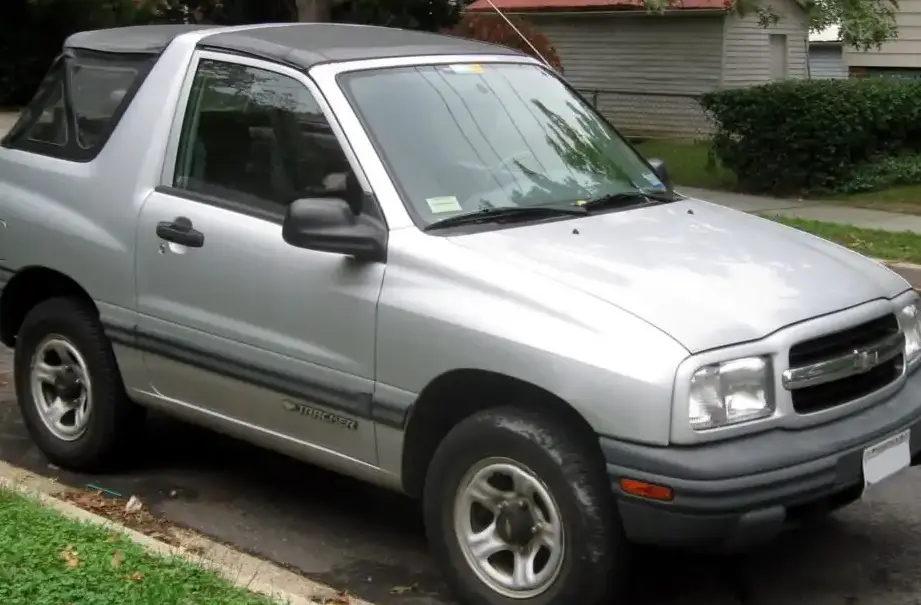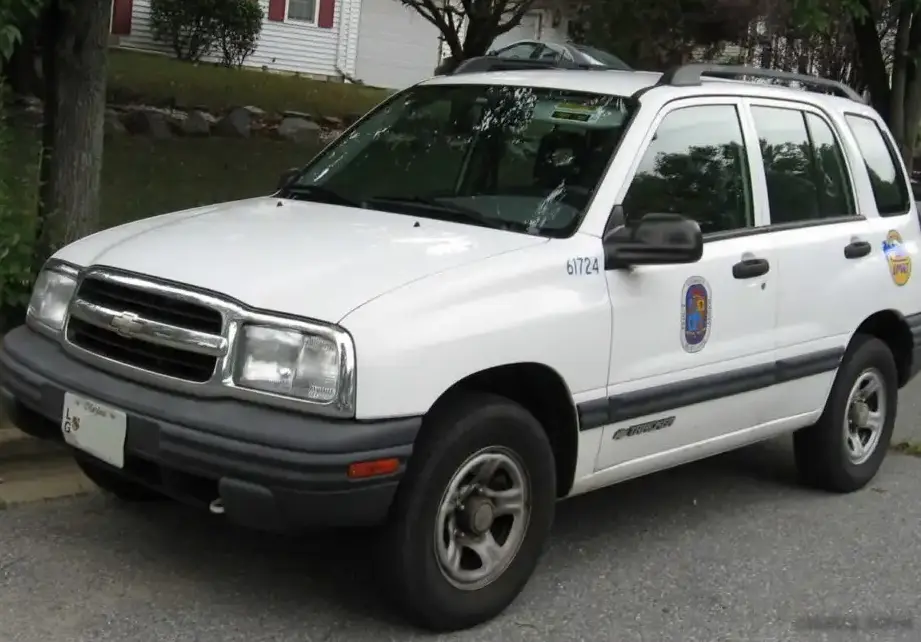
The Chevrolet Tracker II 2.0 i 16V 4WD, produced between 1998 and 2002, represented a significant update to Chevrolet’s entry-level SUV offering. Positioned as a compact, affordable, and capable vehicle, the Tracker II aimed to provide a blend of practicality and all-weather capability, particularly appealing to buyers in regions experiencing inclement weather or desiring light off-road functionality. This variant, equipped with the 2.0-liter inline-four engine and a five-speed manual transmission, occupied a mid-range position within the Tracker II lineup, offering a step up in performance from the base models while remaining more accessible than the potentially available optional equipment. It was primarily sold in North America, where it competed with similar small SUVs like the Honda CR-V and Toyota RAV4.
Technical Specifications
| Brand | Chevrolet |
| Model | Tracker |
| Generation | Tracker II |
| Type (Engine) | 2.0 i 16V 4 WD (129 Hp) |
| Start of production | 1998 |
| End of production | 2002 |
| Powertrain Architecture | Internal Combustion engine |
| Body type | SUV |
| Seats | 5 |
| Doors | 5 |
| Fuel consumption (urban) | 14 l/100 km (16.8 US mpg) |
| Fuel consumption (extra urban) | 8 l/100 km (29.4 US mpg) |
| Fuel Type | Petrol (Gasoline) |
| Maximum speed | 150 km/h (93.21 mph) |
| Weight-to-power ratio | 10.5 kg/Hp |
| Weight-to-torque ratio | 7.4 kg/Nm |
| Power | 129 Hp @ 6000 rpm |
| Power per litre | 64.7 Hp/l |
| Torque | 182 Nm @ 3000 rpm (134.24 lb.-ft. @ 3000 rpm) |
| Engine layout | Front, Longitudinal |
| Engine Model/Code | J20A |
| Engine displacement | 1995 cm3 (121.74 cu. in.) |
| Number of cylinders | 4 |
| Engine configuration | Inline |
| Cylinder Bore | 84 mm (3.31 in.) |
| Piston Stroke | 90 mm (3.54 in.) |
| Compression ratio | 9.5:1 |
| Number of valves per cylinder | 4 |
| Fuel injection system | Multi-port manifold injection |
| Engine aspiration | Naturally aspirated engine |
| Valvetrain | OHC |
| Engine oil capacity | 5.2 l (5.49 US qt | 4.58 UK qt) |
| Coolant | 6.5 l (6.87 US qt | 5.72 UK qt) |
| Kerb Weight | 1355 kg (2987.26 lbs.) |
| Trunk (boot) space – minimum | 575 l (20.31 cu. ft.) |
| Trunk (boot) space – maximum | 985 l (34.78 cu. ft.) |
| Fuel tank capacity | 56 l (14.79 US gal | 12.32 UK gal) |
| Length | 4060 mm (159.84 in.) |
| Width | 1695 mm (66.73 in.) |
| Height | 1690 mm (66.54 in.) |
| Wheelbase | 2480 mm (97.64 in.) |
| Front track | 1455 mm (57.28 in.) |
| Rear (Back) track | 1460 mm (57.48 in.) |
| Drive wheel | All wheel drive (4×4) |
| Number of gears and type of gearbox | 5 gears, manual transmission |
| Front suspension | Spring Strut |
| Rear suspension | Coil spring |
| Front brakes | Ventilated discs |
| Rear brakes | Drum |
| Assisting systems | ABS (Anti-lock braking system) |
| Steering type | Worm-reduction unit |
| Power steering | Hydraulic Steering |
| Tires size | 195/75 R15 |
Powertrain & Engine Architecture
The heart of the Tracker II 2.0 i 4WD is the J20A engine, a 1.995-liter (121.74 cubic inches) inline-four cylinder gasoline engine. This engine utilizes a single overhead camshaft (OHC) valvetrain with four valves per cylinder, contributing to its 16-valve configuration. Fuel delivery is managed by a multi-port fuel injection system, providing precise fuel metering for improved efficiency and performance. The engine produces 129 horsepower at 6000 rpm and 182 Nm (134.24 lb-ft) of torque at 3000 rpm. The engine’s longitudinal mounting allowed for a more efficient drivetrain layout, particularly important for a four-wheel-drive vehicle. The five-speed manual transmission offered precise gear selection and contributed to the vehicle’s overall responsiveness. The transmission’s gear ratios were tuned for a balance between acceleration and fuel economy, prioritizing usability in everyday driving conditions.
Driving Characteristics
The 2.0-liter engine and five-speed manual transmission combination in the Tracker II provided adequate, though not exhilarating, performance. Acceleration was reasonable for its class, with the vehicle capable of reaching 60 mph in approximately 10-11 seconds. The manual transmission allowed drivers to maintain control over engine speed and maximize available power, especially when navigating hills or overtaking. Compared to potential automatic transmission equipped models, the manual offered a more engaging driving experience and slightly improved fuel economy. While not a dedicated off-roader, the four-wheel-drive system provided enhanced traction on slippery surfaces, making it a capable vehicle for light off-road adventures and challenging weather conditions. The steering, utilizing a worm-reduction unit, was known for being somewhat vague but provided adequate control for typical driving scenarios.
Equipment & Trim Levels
The Tracker II 2.0 i 4WD typically came standard with features such as air conditioning, power steering, and an AM/FM radio. The interior featured cloth upholstery and a relatively basic dashboard layout. Optional extras included features like upgraded audio systems, power windows and locks, and alloy wheels. The 4WD system was a key feature of this trim, differentiating it from the base, two-wheel-drive models. Safety features were relatively basic for the era, typically including only ABS (Anti-lock Braking System) as a standard offering.
Chassis & Braking
The Tracker II utilized a body-on-frame construction, providing a robust and durable chassis. The front suspension employed a MacPherson strut design, while the rear suspension utilized a coil spring setup. This suspension configuration offered a reasonable balance between ride comfort and handling. The braking system consisted of ventilated discs on the front wheels and drum brakes on the rear. While adequate for normal driving conditions, the rear drum brakes were a point of criticism, as they offered less stopping power and fade resistance compared to disc brakes. The vehicle’s relatively light weight helped to mitigate the limitations of the braking system.
Market Reception & Comparison
The Chevrolet Tracker II 2.0 i 4WD was generally well-received by critics as an affordable and practical small SUV. Its four-wheel-drive capability was a significant selling point, particularly in regions with harsh winters. However, some reviewers noted the engine’s lack of refinement and the somewhat basic interior. Compared to other trims in the Tracker II lineup, the 2.0-liter 4WD model offered a noticeable performance improvement over the base engine, while remaining more affordable than potentially available luxury options. Fuel economy was average for its class, with the manual transmission offering a slight advantage over the automatic. Reliability was generally considered good, although some owners reported minor issues with the fuel injection system and electrical components.
Legacy
The Chevrolet Tracker II, and specifically the 2.0 i 4WD variant, has developed a modest following among enthusiasts and budget-minded buyers in the used car market. The J20A engine is known for its relative simplicity and durability, making it a relatively easy engine to maintain. However, finding parts can sometimes be challenging as the vehicle is no longer in production. The Tracker II’s affordability and four-wheel-drive capability continue to make it an attractive option for those seeking a practical and capable small SUV. While not a collector’s item, well-maintained examples of the Tracker II 2.0 i 4WD can provide reliable transportation for years to come.