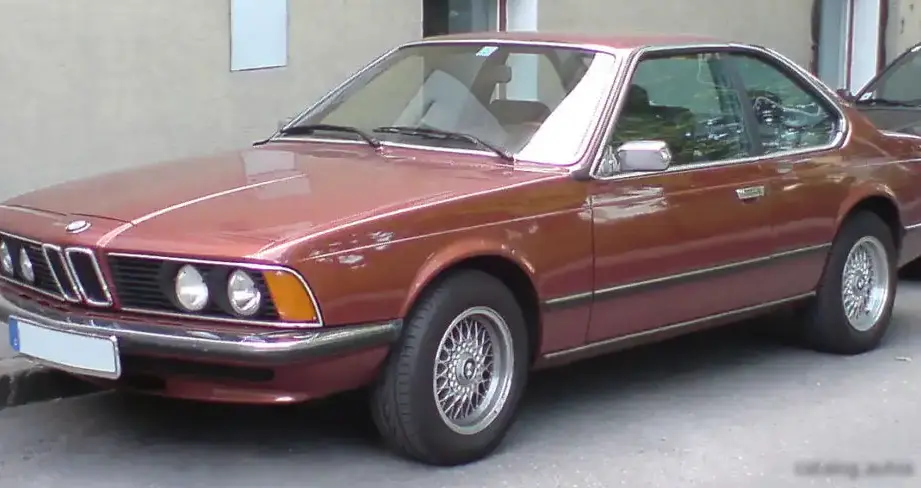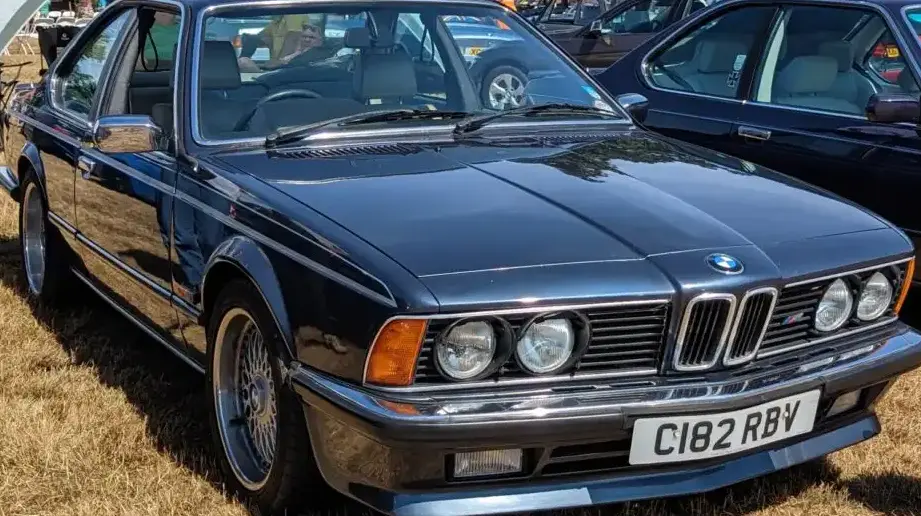
The BMW 635CSi, produced from 1982 to 1987, represented the pinnacle of the first-generation 6 Series (E24) coupe. Positioned as the performance variant within the E24 range, it superseded the earlier 633CSi and offered a significant upgrade in power and refinement. The “CSi” designation signified “Coupe, Sport, Injection,” highlighting its sporting intentions and fuel injection system. This facelifted version of the E24, introduced in 1982, featured subtle but important revisions to the exterior styling, including integrated front and rear spoilers, and a more modern interior. The 635CSi quickly became a benchmark for grand touring coupes, blending performance, luxury, and BMW’s renowned driving dynamics.
Technical Specifications
| Brand | BMW |
| Model | 6 Series |
| Generation | 6 Series (E24, facelift 1982) |
| Type (Engine) | 635CSi (218 Hp) |
| Start of production | 1982 |
| End of production | 1987 |
| Powertrain Architecture | Internal Combustion engine |
| Body type | Coupe |
| Seats | 4 |
| Doors | 2 |
| Fuel consumption (urban) | 15.7 l/100 km (15 US mpg, 18 UK mpg, 6.4 km/l) |
| Fuel consumption (extra urban) | 7.2 l/100 km (32.7 US mpg, 39.2 UK mpg, 13.9 km/l) |
| Fuel consumption (combined) | 10.6 l/100 km (22.2 US mpg, 26.6 UK mpg, 9.4 km/l) |
| Fuel Type | Petrol (Gasoline) |
| Acceleration 0 – 100 km/h | 7.4 sec |
| Acceleration 0 – 62 mph | 7.4 sec |
| Acceleration 0 – 60 mph | 7 sec |
| Maximum speed | 229 km/h (142.29 mph) |
| Weight-to-power ratio | 6.6 kg/Hp, 152.4 Hp/tonne |
| Weight-to-torque ratio | 4.6 kg/Nm, 216.8 Nm/tonne |
| Power | 218 Hp @ 5200 rpm |
| Power per litre | 63.6 Hp/l |
| Torque | 310 Nm @ 4000 rpm (228.64 lb.-ft. @ 4000 rpm) |
| Engine layout | Front, Longitudinal |
| Engine Model/Code | M30 |
| Engine displacement | 3430 cm3 (209.31 cu. in.) |
| Number of cylinders | 6 |
| Engine configuration | Inline |
| Cylinder Bore | 92 mm (3.62 in.) |
| Piston Stroke | 86 mm (3.39 in.) |
| Compression ratio | 10:1 |
| Number of valves per cylinder | 2 |
| Fuel injection system | Multi-port manifold injection |
| Engine aspiration | Naturally aspirated engine |
| Engine oil capacity | 5.8 l (6.13 US qt | 5.1 UK qt) |
| Coolant capacity | 12 l (12.68 US qt | 10.56 UK qt) |
| Kerb Weight | 1430 kg (3152.61 lbs.) |
| Max. weight | 1850 kg (4078.55 lbs.) |
| Max load | 420 kg (925.94 lbs.) |
| Trunk (boot) space – minimum | 415 l (14.66 cu. ft.) |
| Fuel tank capacity | 70 l (18.49 US gal | 15.4 UK gal) |
| Length | 4755 mm (187.2 in.) |
| Width | 1725 mm (67.91 in.) |
| Height | 1365 mm (53.74 in.) |
| Wheelbase | 2625 mm (103.35 in.) |
| Front track | 1430 mm (56.3 in.) |
| Rear (Back) track | 1460 mm (57.48 in.) |
| Drag coefficient (Cd) | 0.41 |
| Minimum turning circle | 11.2 m (36.75 ft.) |
| Drivetrain Architecture | Rear wheel drive |
| Number of gears | 5 gears, manual transmission |
| Front suspension | Independent, type McPherson with coil spring and anti-roll bar |
| Rear suspension | Independent coil spring |
| Front brakes | Ventilated discs |
| Rear brakes | Disc |
| Steering type | Cone worm with recirculation balls |
| Tires size | 205/70 R14 |
| Wheel rims size | 14 |
Powertrain & Engine Architecture
The heart of the 635CSi was the M30 inline-six engine, specifically the M30B34 variant. This 3.4-liter engine featured a cast iron block and an aluminum cylinder head, employing a single overhead camshaft (SOHC) design with two valves per cylinder. The M30 engine was renowned for its smoothness and durability. The 635CSi utilized Bosch Motronic fuel injection, a sophisticated system for its time, which optimized fuel delivery and ignition timing for improved performance and efficiency. The engine produced 218 horsepower at 5,200 rpm and 228.64 lb-ft of torque at 4,000 rpm. The standard transmission was a Getrag 265 five-speed manual, but a four-speed automatic transmission was also available, though it slightly diminished acceleration. The automatic transmission, while offering convenience, was often criticized for its less-than-sporty shift characteristics compared to the manual.
Driving Characteristics
The 635CSi with the manual transmission delivered a refined yet engaging driving experience. Acceleration from 0 to 60 mph took around 7 seconds, respectable for the early 1980s. The engine’s torque curve provided strong pull throughout the rev range, making it a capable performer in both city and highway driving. The automatic version, while still offering good performance, felt noticeably slower and less responsive. The gear ratios in the automatic were spaced to prioritize comfort and fuel economy over outright acceleration. The 635CSi’s suspension, featuring McPherson struts in the front and independent coil springs in the rear, provided a comfortable ride while maintaining good handling characteristics. The car felt planted and stable, even at higher speeds.
Equipment & Trim Levels
The 635CSi was well-equipped for its era. Standard features included power windows, power locks, a sunroof, and leather upholstery. Air conditioning was also standard. Optional extras included a premium sound system, heated seats, and metallic paint finishes. The interior design was characterized by its clean lines and high-quality materials. The dashboard layout was driver-focused, with easy-to-read gauges and well-placed controls. Trim levels were relatively simple; the 635CSi was the top-of-the-line model, with options allowing for personalization.
Chassis & Braking
The 635CSi utilized a robust chassis with a fully independent suspension. The front suspension employed McPherson struts with coil springs and an anti-roll bar, while the rear featured an independent semi-trailing arm suspension with coil springs. Braking duties were handled by ventilated disc brakes at the front and solid disc brakes at the rear. The braking system provided ample stopping power, although it lacked the anti-lock braking system (ABS) that would become commonplace in later years. The car’s weight distribution was well-balanced, contributing to its neutral handling characteristics.
Market Reception & Comparison
The 635CSi was widely praised by automotive journalists for its blend of performance, luxury, and handling. It was often compared favorably to other grand touring coupes of the time, such as the Porsche 911 and the Mercedes-Benz SL. Critics noted the car’s refined engine, comfortable ride, and stylish design. The automatic transmission version received some criticism for its slower acceleration and less engaging driving experience. Fuel economy, at around 22 mpg combined, was reasonable for a performance coupe of this era. Compared to the 633CSi, the 635CSi offered a significant power increase and improved performance. Later, the introduction of the 635CSi Highline added even more luxury features.
Legacy
The BMW 635CSi remains a highly sought-after classic car today. The M30 engine is known for its durability and relatively simple maintenance requirements, although age-related issues such as oil leaks and corrosion can be common. Well-maintained examples command high prices in the collector car market. The 635CSi’s influence can be seen in subsequent generations of BMW coupes, which have continued to prioritize performance, luxury, and driving dynamics. It is considered a landmark vehicle in BMW’s history, representing a high point in the company’s commitment to building exceptional grand touring cars. The car’s timeless design and engaging driving experience continue to appeal to enthusiasts around the world.