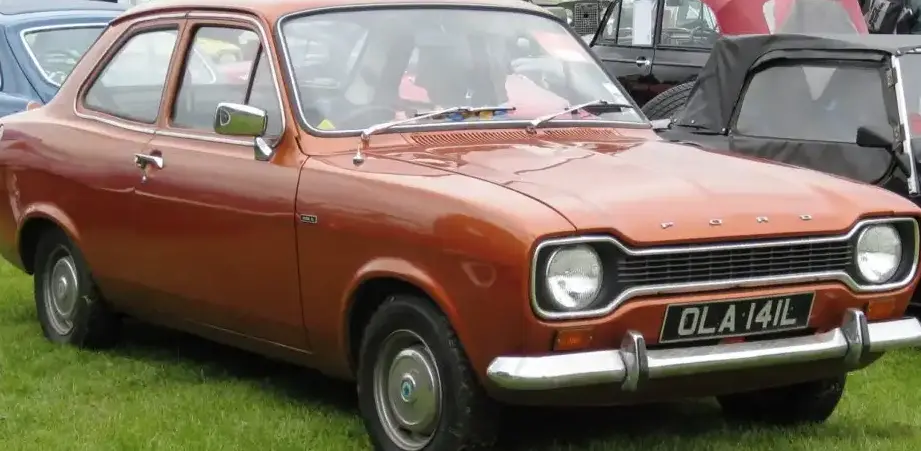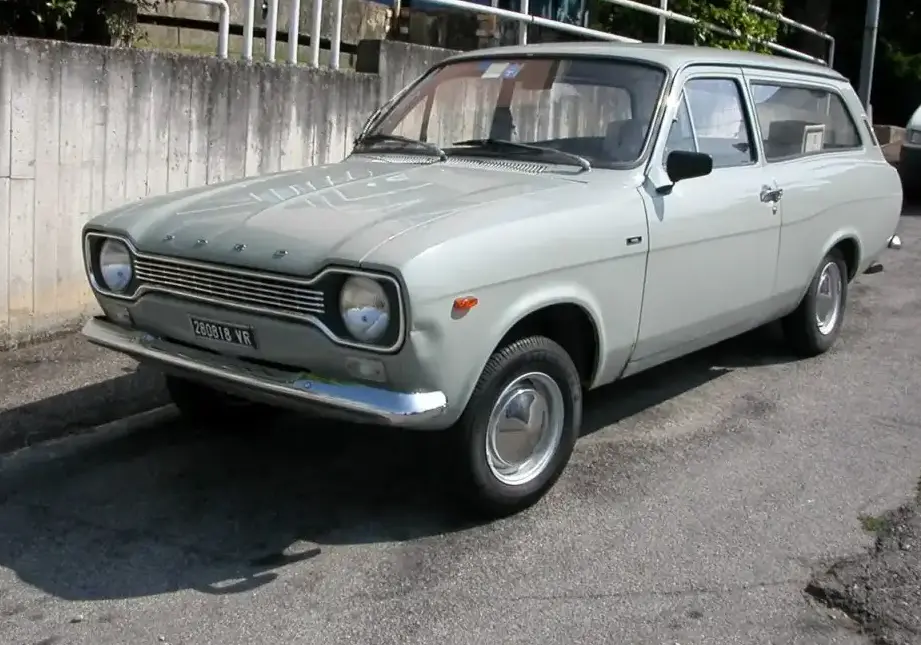
The Ford Escort VI (GAL) 1.4, producing 75 horsepower, represents an entry-level offering within the sixth generation of the globally successful Ford Escort. Produced between 1994 and 1995, this variant primarily served as the base model for European markets, offering affordable transportation with a focus on fuel economy. It occupied the lower end of the Escort VI lineup, positioned below the more powerful 1.6 and 1.8-liter variants, as well as the diesel options. This model was crucial for attracting budget-conscious buyers and maintaining the Escort’s broad market appeal.
Technical Specifications
| Brand | Ford |
| Model | Escort |
| Generation | Escort VI (GAL) |
| Type (Engine) | 1.4 (75 Hp) |
| Start of production | 1994 |
| End of production | 1995 |
| Powertrain Architecture | Internal Combustion engine |
| Body type | Sedan |
| Fuel Type | Petrol (Gasoline) |
| Power | 75 Hp |
| Engine Model/Code | FUH, F4B |
| Engine aspiration | Naturally aspirated engine |
| Engine oil capacity | 3.5 l (3.7 US qt | 3.08 UK qt) |
| Coolant capacity | 7.6 l (8.03 US qt | 6.69 UK qt) |
Powertrain & Engine Architecture
The Ford Escort VI 1.4 utilized either the FUH or F4B engine code, both denoting a 1392cc (84.8 cubic inch) inline-four cylinder engine. This engine was a relatively simple design, featuring a single overhead camshaft (SOHC) operating two valves per cylinder. Fuel delivery was managed by a Bosch fuel injection system, a significant upgrade from the carburetors used in earlier Escort generations. The injection system, while not particularly advanced, provided improved fuel efficiency and smoother operation compared to older technologies. The engine’s block was cast iron, providing durability, while the cylinder head was aluminum, contributing to weight reduction. The engine’s modest power output was a result of its relatively small displacement and conservative tuning, prioritizing reliability and fuel economy over outright performance. The engine was typically paired with a four-speed automatic transmission, although a five-speed manual was also available. The automatic transmission, while offering convenience, was known for its relatively slow shift times and tendency to hunt for gears, especially under load. It was a Ford-sourced unit, designed for smooth operation but lacking the responsiveness of more modern automatic gearboxes.
Driving Characteristics
The 1.4-liter Escort VI with the automatic transmission delivered a driving experience focused on practicality rather than excitement. Acceleration was leisurely, with 0-60 mph times estimated around 14-16 seconds. The automatic transmission’s gear ratios were geared towards fuel efficiency, resulting in a noticeable lack of responsiveness when attempting to overtake or climb hills. The engine produced a usable amount of torque at lower RPMs, making it adequate for everyday driving conditions, but it quickly ran out of steam at higher speeds. Compared to the 1.6-liter and 1.8-liter versions, the 1.4 felt noticeably slower and less refined. The manual transmission offered a more engaging driving experience, allowing the driver to better utilize the engine’s limited power band, but even then, it wasn’t a particularly sporty vehicle. Steering was light and precise, typical of Ford Escorts of this era, and the suspension provided a comfortable, if somewhat uninspired, ride. The automatic transmission, while convenient for city driving, often felt strained on highway inclines, requiring frequent downshifts.
Equipment & Trim Levels
The 1.4-liter Escort VI typically represented the base trim level, often referred to as “LX” or a similar designation depending on the specific market. Standard equipment generally included central locking, power steering, and a basic stereo system. Interior upholstery was typically cloth, with a simple dashboard layout featuring analog gauges. Optional extras included air conditioning, electric windows, and upgraded stereo systems. The interior materials were durable but not particularly luxurious, reflecting the car’s budget-oriented positioning. Safety features were also basic, typically limited to seatbelts and a driver’s airbag in some markets. The overall impression was one of functional simplicity, prioritizing affordability and practicality over creature comforts. Higher trim levels, like the Ghia, offered more luxurious appointments, but the 1.4 LX focused on essential features.
Chassis & Braking
The Escort VI chassis utilized a MacPherson strut front suspension and a semi-independent twist beam rear suspension. This setup provided a reasonable balance between ride comfort and handling, although it wasn’t particularly sophisticated. The front brakes were typically disc brakes, while the rear brakes were often drum brakes, particularly on the base 1.4-liter models. This configuration was a cost-saving measure, and the rear drum brakes offered less stopping power and fade resistance compared to disc brakes. Stabilizer bars were typically fitted to the front suspension, helping to reduce body roll during cornering. The steering system was a rack-and-pinion setup, providing precise and responsive steering feel. The overall chassis design was robust and reliable, contributing to the Escort’s reputation as a durable and practical vehicle. The suspension was tuned for comfort rather than sporty handling, prioritizing a smooth ride over sharp cornering.
Market Reception & Comparison
The Ford Escort VI 1.4 Automatic received mixed reviews from automotive critics. While praised for its affordability and fuel economy, it was often criticized for its lack of performance and refinement. Compared to the 1.6-liter and 1.8-liter versions, the 1.4 felt underpowered and sluggish. The automatic transmission was also a point of criticism, with reviewers noting its slow shift times and tendency to hunt for gears. However, the 1.4 offered a compelling value proposition for budget-conscious buyers, and its fuel economy was significantly better than that of the larger-engined models. In terms of reliability, the 1.4-liter engine proved to be generally robust, although the automatic transmission could be prone to issues if not properly maintained. Compared to competitors such as the Vauxhall/Opel Astra and Volkswagen Golf, the Escort VI 1.4 offered a similar level of practicality and affordability, often undercutting them in price. The Astra, however, often offered a slightly more refined driving experience, while the Golf was known for its build quality.
Legacy
The Ford Escort VI 1.4 Automatic, while not a performance icon, remains a relatively common sight on European roads today. Its simple engine design and robust construction contribute to its long-term reliability. However, finding well-maintained examples can be challenging, as many have succumbed to rust or neglect. The automatic transmission, while convenient, is often the first component to fail. In the used car market, the 1.4-liter Escort VI commands relatively low prices, making it an affordable option for those seeking a classic Ford. While it may not offer the thrills of its more powerful siblings, the 1.4 represents a practical and economical choice for everyday transportation, embodying the spirit of the original Escort as a dependable and accessible family car. Its simplicity makes it relatively easy and inexpensive to maintain, appealing to DIY mechanics and those seeking a straightforward vehicle.