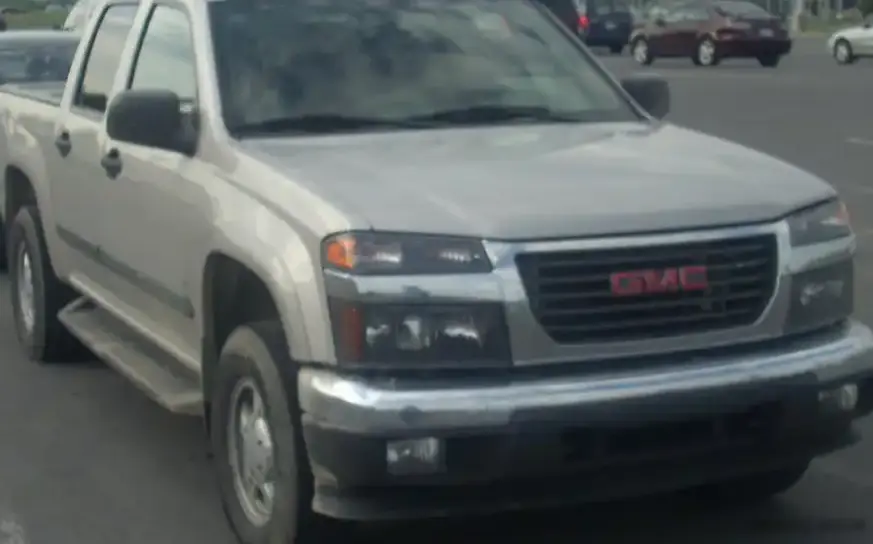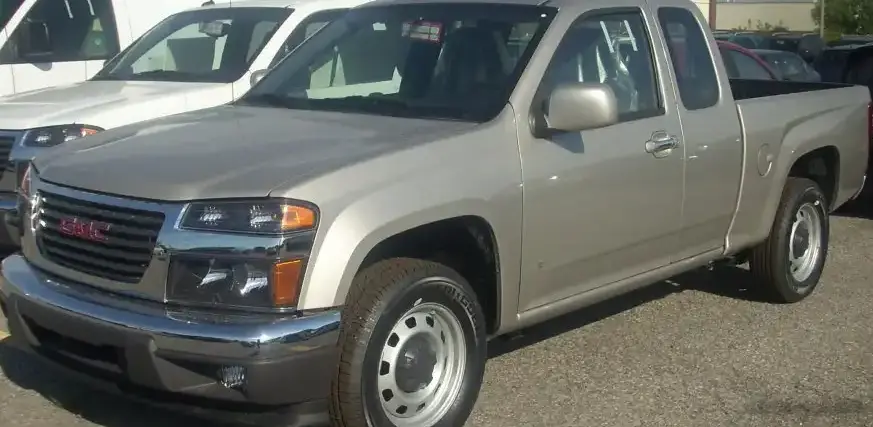
The GMC Canyon I Extended Cab, produced between 2009 and 2012, represented GMC’s entry into the mid-size pickup truck market in the United States. Positioned below the full-size Sierra, the Canyon aimed to provide a more manageable and fuel-efficient option for buyers who didn’t require the larger truck’s capabilities. The 5.3L V8 engine paired with an automatic transmission was a mid-range offering within the Canyon lineup, slotting above the base 2.9L inline-four and below potential diesel options. This configuration targeted buyers seeking a balance of power, towing capacity, and everyday usability. The Canyon shared its platform with the Chevrolet Colorado, representing GM’s attempt to compete with increasingly popular compact pickups from Toyota, Nissan, and Ford.
Technical Specifications
| Brand | GMC |
| Model | Canyon |
| Generation | Canyon I Extended Cab |
| Type (Engine) | 5.3 V8 (300 Hp) Automatic |
| Start of production | 2009 |
| End of production | 2012 |
| Powertrain Architecture | Internal Combustion engine |
| Body type | Pick-up |
| Seats | 4-5 |
| Doors | 4 |
| Fuel consumption (urban) | 15.6 l/100 km (15.1 US mpg, 18.1 UK mpg, 6.4 km/l) |
| Fuel consumption (extra urban) | 11.2 l/100 km (21 US mpg, 25.2 UK mpg, 8.9 km/l) |
| Fuel Type | Petrol (Gasoline) |
| Weight-to-power ratio | 5.9 kg/Hp, 170.1 Hp/tonne |
| Weight-to-torque ratio | 4.1 kg/Nm, 246 Nm/tonne |
| Power | 300 Hp @ 5200 rpm |
| Power per litre | 56.3 Hp/l |
| Torque | 434 Nm @ 4000 rpm (320.1 lb.-ft. @ 4000 rpm) |
| Maximum engine speed | 6000 rpm |
| Engine layout | Front, Longitudinal |
| Engine Model/Code | LH8 |
| Engine displacement | 5328 cm3 (325.13 cu. in.) |
| Number of cylinders | 8 |
| Engine configuration | V-engine |
| Cylinder Bore | 96 mm (3.78 in.) |
| Piston Stroke | 92 mm (3.62 in.) |
| Compression ratio | 9.9:1 |
| Number of valves per cylinder | 2 |
| Fuel injection system | Multi-port manifold injection |
| Engine aspiration | Naturally aspirated engine |
| Valvetrain | OHV |
| Engine oil capacity | 5.7 l (6.02 US qt | 5.02 UK qt) |
| Coolant | 13 l (13.74 US qt | 11.44 UK qt) |
| Kerb Weight | 1764 kg (3888.95 lbs.) |
| Max. weight | 2268 kg (5000.08 lbs.) |
| Max load | 504 kg (1111.13 lbs.) |
| Trunk (boot) space – minimum | 1245 l (43.97 cu. ft.) |
| Fuel tank capacity | 74.2 l (19.6 US gal | 16.32 UK gal) |
| Length | 5260 mm (207.09 in.) |
| Width | 1717 mm (67.6 in.) |
| Height | 1649 mm (64.92 in.) |
| Wheelbase | 3200 mm (125.98 in.) |
| Front track | 1460 mm (57.48 in.) |
| Rear (Back) track | 1460 mm (57.48 in.) |
| Ride height (ground clearance) | 167 mm (6.57 in.) |
| Minimum turning circle (turning diameter) | 13.5 m (44.29 ft.) |
| Drivetrain Architecture | The Internal combustion engine (ICE) drives the rear wheels of the vehicle. |
| Drive wheel | Rear wheel drive |
| Number of gears and type of gearbox | 4 gears, automatic transmission Hydra-Matic |
| Front suspension | Independent coil spring |
| Rear suspension | Leaf spring |
| Front brakes | Ventilated discs |
| Rear brakes | Drum |
| Assisting systems | ABS (Anti-lock braking system) |
| Steering type | Steering rack and pinion |
| Power steering | Hydraulic Steering |
| Tires size | 235/50 R18 |
| Wheel rims size | 18 |
Powertrain & Engine Architecture
The heart of this Canyon variant was the 5.3-liter LH8 V8 engine. This engine, a member of GM’s Small-Block family, featured a cast iron block with aluminum cylinder heads. It utilized a traditional overhead valve (OHV) valvetrain with two valves per cylinder. Fuel delivery was handled by a multi-port fuel injection system, providing adequate atomization for efficient combustion. The LH8 was known for its robust construction and relatively simple design, contributing to its overall reliability. The engine’s 300 horsepower and 320 lb-ft of torque were respectable for a mid-size truck, allowing for capable towing and hauling. The engine was mounted longitudinally in the chassis, driving the rear wheels. Paired with the 5.3L was the 4L60E, a four-speed automatic transmission. This Hydra-Matic transmission was a workhorse for GM, known for its durability, but also criticized for its relatively limited gear count compared to newer transmissions.
Driving Characteristics
The 5.3L V8 and 4L60E combination provided a noticeable step up in performance compared to the base 2.9L four-cylinder Canyon. Acceleration was brisk, and the engine had sufficient power for highway passing and merging. However, the four-speed automatic transmission meant that the engine often ran at higher RPMs during cruising, impacting fuel economy. The gear ratios were optimized for towing and hauling, rather than maximizing fuel efficiency. Compared to a manual transmission equipped Canyon, the automatic offered convenience but sacrificed some driver control and responsiveness. The rear-wheel-drive configuration provided a traditional truck feel, with predictable handling characteristics.
Equipment & Trim Levels
The 5.3L V8 was typically offered on the SLE and SLT trim levels of the Canyon Extended Cab. Standard features included air conditioning, power windows and locks, a CD player, and cloth upholstery. The SLT trim added features like leather upholstery, heated front seats, and a premium sound system. Optional extras included a navigation system, a sunroof, and a trailering package. The Extended Cab configuration provided a small rear seat area, suitable for occasional passengers or cargo. The interior design was functional and straightforward, prioritizing durability over luxury.
Chassis & Braking
The Canyon I utilized a body-on-frame construction, providing a robust and durable platform. The front suspension consisted of independent coil springs, while the rear suspension employed leaf springs. This setup was typical for mid-size trucks of the era, prioritizing load-carrying capacity and durability. The front brakes were ventilated discs, providing adequate stopping power, while the rear brakes were drums. An Anti-lock Braking System (ABS) was standard, enhancing safety. The steering was a hydraulic rack-and-pinion system, offering responsive and predictable handling. The Canyon’s ride quality was generally comfortable, but could be firm when the bed was unloaded.
Market Reception & Comparison
Critics generally praised the Canyon’s V8 engine for its power and towing capacity. However, the four-speed automatic transmission was often criticized for its lack of refinement and impact on fuel economy. Compared to the base 2.9L four-cylinder, the 5.3L V8 offered a significant performance upgrade, but at the cost of increased fuel consumption. The Canyon’s fuel economy figures of 15.6 l/100 km (15.1 US mpg) in the city and 11.2 l/100 km (21 US mpg) on the highway were typical for a V8-powered pickup truck of its size, but less competitive than smaller, more fuel-efficient options. The Canyon also faced competition from the Toyota Tacoma and Nissan Frontier, which were known for their reliability and resale value.
Legacy
The GMC Canyon I 5.3L V8 Automatic, while not a groundbreaking vehicle, proved to be a reliable and capable mid-size pickup truck. The LH8 V8 engine is known for its durability, and the 4L60E transmission, while aging, is relatively easy to repair and maintain. In the used car market, these Canyons represent a relatively affordable option for buyers seeking a V8-powered pickup truck. However, potential buyers should be aware of the potential for rust, particularly in areas with harsh winters. Overall, the Canyon I 5.3L V8 Automatic remains a viable option for those seeking a practical and dependable truck for everyday use and occasional towing.