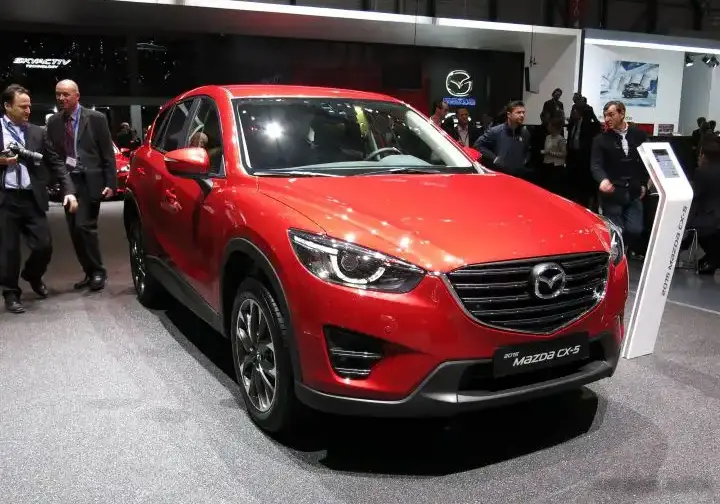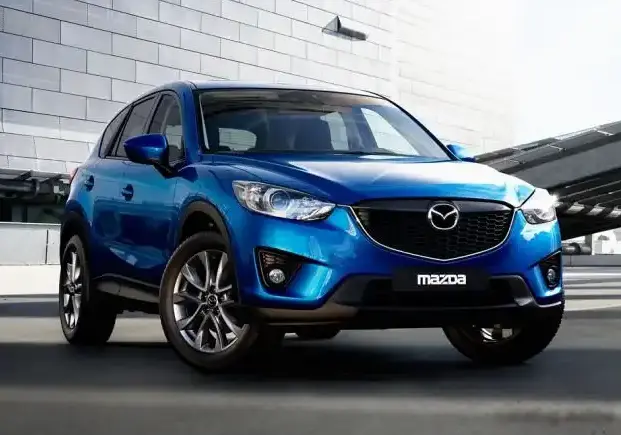
The Mazda CX-5 2.2 SKYACTIV-D, producing 150 horsepower, was a key variant in the first generation (KE series) of Mazda’s popular compact SUV, produced from 2012 to 2015. Positioned as a fuel-efficient and practical option within the CX-5 lineup, it catered to buyers seeking a balance between performance and economy. This model played a significant role in establishing the CX-5 as a competitive force in the European and Asian markets, where diesel engines were – and continue to be – highly favored. It was a crucial step in Mazda’s broader SKYACTIV Technology rollout, showcasing their advancements in engine design and lightweight construction.
Technical Specifications
| Brand | Mazda |
| Model | CX-5 |
| Generation | CX-5 |
| Type (Engine) | 2.2 SKYACTIV-D (150 Hp) |
| Start of production | 2012 |
| End of production | 2015 |
| Powertrain Architecture | Internal Combustion engine |
| Body type | SUV |
| Seats | 5 |
| Doors | 5 |
| Fuel consumption (urban) | 5.4 l/100 km (43.6 US mpg, 52.3 UK mpg, 18.5 km/l) |
| Fuel consumption (extra urban) | 4.1 l/100 km (57.4 US mpg, 68.9 UK mpg, 24.4 km/l) |
| Fuel consumption (combined) | 4.6 l/100 km (51.1 US mpg, 61.4 UK mpg, 21.7 km/l) |
| CO2 emissions | 119 g/km |
| Fuel Type | Diesel |
| Acceleration 0 – 100 km/h | 9.2 sec |
| Acceleration 0 – 62 mph | 9.2 sec |
| Acceleration 0 – 60 mph | 8.7 sec |
| Maximum speed | 202 km/h (125.52 mph) |
| Emission standard | Euro 6 |
| Weight-to-power ratio | 9.4 kg/Hp, 106.4 Hp/tonne |
| Weight-to-torque ratio | 3.7 kg/Nm, 269.5 Nm/tonne |
| Power | 150 Hp @ 4500 rpm |
| Power per litre | 68.5 Hp/l |
| Torque | 380 Nm @ 1800-2600 rpm (280.27 lb.-ft. @ 1800-2600 rpm) |
| Engine layout | Front, Transverse |
| Engine Model/Code | SHY1 |
| Engine displacement | 2191 cm3 (133.7 cu. in.) |
| Number of cylinders | 4 |
| Engine configuration | Inline |
| Cylinder Bore | 86 mm (3.39 in.) |
| Piston Stroke | 94.3 mm (3.71 in.) |
| Compression ratio | 14:1 |
| Number of valves per cylinder | 4 |
| Fuel injection system | Diesel Commonrail |
| Engine aspiration | Twin-Turbo, Intercooler |
| Valvetrain | DOHC |
| Engine oil capacity | 5.1 l (5.39 US qt | 4.49 UK qt) |
| Coolant | 8.5 l (8.98 US qt | 7.48 UK qt) |
| Kerb Weight | 1410 kg (3108.52 lbs.) |
| Max. weight | 2035 kg (4486.41 lbs.) |
| Max load | 625 kg (1377.89 lbs.) |
| Trunk (boot) space – minimum | 503 l (17.76 cu. ft.) |
| Trunk (boot) space – maximum | 1620 l (57.21 cu. ft.) |
| Fuel tank capacity | 56 l (14.79 US gal | 12.32 UK gal) |
| Max. roof load | 50 kg (110.23 lbs.) |
| Permitted trailer load with brakes (8%) | 2000 kg (4409.25 lbs.) |
| Permitted trailer load with brakes (12%) | 2000 kg (4409.25 lbs.) |
| Permitted trailer load without brakes | 740 kg (1631.42 lbs.) |
| Permitted towbar download | 88 kg (194.01 lbs.) |
| Length | 4555 mm (179.33 in.) |
| Width | 1840 mm (72.44 in.) |
| Height | 1710 mm (67.32 in.) |
| Wheelbase | 2700 mm (106.3 in.) |
| Front track | 1585 mm (62.4 in.) |
| Rear (Back) track | 1590 mm (62.6 in.) |
| Drag coefficient (Cd) | 0.33 |
| Minimum turning circle | 11.7 m (38.39 ft.) |
| Drivetrain Architecture | The Internal combustion engine (ICE) drives the front wheels of the vehicle. |
| Drive wheel | Front wheel drive |
| Number of gears and type of gearbox | 6 gears, manual transmission |
| Front suspension | Independent type McPherson |
| Rear suspension | Independent multi-link suspension |
| Front brakes | Ventilated discs, 297 mm |
| Rear brakes | Disc, 303 mm |
| Assisting systems | ABS (Anti-lock braking system) |
| Steering type | Steering rack and pinion |
| Power steering | Electric Steering |
| Tires size | 225/65 R17; 225/55 R19 |
| Wheel rims size | 7J x 17; 7J x 19 |
INTRODUCTION
The Mazda CX-5 2.2 SKYACTIV-D 150 hp model, launched in 2012, represented a significant step forward for Mazda in the compact SUV segment. Built on the 1HX0/A3 platform, it was designed to appeal to a broad audience seeking a stylish, efficient, and practical vehicle. This particular engine and power output was a mainstay in European markets, offering a compelling alternative to gasoline engines and other diesel offerings. It was positioned as a mid-range option, offering a balance between the base 2.0-liter gasoline engine and the more powerful 2.2-liter SKYACTIV-D variants.
Powertrain & Engine Architecture
At the heart of the CX-5 2.2 SKYACTIV-D 150 is the SHY1 engine, a 2.2-liter four-cylinder diesel engine. This engine is a key component of Mazda’s SKYACTIV Technology, which focuses on maximizing combustion efficiency. The engine features a high compression ratio of 14:1, achieved through optimized piston design and combustion chamber geometry. It utilizes a common-rail direct injection system, delivering fuel at extremely high pressure for finer atomization and more complete combustion. The engine is also equipped with a twin-turbocharger system with an intercooler, which helps to reduce turbo lag and improve power delivery across the rev range. The 150 hp version was specifically tuned for efficiency and refinement, prioritizing torque over outright horsepower. The six-speed manual transmission was standard, offering precise shifts and contributing to the vehicle’s overall fuel economy.
Driving Characteristics
The 150 hp SKYACTIV-D engine in the CX-5 provided a comfortable and capable driving experience. While not as overtly sporty as some of its competitors, it delivered ample torque – 380 Nm (280 lb-ft) – from as low as 1800 rpm, making it well-suited for everyday driving and overtaking maneuvers. The six-speed manual transmission allowed drivers to effectively utilize the engine’s torque band. Acceleration from 0-60 mph took approximately 8.7 seconds, which was competitive for the segment. Compared to the higher-output 2.2-liter SKYACTIV-D variants, the 150 hp version felt less urgent in its acceleration, but it offered superior fuel economy and a more relaxed driving experience. The gear ratios were optimized for both fuel efficiency and drivability, providing smooth transitions between gears.
Equipment & Trim Levels
The CX-5 2.2 SKYACTIV-D 150 hp typically came with a good level of standard equipment. Base models included air conditioning, power windows and mirrors, a multi-function steering wheel, and a basic audio system. Higher trim levels added features such as alloy wheels, fog lights, a touchscreen infotainment system, Bluetooth connectivity, and a reversing camera. Interior upholstery was typically cloth, with leather options available on higher trims. Optional extras included a sunroof, heated seats, and a premium sound system. The dashboard layout was clean and functional, with a focus on ergonomics and ease of use.
Chassis & Braking
The CX-5 featured a well-tuned chassis designed to provide a comfortable ride and responsive handling. The front suspension utilized independent McPherson struts, while the rear suspension employed an independent multi-link setup. This configuration helped to minimize body roll and provide a stable platform for cornering. Braking duties were handled by ventilated discs at the front and solid discs at the rear. Anti-lock Braking System (ABS) was standard, enhancing safety and control during emergency braking situations. The suspension was tuned to prioritize comfort, but it still offered a reasonable level of control and responsiveness.
Market Reception & Comparison
The Mazda CX-5 2.2 SKYACTIV-D 150 hp was generally well-received by automotive critics. It was praised for its fuel efficiency, comfortable ride, and stylish design. Critics noted that the engine provided ample torque for everyday driving, but some found it to be slightly underpowered compared to some of its rivals. In terms of fuel economy, it consistently outperformed comparable gasoline-powered SUVs. Compared to the higher-output 2.2-liter SKYACTIV-D variants, the 150 hp version offered a more affordable price point and lower running costs. Reliability was also a strong point, with the SKYACTIV-D engine proving to be durable and long-lasting.
Legacy
The Mazda CX-5 2.2 SKYACTIV-D 150 hp has proven to be a reliable and durable vehicle. The SKYACTIV-D engine, while requiring regular maintenance (including diesel particulate filter regeneration), has a good reputation for longevity. On the used car market, these models remain popular due to their fuel efficiency, practicality, and relatively low running costs. However, potential buyers should be aware of the potential for diesel particulate filter issues, particularly on vehicles that have primarily been used for short journeys. Overall, the CX-5 2.2 SKYACTIV-D 150 hp represents a well-engineered and thoughtfully designed SUV that continues to offer a compelling value proposition in the used car market.