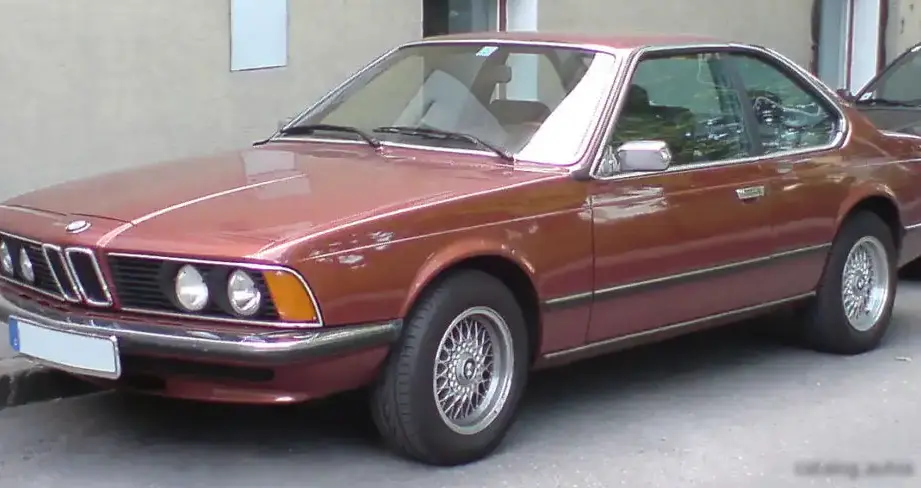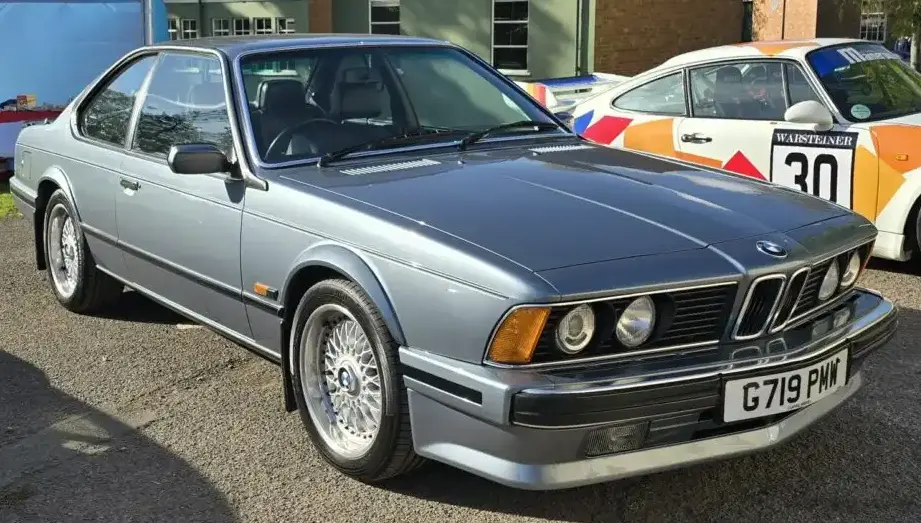
The BMW 635CSi, produced between 1987 and 1989, represents the final iteration of the E24 6 Series coupe. This facelifted version, distinguished by its subtle aerodynamic enhancements and updated interior, solidified the 6 Series’ position as a grand tourer blending performance, luxury, and sophisticated styling. The 635CSi with the automatic transmission and catalytic converter was a significant offering in the North American market, where emissions regulations were becoming increasingly stringent. It sat towards the upper end of the 6 Series lineup, offering a compelling balance between the more driver-focused manual transmission models and the ultimate performance of the M6.
Technical Specifications
| Brand | BMW |
| Model | 6 Series |
| Generation | 6 Series (E24, facelift 1987) |
| Type (Engine) | 635CSi (211 Hp) Automatic cat |
| Start of production | 1987 |
| End of production | 1989 |
| Powertrain Architecture | Internal Combustion engine |
| Body type | Coupe |
| Seats | 4 |
| Doors | 2 |
| Fuel consumption (urban) | 17.5 l/100 km (13.4 US mpg, 16.1 UK mpg, 5.7 km/l) |
| Fuel consumption (extra urban) | 8 l/100 km (29.4 US mpg, 35.3 UK mpg, 12.5 km/l) |
| Fuel consumption (combined) | 11.9 l/100 km (19.8 US mpg, 23.7 UK mpg, 8.4 km/l) |
| Fuel Type | Petrol (Gasoline) |
| Acceleration 0 – 100 km/h | 9 sec |
| Acceleration 0 – 62 mph | 9 sec |
| Acceleration 0 – 60 mph | 8.6 sec |
| Maximum speed | 220 km/h (136.7 mph) |
| Weight-to-power ratio | 7.1 kg/Hp, 141.1 Hp/tonne |
| Weight-to-torque ratio | 4.9 kg/Nm, 204 Nm/tonne |
| Power | 211 Hp @ 5700 rpm |
| Power per litre | 61.5 Hp/l |
| Torque | 305 Nm @ 4000 rpm (224.96 lb.-ft. @ 4000 rpm) |
| Engine layout | Front, Longitudinal |
| Engine Model/Code | M30B35 |
| Engine displacement | 3430 cm3 (209.31 cu. in.) |
| Number of cylinders | 6 |
| Engine configuration | Inline |
| Cylinder Bore | 92 mm (3.62 in.) |
| Piston Stroke | 86 mm (3.39 in.) |
| Compression ratio | 9:1 |
| Number of valves per cylinder | 2 |
| Fuel injection system | Multi-port manifold injection |
| Engine aspiration | Naturally aspirated engine |
| Engine oil capacity | 5.8 l (6.13 US qt | 5.1 UK qt) |
| Coolant | 12 l (12.68 US qt | 10.56 UK qt) |
| Kerb Weight | 1495 kg (3295.91 lbs.) |
| Max. weight | 1895 kg (4177.76 lbs.) |
| Max load | 400 kg (881.85 lbs.) |
| Trunk (boot) space – minimum | 413 l (14.58 cu. ft.) |
| Fuel tank capacity | 70 l (18.49 US gal | 15.4 UK gal) |
| Length | 4815 mm (189.57 in.) |
| Width | 1725 mm (67.91 in.) |
| Height | 1365 mm (53.74 in.) |
| Wheelbase | 2625 mm (103.35 in.) |
| Front track | 1435 mm (56.5 in.) |
| Rear (Back) track | 1465 mm (57.68 in.) |
| Drag coefficient (Cd) | 0.41 |
| Minimum turning circle | 11.7 m (38.39 ft.) |
| Drivetrain Architecture | Rear wheel drive |
| Number of gears | 4 |
| Gearbox type | Automatic transmission |
| Front suspension | Independent, type McPherson with coil spring and anti-roll bar |
| Rear suspension | Independent coil spring |
| Front brakes | Ventilated discs |
| Rear brakes | Disc |
| Steering type | Cone worm with recirculation balls |
| Tires size | 220/55 VR 390 |
Powertrain & Engine Architecture
The heart of the 635CSi is the M30B35 engine, a 3.4-liter inline-six cylinder powerplant. This engine, a descendant of BMW’s long-running M30 family, featured a cast iron block and an aluminum cylinder head. The B35 variant incorporated Bosch Motronic fuel injection, a significant upgrade over earlier carbureted versions, improving both performance and fuel efficiency. The engine utilized a single overhead camshaft (SOHC) design with two valves per cylinder. The catalytic converter, standard on this version, was crucial for meeting increasingly strict emissions standards, particularly in the US market. The four-speed automatic transmission, a ZF 4HP22 unit, was chosen for its smoothness and reliability, catering to drivers prioritizing comfort over outright performance. This transmission featured a torque converter and offered a relatively conventional shift pattern for the era.
Driving Characteristics
The 635CSi automatic, while offering a refined driving experience, differed noticeably from its manual transmission counterparts. The automatic transmission, while smooth, introduced a degree of torque converter slip, resulting in slightly slower acceleration – a 0-60 mph time of around 8.6 seconds compared to the manual’s sub-7 second times. The gear ratios were optimized for cruising comfort rather than aggressive acceleration. Power delivery was linear and predictable, making the car easy to drive in everyday situations. However, the automatic lacked the direct connection and responsiveness of the manual, diminishing the driver’s sense of control. Despite this, the 635CSi automatic still provided ample power for highway passing and spirited driving, offering a comfortable and capable grand touring experience.
Equipment & Trim Levels
The 635CSi automatic typically came well-equipped, reflecting its position as a premium model. Standard features included leather upholstery, power windows, power locks, and a sunroof. Air conditioning was also standard. The interior featured BMW’s typically driver-focused layout, with clear instrumentation and ergonomically placed controls. Optional extras included a premium sound system, heated seats, and metallic paint finishes. The trim level was largely consistent, with variations primarily stemming from individual customer choices regarding optional equipment.
Chassis & Braking
The E24 6 Series featured an independent suspension system all around, utilizing McPherson struts at the front and semi-trailing arms at the rear. This setup provided a comfortable ride while maintaining good handling characteristics. The 635CSi was equipped with ventilated disc brakes at the front and solid disc brakes at the rear, providing adequate stopping power for its weight and performance. The steering was a recirculating ball system, offering a degree of feel but lacking the precision of more modern rack-and-pinion setups. Stabilizer bars were fitted front and rear to reduce body roll during cornering.
Market Reception & Comparison
The 635CSi automatic received generally positive reviews, praised for its blend of performance, luxury, and refinement. Critics noted the smooth operation of the automatic transmission and the comfortable ride quality. However, some reviewers expressed a preference for the more engaging driving experience offered by the manual transmission models. Compared to the 633CSi, the 635CSi offered a noticeable performance increase. Against the high-performance M6, the 635CSi automatic provided a more relaxed and comfortable driving experience, sacrificing some outright speed and handling prowess. Fuel economy, while not exceptional, was reasonable for a vehicle of its class, averaging around 19.8 US mpg in combined driving.
Legacy
The BMW 635CSi, particularly the automatic version, has become a sought-after classic among enthusiasts. The M30B35 engine is known for its durability and relatively straightforward maintenance. However, like all classic BMWs, these cars require diligent upkeep to prevent corrosion and ensure reliable operation. The automatic transmission, while generally reliable, can be expensive to repair if issues arise. Today, well-maintained examples command strong prices in the used car market, reflecting their enduring appeal and status as a symbol of 1980s BMW engineering and design. The 635CSi automatic represents a refined and comfortable grand touring experience, offering a unique blend of performance and luxury that continues to resonate with enthusiasts today.