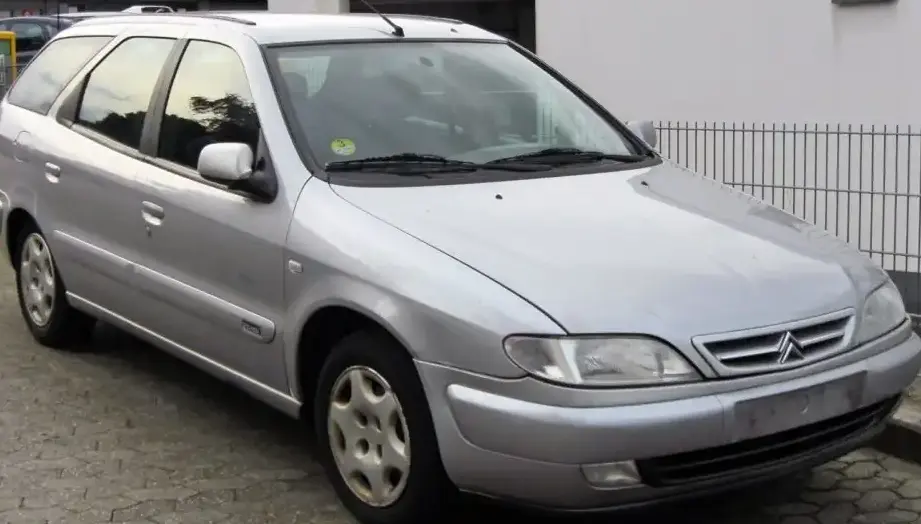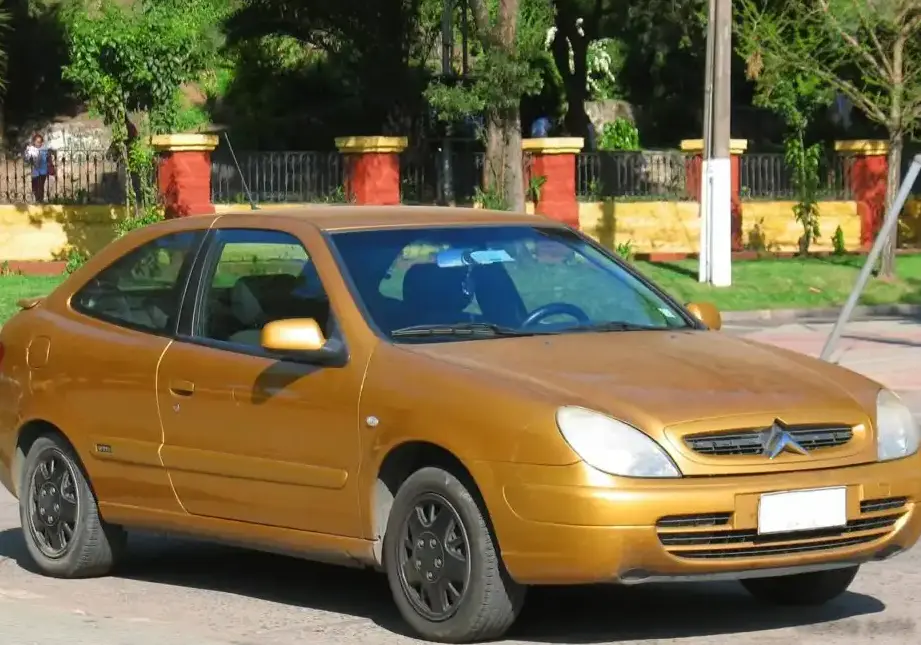
The Citroën Xsara Coupé 2.0 16V, produced between 2000 and 2002, represented a sporty and stylish offering within the broader Xsara range (N0, Phase II). Positioned as a more dynamic alternative to the hatchback and estate versions, the Coupé aimed to attract buyers seeking a more individualistic and driver-focused vehicle. This particular 2.0-liter 16-valve variant served as the performance flagship of the Coupé lineup, offering a significant step up in power and driving experience compared to the lower-displacement engines available. It was a key part of Citroën’s effort to modernize its image and appeal to a younger demographic.
Technical Specifications
| Brand | Citroën |
| Model | Xsara |
| Generation | Xsara Coupé (N0, Phase II) |
| Type (Engine) | 2.0 16V (163 Hp) |
| Start of production | 2000 |
| End of production | 2002 |
| Powertrain Architecture | Internal Combustion engine |
| Body type | Coupe |
| Seats | 5 |
| Doors | 3 |
| Fuel consumption (urban) | 13.6 l/100 km (17.3 US mpg, 20.8 UK mpg, 7.4 km/l) |
| Fuel consumption (extra urban) | 6.8 l/100 km (34.6 US mpg, 41.5 UK mpg, 14.7 km/l) |
| Fuel consumption (combined) | 9.3 l/100 km (25.3 US mpg, 30.4 UK mpg, 10.8 km/l) |
| CO2 emissions | 215 g/km |
| Fuel Type | Petrol (Gasoline) |
| Acceleration 0 – 100 km/h | 8.7 sec |
| Acceleration 0 – 62 mph | 8.7 sec |
| Acceleration 0 – 60 mph | 8.3 sec |
| Maximum speed | 220 km/h (136.7 mph) |
| Emission standard | Euro 3 |
| Weight-to-power ratio | 7.5 kg/Hp, 133.7 Hp/tonne |
| Weight-to-torque ratio | 6.3 kg/Nm, 158.3 Nm/tonne |
| Power | 163 Hp @ 6500 rpm |
| Power per litre | 81.6 Hp/l |
| Torque | 193 Nm @ 5500 rpm (142.35 lb.-ft. @ 5500 rpm) |
| Engine layout | Front, Transverse |
| Engine Model/Code | RFS XU10J4RS |
| Engine displacement | 1998 cm3 (121.93 cu. in.) |
| Number of cylinders | 4 |
| Engine configuration | Inline |
| Cylinder Bore | 86 mm (3.39 in.) |
| Piston Stroke | 86 mm (3.39 in.) |
| Compression ratio | 10.8:1 |
| Number of valves per cylinder | 4 |
| Fuel injection system | Multi-port manifold injection |
| Engine aspiration | Naturally aspirated engine |
| Valvetrain | DOHC |
| Engine oil capacity | 4.25 l (4.49 US qt | 3.74 UK qt) |
| Coolant | 7 l (7.4 US qt | 6.16 UK qt) |
| Kerb Weight | 1219 kg (2687.43 lbs.) |
| Max. weight | 1699 kg (3745.65 lbs.) |
| Max load | 480 kg (1058.22 lbs.) |
| Trunk (boot) space – minimum | 408 l (14.41 cu. ft.) |
| Trunk (boot) space – maximum | 1190 l (42.02 cu. ft.) |
| Fuel tank capacity | 54 l (14.27 US gal | 11.88 UK gal) |
| Max. roof load | 75 kg (165.35 lbs.) |
| Permitted trailer load with brakes (12%) | 1100 kg (2425.08 lbs.) |
| Permitted trailer load without brakes | 630 kg (1388.91 lbs.) |
| Permitted towbar download | 70 kg (154.32 lbs.) |
| Length | 4188 mm (164.88 in.) |
| Width | 1705 mm (67.13 in.) |
| Width including mirrors | 1976 mm (77.8 in.) |
| Height | 1405 mm (55.31 in.) |
| Wheelbase | 2540 mm (100 in.) |
| Front track | 1433 mm (56.42 in.) |
| Rear (Back) track | 1442 mm (56.77 in.) |
| Front overhang | 880 mm (34.65 in.) |
| Rear overhang | 768 mm (30.24 in.) |
| Minimum turning circle | 11.5 m (37.73 ft.) |
| Drivetrain Architecture | The Internal combustion engine (ICE) drives the front wheels of the vehicle. |
| Drive wheel | Front wheel drive |
| Number of gears and type of gearbox | 5 gears, manual transmission |
| Front suspension | Independent, type McPherson with coil spring and anti-roll bar |
| Rear suspension | Torsion |
| Front brakes | Ventilated discs |
| Rear brakes | Disc |
| Assisting systems | ABS (Anti-lock braking system) |
| Steering type | Steering rack and pinion |
| Power steering | Hydraulic Steering |
| Tires size | 195/55 R15 |
| Wheel rims size | 6J x 15 |
Powertrain & Engine Architecture
The heart of the Xsara Coupé 2.0 16V is the RFS XU10J4RS engine, a naturally aspirated 1.998-liter inline-four cylinder powerplant. This engine, a staple of Peugeot-Citroën vehicles for many years, features a cast iron block and an aluminum cylinder head. The “16V” designation indicates the use of four valves per cylinder, enhancing breathing and contributing to the engine’s higher output. Fuel delivery is managed by a multi-port fuel injection system, providing precise fuel metering for optimal combustion. The engine utilizes a double overhead camshaft (DOHC) valvetrain, further optimizing valve timing and control. The engine’s 163 horsepower and 193 Nm (142 lb-ft) of torque were respectable figures for its time, providing a noticeable performance boost over the smaller-displacement options. The engine was typically paired with a five-speed manual transmission, although an automatic transmission was also available, albeit less common.
Driving Characteristics
The 2.0 16V Coupé offered a significantly more engaging driving experience than its lower-powered siblings. Acceleration to 60 mph took approximately 8.3 seconds, and it could reach a top speed of 136.7 mph. The engine delivered a linear power delivery, with a strong mid-range providing ample torque for everyday driving and overtaking maneuvers. While not a sports car in the purest sense, the Coupé’s chassis was well-tuned, offering a good balance between comfort and handling. The steering was precise and responsive, and the suspension effectively controlled body roll. The five-speed manual transmission provided a direct and satisfying connection to the engine, allowing drivers to fully exploit the engine’s power. The automatic transmission, while offering convenience, did diminish the overall driving experience somewhat, resulting in slightly slower acceleration and a less engaging feel.
Equipment & Trim Levels
The 2.0 16V Coupé typically came equipped with a generous level of standard features. Interior appointments included comfortable cloth seats, a leather-wrapped steering wheel, and power windows. Air conditioning, central locking, and an RDS radio were also standard. Optional extras included alloy wheels, a sunroof, and upgraded audio systems. The interior design was functional and modern for its time, with a focus on ergonomics and ease of use. The Coupé’s trim level generally sat towards the higher end of the Xsara range, reflecting its position as the performance variant.
Chassis & Braking
The Xsara Coupé utilized an independent McPherson strut suspension setup at the front, providing good wheel control and ride comfort. The rear suspension employed a torsion beam, a cost-effective and space-efficient solution. Braking duties were handled by ventilated discs at the front and solid discs at the rear. Anti-lock Braking System (ABS) was standard, enhancing safety and stability during hard braking. The chassis was designed to provide a balance between handling and ride quality, making the Coupé suitable for both everyday commuting and spirited driving.
Market Reception & Comparison
The Citroën Xsara Coupé 2.0 16V was generally well-received by automotive critics. It was praised for its stylish design, engaging driving dynamics, and strong engine performance. Compared to other coupes in its class, such as the Peugeot 307 Coupé and the Renault Mégane Coupé, the Xsara offered a unique blend of French flair and practicality. Fuel economy was reasonable for a 2.0-liter engine, averaging around 25.3 US mpg in combined driving. Reliability was generally good, although some owners reported minor issues with the electrical system. The 2.0 16V variant was considered a significant improvement over the lower-displacement engines, offering a more rewarding driving experience.
Legacy
The Citroën Xsara Coupé 2.0 16V remains a popular choice among enthusiasts today. The RFS XU10J4RS engine is known for its durability and relatively straightforward maintenance. While finding well-maintained examples can be challenging, the Coupé offers a unique and affordable way to experience a stylish and engaging French coupe. Parts availability is generally good, and the car’s relatively simple mechanical design makes it accessible to home mechanics. The Xsara Coupé 2.0 16V represents a high point in Citroën’s design and engineering, and it continues to be appreciated for its blend of style, performance, and practicality.