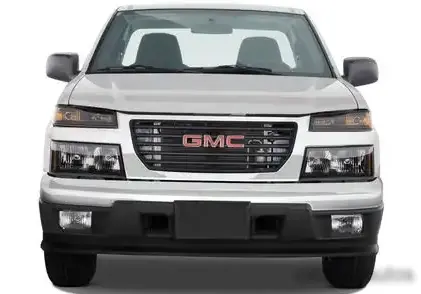
The GMC Canyon I Regular Cab, specifically the 2.8-liter (175 hp) 4WD Automatic variant, was produced from 2004 to 2006. This model represented GMC’s entry into the mid-size pickup truck segment, designed to offer a more manageable and fuel-efficient alternative to full-size trucks like the Sierra. Positioned as a work-oriented or entry-level trim within the Canyon lineup, it catered to buyers needing a capable truck without the expense or size of larger options. The Canyon shared its platform with the Chevrolet Colorado, and both were the first mid-size pickups from GM since the S-10. This generation aimed to recapture a market segment largely abandoned by American manufacturers in favor of larger trucks.
Technical Specifications
| Brand | GMC |
| Model | Canyon |
| Generation | Canyon I Regular Cab |
| Type (Engine) | 2.8 (175 Hp) 4WD Automatic |
| Start of production | 2004 |
| End of production | 2006 |
| Powertrain Architecture | Internal Combustion engine |
| Body type | Pick-up |
| Seats | 2-3 |
| Doors | 2 |
| Fuel Type | Petrol (Gasoline) |
| Weight-to-power ratio | 9.6 kg/Hp, 103.9 Hp/tonne |
| Weight-to-torque ratio | 6.7 kg/Nm, 149 Nm/tonne |
| Power | 175 Hp @ 5600 rpm |
| Power per litre | 63.2 Hp/l |
| Torque | 251 Nm @ 2800 rpm (185.13 lb.-ft. @ 2800 rpm) |
| Maximum engine speed | 6300 rpm |
| Engine layout | Front, Transverse |
| Engine Model/Code | LK5 Vortec 2800 |
| Engine displacement | 2770 cm3 (169.04 cu. in.) |
| Number of cylinders | 4 |
| Engine configuration | Inline |
| Cylinder Bore | 93 mm (3.66 in.) |
| Piston Stroke | 102 mm (4.02 in.) |
| Compression ratio | 10:1 |
| Number of valves per cylinder | 4 |
| Fuel injection system | Multi-port manifold injection |
| Engine aspiration | Naturally aspirated engine |
| Valvetrain | DOHC, CVVT |
| Engine oil capacity | 4.7 l (4.97 US qt | 4.14 UK qt) |
| Coolant | 9.8 l (10.36 US qt | 8.62 UK qt) |
| Kerb Weight | 1685 kg (3714.79 lbs.) |
| Max. weight | 2336 kg (5150 lbs.) |
| Max load | 651 kg (1435.21 lbs.) |
| Trunk (boot) space – minimum | 1243 l (43.9 cu. ft.) |
| Fuel tank capacity | 74.2 l (19.6 US gal | 16.32 UK gal) |
| Length | 4897 mm (192.8 in.) |
| Width | 1717 mm (67.6 in.) |
| Height | 1646 mm (64.8 in.) |
| Wheelbase | 2825 mm (111.22 in.) |
| Front track | 1514 mm (59.61 in.) |
| Rear (Back) track | 1460 mm (57.48 in.) |
| Ride height (ground clearance) | 216 mm (8.5 in.) |
| Minimum turning circle (turning diameter) | 12.4 m (40.68 ft.) |
| Drive wheel | All wheel drive (4×4) |
| Number of gears and type of gearbox | 4 gears, automatic transmission Hydra-Matic |
| Front suspension | Independent coil spring |
| Rear suspension | Leaf spring |
| Front brakes | Ventilated discs |
| Rear brakes | Drum |
| Assisting systems | ABS (Anti-lock braking system) |
| Steering type | Steering rack and pinion |
| Power steering | Hydraulic Steering |
| Tires size | 205/75 R15; 225/70 R15 |
| Wheel rims size | 15 |
Powertrain & Engine Architecture
The heart of this Canyon variant is the LK5 Vortec 2800 engine, a 2.8-liter inline-four cylinder powerplant. This engine utilized a cast iron block with an aluminum cylinder head, incorporating dual overhead camshafts (DOHC) and variable valve timing (CVVT) for improved efficiency and responsiveness. The multi-port fuel injection system delivered fuel directly to each cylinder, optimizing combustion. The engine produced 175 horsepower at 5600 rpm and 185 lb-ft of torque at 2800 rpm. The Hydra-Matic 4-speed automatic transmission was the sole transmission option for this configuration. This transmission was known for its durability but lacked the efficiency of more modern transmissions with higher gear counts. The transverse engine layout contributed to a more compact engine bay, aiding in packaging within the mid-size truck frame.
Driving Characteristics
The 175 hp 2.8L engine paired with the 4-speed automatic delivered adequate, but not exhilarating, performance. Acceleration was modest, and passing maneuvers required planning. The automatic transmission’s gear ratios were geared towards fuel economy and towing capability rather than outright speed. Compared to the optional 3.5L inline-five or the more powerful Colorado ZR2 trims, this variant felt noticeably less potent. However, the lower power output also translated to better fuel economy. The 4WD system provided enhanced traction in inclement weather and on unpaved surfaces, making it suitable for light-duty off-road use. The leaf spring rear suspension, while robust, contributed to a somewhat firm ride quality, especially when unladen.
Equipment & Trim Levels
The base Regular Cab Canyon with the 2.8L engine and automatic transmission typically came with a fairly basic set of features. Standard equipment included air conditioning, a basic audio system, and vinyl upholstery. Power windows and locks were often optional. The interior was functional and durable, prioritizing practicality over luxury. Optional extras included upgraded audio systems, cruise control, and a towing package. The interior color schemes were typically limited to neutral tones like gray or tan. The exterior featured steel wheels and black plastic bumpers and trim.
Chassis & Braking
The Canyon I Regular Cab utilized a body-on-frame construction, providing a robust and durable chassis. The front suspension consisted of independent coil springs, offering a reasonable level of ride comfort. The rear suspension employed leaf springs, chosen for their load-carrying capacity. The braking system featured ventilated discs at the front and drum brakes at the rear. ABS (Anti-lock Braking System) was standard, enhancing safety during emergency braking situations. The steering system was a hydraulic rack-and-pinion setup, providing responsive and predictable handling. The relatively narrow track width contributed to a slightly less stable feel compared to wider trucks.
Market Reception & Comparison
Critics generally viewed the 2.8L Canyon as a competent but unremarkable offering. It was praised for its affordability and fuel efficiency, but criticized for its lack of power and refinement compared to competitors and higher-trim Canyon models. The 3.5L inline-five offered a significant performance boost, while the 2.8L was seen as adequate for basic commuting and light hauling. Fuel economy was a strong point, averaging around 17 mpg city and 22 mpg highway. Reliability was generally good, although some owners reported issues with the automatic transmission over the long term. Compared to the Ford Ranger and Toyota Tacoma, the Canyon offered a more modern interior but lacked the established reputation for durability of the Japanese competitor.
Legacy
The 2.8L engine and 4-speed automatic transmission combination in the GMC Canyon I Regular Cab represents a transitional period in pickup truck design. While not a performance standout, it provided a viable option for buyers seeking an affordable and capable mid-size truck. Today, these trucks are relatively common in the used car market and can be found at very reasonable prices. The powertrain is generally considered reliable, but preventative maintenance is crucial, particularly regarding the automatic transmission. Parts availability is good, and the relatively simple mechanical design makes it accessible for DIY repairs. The Canyon I Regular Cab 2.8L 4WD Automatic remains a practical and affordable choice for those needing a basic, dependable pickup truck.