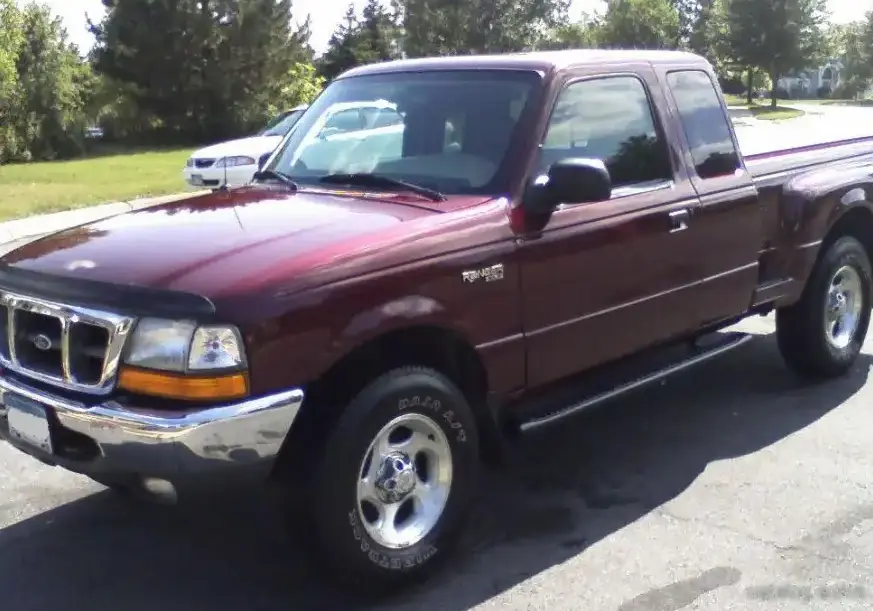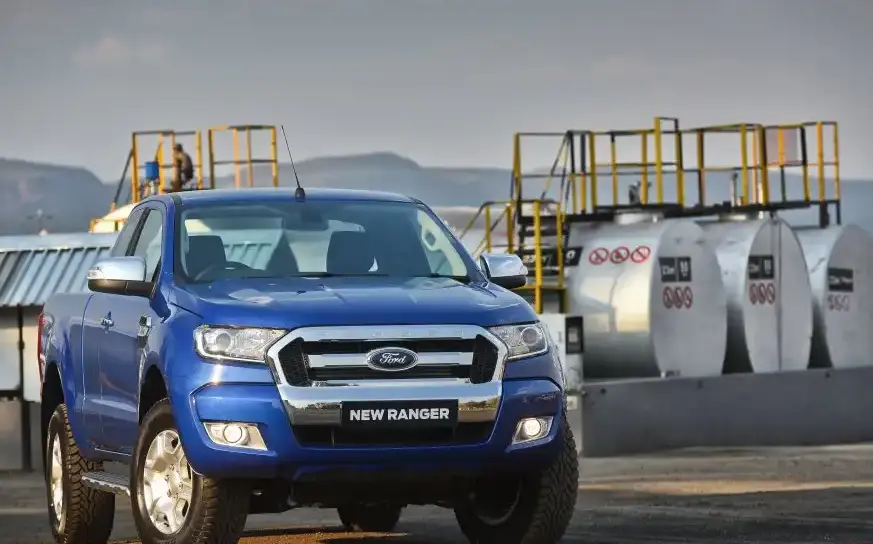
The Ford Ranger III Super Cab, specifically the facelifted version produced from 2015 to 2018, represented a significant evolution of Ford’s globally popular mid-size pickup truck. This iteration, sold primarily in Europe, South Africa, Australia, and New Zealand, offered a blend of practicality, capability, and modern features. The 2.2 TDCi 4×4 variant, producing 160 horsepower, occupied a key position in the Ranger lineup, appealing to buyers seeking a balance between fuel efficiency, towing capacity, and off-road prowess. It served as a step up from the base engine options while remaining more accessible than the higher-output diesel variants.
Technical Specifications
| Brand | Ford |
| Model | Ranger |
| Generation | Ranger III Super Cab (facelift 2015) |
| Type (Engine) | 2.2 TDCi (160 Hp) 4×4 |
| Start of production | 2015 |
| End of production | 2018 |
| Powertrain Architecture | Internal Combustion engine |
| Body type | Pick-up |
| Seats | 5 |
| Doors | 2 |
| Fuel consumption (urban) | 8.2 l/100 km (28.7 US mpg) |
| Fuel consumption (extra urban) | 6.6 l/100 km (35.6 US mpg) |
| Fuel consumption (combined) | 7.1 l/100 km (33.1 US mpg) |
| CO2 emissions | 185 g/km |
| Fuel Type | Diesel |
| Acceleration 0 – 100 km/h | 11.8 sec |
| Acceleration 0 – 62 mph | 11.8 sec |
| Acceleration 0 – 60 mph | 11.2 sec |
| Maximum speed | 175 km/h (108.74 mph) |
| Emission standard | Euro 5 |
| Weight-to-power ratio | 12.3 kg/Hp |
| Weight-to-torque ratio | 5.1 kg/Nm |
| Power | 160 Hp @ 3700 rpm |
| Torque | 385 Nm @ 1500-2500 rpm (283.96 lb.-ft.) |
| Engine layout | Front, Longitudinal |
| Engine displacement | 2198 cm3 (134.13 cu. in.) |
| Number of cylinders | 4 |
| Engine configuration | Inline |
| Cylinder Bore | 86 mm (3.39 in.) |
| Piston Stroke | 94.6 mm (3.72 in.) |
| Compression ratio | 15.7:1 |
| Number of valves per cylinder | 4 |
| Fuel injection system | Diesel Commonrail |
| Engine aspiration | Turbocharger, Intercooler |
| Engine oil capacity | 8.55 l (9.03 US qt | 7.52 UK qt) |
| Coolant capacity | 11.5 l (12.15 US qt | 10.12 UK qt) |
| Kerb Weight | 1970 kg (4343.11 lbs.) |
| Max. weight | 3200 kg (7054.79 lbs.) |
| Max load | 1230 kg (2711.69 lbs.) |
| Fuel tank capacity | 80 l (21.13 US gal | 17.6 UK gal) |
| Length | 5277-5354 mm (207.76 – 210.79 in.) |
| Width | 1860 mm (73.23 in.) |
| Height | 1804-1840 mm (71.02 – 72.44 in.) |
| Wheelbase | 3220 mm (126.77 in.) |
| Front track | 1560 mm (61.42 in.) |
| Rear track | 1560 mm (61.42 in.) |
| Front overhang | 908 mm (35.75 in.) |
| Rear overhang | 1149-1226 mm (45.24 – 48.27 in.) |
| Ride height (ground clearance) | 223-237 mm (8.78 – 9.33 in.) |
| Approach angle | 28° |
| Departure angle | 28° |
| Ramp-over angle | 25° |
| Climb angle | 32° |
| Wading depth | 800 mm (31.5 in.) |
| Drive wheel | All wheel drive (4×4) |
| Number of gears | 6 |
| Gearbox type | Manual transmission |
| Front suspension | Independent coil spring |
| Rear suspension | Dependent suspension of two longitudinal semi-elliptic leaf springs |
| Front brakes | Ventilated discs |
| Rear brakes | Drum |
| Assisting systems | ABS (Anti-lock braking system) |
| Steering type | Steering rack and pinion |
| Power steering | Electric |
| Tires size | 215/70 R16; 255/70 R16; 265/65 R17; 265/60 R18 |
| Wheel rims size | 16; 17; 18 |
INTRODUCTION
The 2015-2018 Ford Ranger III Super Cab 2.2 TDCi 4×4 was a crucial model within the T6 platform Ranger series. The facelift brought updated styling, improved interior materials, and enhanced technology compared to the pre-2015 models. The Super Cab configuration offered a compromise between the practicality of a double cab and the more compact footprint of a regular cab, making it suitable for both work and family use. The 2.2-liter turbodiesel engine, paired with a six-speed manual transmission and a four-wheel-drive system, provided a versatile powertrain for a wide range of applications, from daily commuting to light-duty hauling and off-road adventures.
Powertrain & Engine Architecture
The heart of this Ranger variant is the Ford Duratorq 2.2-liter TDCi diesel engine. This engine, part of the Puma family, utilizes a common-rail direct injection system, delivering fuel at extremely high pressure for optimized combustion. The engine code is typically associated with the Puma 2.2, and it features a single variable geometry turbocharger (VGT) and an intercooler to enhance power and efficiency. The VGT adjusts the turbine vanes to optimize boost pressure across the engine’s rev range, improving both low-end torque and high-end horsepower. The engine produces 160 horsepower at 3700 rpm and a substantial 385 Nm (283.96 lb-ft) of torque between 1500 and 2500 rpm. The six-speed manual transmission provides precise gear changes and contributes to the truck’s overall efficiency. The transmission’s gear ratios are tuned to maximize torque delivery for both on-road driving and off-road crawling.
Driving Characteristics
The 2.2 TDCi engine, while not the most powerful option in the Ranger lineup, offers a good balance of performance and fuel economy. Acceleration from 0-60 mph takes around 11.2 seconds, and the truck has a top speed of 175 km/h (108.74 mph). The engine’s strong low-end torque makes it well-suited for towing and hauling, and the six-speed manual transmission allows drivers to keep the engine in its optimal power band. Compared to the higher-output 3.2-liter TDCi engine, the 2.2 TDCi feels less strained during acceleration and offers better fuel efficiency. However, it lacks the outright power of the larger engine, particularly when fully loaded or tackling steep inclines. The 4×4 system provides excellent traction in various conditions, and the Ranger’s robust suspension ensures a comfortable ride even on rough terrain.
Equipment & Trim Levels
The 2.2 TDCi 4×4 Ranger typically came equipped with a reasonable level of standard features. These included air conditioning, power windows, power door locks, and a basic audio system. Higher trim levels, such as the Limited, added features like alloy wheels, a more sophisticated infotainment system with touchscreen display, automatic climate control, and upgraded interior trim. Optional extras included a tow bar, bed liner, side steps, and a rear differential lock. The interior design was functional and durable, with hard-wearing plastics and comfortable seating. The Super Cab configuration offered limited rear seating, best suited for occasional passengers.
Chassis & Braking
The Ranger III Super Cab utilized a body-on-frame construction, providing a robust and durable chassis. The front suspension consisted of independent coil springs, while the rear suspension employed a traditional leaf spring setup. This combination offered a good balance of ride comfort and load-carrying capacity. Braking duties were handled by ventilated discs at the front and drum brakes at the rear. An Anti-lock Braking System (ABS) was standard, enhancing safety during emergency braking situations. The steering system was a rack-and-pinion setup with electric power assistance, providing precise and responsive steering feel.
Market Reception & Comparison
The Ford Ranger III Super Cab 2.2 TDCi 4×4 was generally well-received by automotive critics. It was praised for its versatility, fuel efficiency, and off-road capability. Compared to other mid-size pickups in its class, such as the Toyota Hilux and the Nissan Navara, the Ranger offered a more modern interior and a more refined driving experience. The 2.2 TDCi engine was considered a good compromise between power and economy, although some reviewers noted that it could feel underpowered when fully loaded. Fuel economy figures of around 33.1 US mpg (combined) were competitive for its class. Reliability was generally good, although some owners reported issues with the diesel particulate filter (DPF).
Legacy
The Ford Ranger III Super Cab 2.2 TDCi 4×4 has proven to be a durable and reliable workhorse. On the used car market, these Rangers hold their value reasonably well, particularly those that have been well-maintained. The 2.2 TDCi engine is known for its longevity, although regular servicing and proper maintenance are essential to prevent issues with the DPF and other components. The Ranger’s robust chassis and four-wheel-drive system make it a popular choice for buyers seeking a capable and versatile pickup truck. It remains a common sight on roads and job sites around the world, a testament to its enduring appeal and practicality.