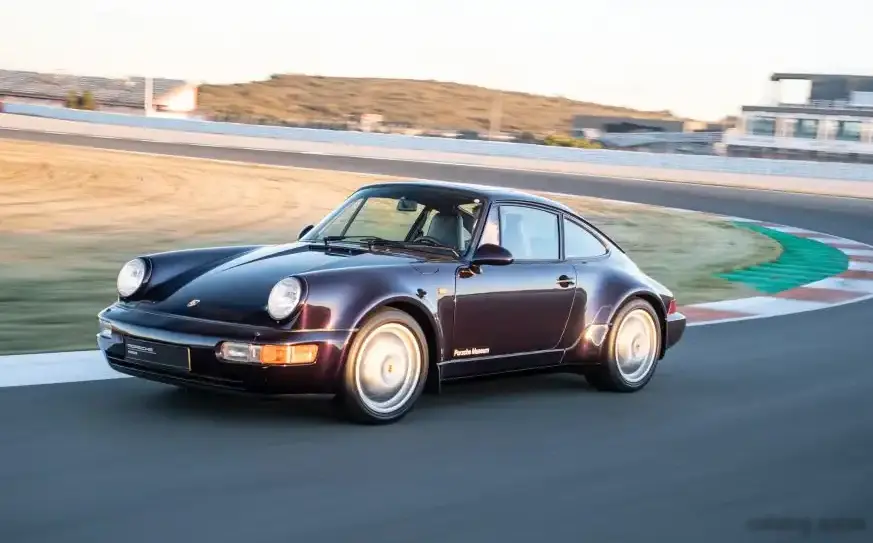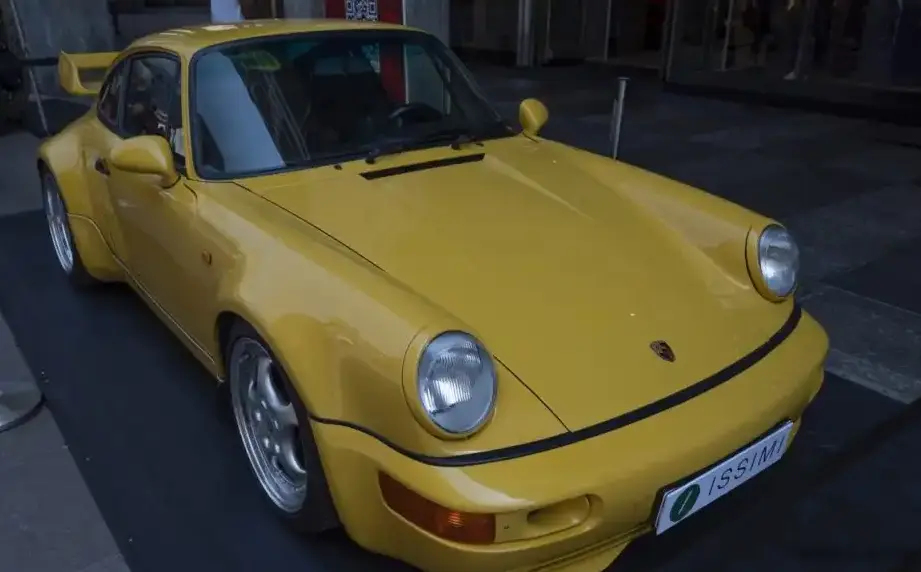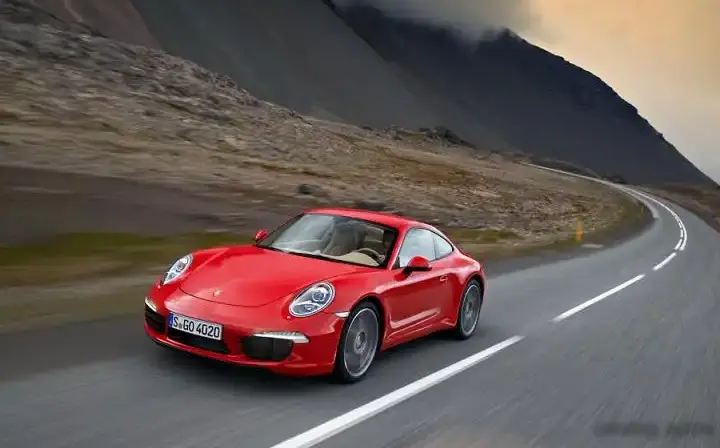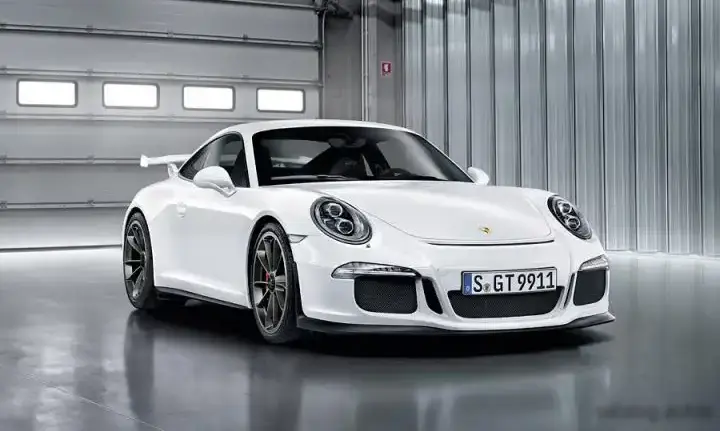
The Porsche 911 (991) GT3 3.8, equipped with the dual-clutch Porsche Doppelkupplung (PDK) transmission, represents a focused, high-performance iteration of the iconic 911. Produced from 2013 to 2017, this variant was positioned as a track-oriented machine, bridging the gap between the Carrera models and the even more extreme RS variants. It’s built on the 991 generation 911 platform, known for its advancements in chassis technology and driver engagement. The GT3 3.8 PDK aimed to deliver the thrills of a traditional manual GT3 with the convenience and speed of Porsche’s advanced automatic system.
Technical Specifications
| Brand | Porsche |
| Model | 911 |
| Generation | 911 (991) |
| Type (Engine) | GT3 3.8 (475 Hp) PDK |
| Start of production | 2013 |
| End of production | 2017 |
| Powertrain Architecture | Internal Combustion engine |
| Body type | Coupe |
| Seats | 2 |
| Doors | 2 |
| Fuel consumption (economy) – urban | 18.9 l/100 km (12.4 US mpg, 14.9 UK mpg, 5.3 km/l) |
| Fuel consumption (economy) – extra urban | 8.9 l/100 km (26.4 US mpg, 31.7 UK mpg, 11.2 km/l) |
| Fuel consumption (economy) – combined | 12.4 l/100 km (19 US mpg, 22.8 UK mpg, 8.1 km/l) |
| CO2 emissions | 289 g/km |
| Fuel Type | Petrol (Gasoline) |
| Acceleration 0 – 100 km/h | 3.5 sec |
| Acceleration 0 – 62 mph | 3.5 sec |
| Acceleration 0 – 60 mph | 3.3 sec |
| Maximum speed | 315 km/h (195.73 mph) |
| Emission standard | Euro 5 |
| Weight-to-power ratio | 3 kg/Hp, 332.2 Hp/tonne |
| Weight-to-torque ratio | 3.3 kg/Nm, 307.7 Nm/tonne |
| Power | 475 Hp @ 8250 rpm |
| Power per litre | 125 Hp/l |
| Torque | 440 Nm @ 6250 rpm (324.53 lb.-ft. @ 6250 rpm) |
| Engine layout | Rear, Longitudinal |
| Engine Model/Code | MA1.75 |
| Engine displacement | 3799 cm3 (231.83 cu. in.) |
| Number of cylinders | 6 |
| Engine configuration | Boxer |
| Cylinder Bore | 102 mm (4.02 in.) |
| Piston Stroke | 77.5 mm (3.05 in.) |
| Compression ratio | 12.9:1 |
| Number of valves per cylinder | 4 |
| Fuel injection system | Direct injection |
| Engine aspiration | Naturally aspirated engine |
| Engine oil capacity | 7.5 l (7.93 US qt | 6.6 UK qt) |
| Coolant | 28 l (29.59 US qt | 24.64 UK qt) |
| Kerb Weight | 1430 kg (3152.61 lbs.) |
| Max. weight | 1720 kg (3791.95 lbs.) |
| Max load | 290 kg (639.34 lbs.) |
| Trunk (boot) space – minimum | 385 l (13.6 cu. ft.) |
| Fuel tank capacity | 64 l (16.91 US gal | 14.08 UK gal) |
| Length | 4545 mm (178.94 in.) |
| Width | 1852 mm (72.91 in.) |
| Height | 1269 mm (49.96 in.) |
| Wheelbase | 2457 mm (96.73 in.) |
| Front track | 1551 mm (61.06 in.) |
| Rear (Back) track | 1555 mm (61.22 in.) |
| Drag coefficient (Cd) | 0.33 |
| Drivetrain Architecture | Rear wheel drive |
| Number of gears and type of gearbox | 7 gears, automatic transmission PDK |
| Front suspension | Independent type McPherson |
| Rear suspension | Independent multi-link suspension |
| Front brakes | Ventilated discs |
| Rear brakes | Ventilated discs |
| Assisting systems | ABS (Anti-lock braking system) |
| Steering type | Steering rack and pinion |
| Tires size | 245/35 ZR20; 305/30 ZR20 |
| Wheel rims size | 9J x 20; 12J x 20 |
INTRODUCTION
The 991 GT3 with the PDK transmission was introduced as a response to market demand for a more accessible GT3 experience. While purists often favored the traditional six-speed manual, the PDK offered quicker shift times and a broader appeal to drivers who desired a high-performance machine without the learning curve of a manual gearbox. The 991.1 GT3, in both manual and PDK forms, represented a significant leap forward in track performance for the 911, incorporating lessons learned from Porsche’s motorsport activities. It was a key model in the 991 generation, setting the stage for the even more focused 911 R and 911 GT3 RS variants.
Powertrain & Engine Architecture
At the heart of the GT3 3.8 PDK lies the naturally aspirated 3.8-liter flat-six engine, designated the MA1.75. This engine is directly derived from the 911 RSR race car, featuring a dry-sump lubrication system for improved oil supply during hard cornering. The engine boasts direct fuel injection, a high 12.9:1 compression ratio, and titanium connecting rods, contributing to its high-revving nature and impressive power output. The engine produces 475 horsepower at 8,250 rpm and 440 Nm (324.53 lb-ft) of torque at 6,250 rpm. The PDK transmission is a seven-speed dual-clutch unit, offering incredibly fast and precise gear changes. Unlike a traditional automatic, the PDK features two separate clutches – one for odd-numbered gears and one for even-numbered gears – allowing for seamless shifts without interruption of power delivery. Paddle shifters mounted behind the steering wheel provide the driver with full control over gear selection.
Driving Characteristics
The GT3 3.8 PDK delivers a thrilling driving experience characterized by its responsiveness, precision, and high-revving engine. The PDK transmission enhances the car’s acceleration, allowing for quicker launches and faster lap times compared to the manual version. While the manual GT3 offered a more engaging and tactile experience, the PDK provided a level of convenience and speed that appealed to many drivers. The gear ratios are optimized for track performance, with close ratios in the lower gears for rapid acceleration and a longer final drive for high-speed stability. The engine’s power delivery is linear and predictable, making it easy to modulate throttle inputs and maintain control. The car feels incredibly balanced and agile, thanks to its lightweight construction and sophisticated suspension system.
Equipment & Trim Levels
The GT3 3.8 PDK came standard with a comprehensive list of performance-oriented features, including a rear wing, a front splitter, and a track-focused suspension setup. The interior featured sport seats with enhanced bolstering, a GT sport steering wheel, and carbon fiber trim. Optional extras included Porsche Ceramic Composite Brakes (PCCB), a Club Sport package (which added a roll cage, six-point harnesses, and a fire extinguisher), and various customization options through Porsche’s “Personalization Plus” program. The interior was relatively spartan compared to other 911 models, reflecting the GT3’s focus on performance. Sound insulation was minimized to enhance the driving experience and allow the driver to fully appreciate the engine’s sound.
Chassis & Braking
The GT3 3.8 PDK features a track-tuned chassis with a wider rear track and stiffer springs and dampers compared to the standard 911 Carrera. The suspension utilizes Porsche Active Suspension Management (PASM), which allows the driver to adjust the damping characteristics to suit different driving conditions. The braking system consists of ventilated discs on all four wheels, providing exceptional stopping power. The optional PCCB system offered even greater braking performance and fade resistance, making it ideal for track use. The car’s lightweight construction, achieved through the use of aluminum and carbon fiber components, contributes to its agility and responsiveness.
Market Reception & Comparison
The 911 GT3 3.8 PDK was widely praised by automotive critics for its performance, handling, and overall driving experience. While some purists lamented the absence of a manual transmission, the PDK version was recognized as a highly capable and engaging sports car. Compared to the standard 911 Carrera, the GT3 offered a significantly more focused and track-oriented experience. Compared to the manual GT3, the PDK version offered quicker acceleration and easier usability, but some drivers found it less engaging. Fuel economy, while not a primary concern for GT3 buyers, was reasonable for a high-performance sports car, averaging around 19 US mpg in combined driving.
Legacy
The 991 GT3 3.8 PDK has established itself as a highly sought-after model in the used car market. Its combination of performance, exclusivity, and Porsche’s reputation for reliability has made it a desirable collector’s item. The MA1.75 engine is known for its durability and relatively low maintenance costs, provided it is properly serviced. The PDK transmission is also generally reliable, although it may require occasional maintenance. The 991.1 GT3, in both manual and PDK forms, represents a high point in the evolution of the 911, offering a compelling blend of performance, technology, and driver engagement.